
7 Best Virtual Tour Features for Buyers
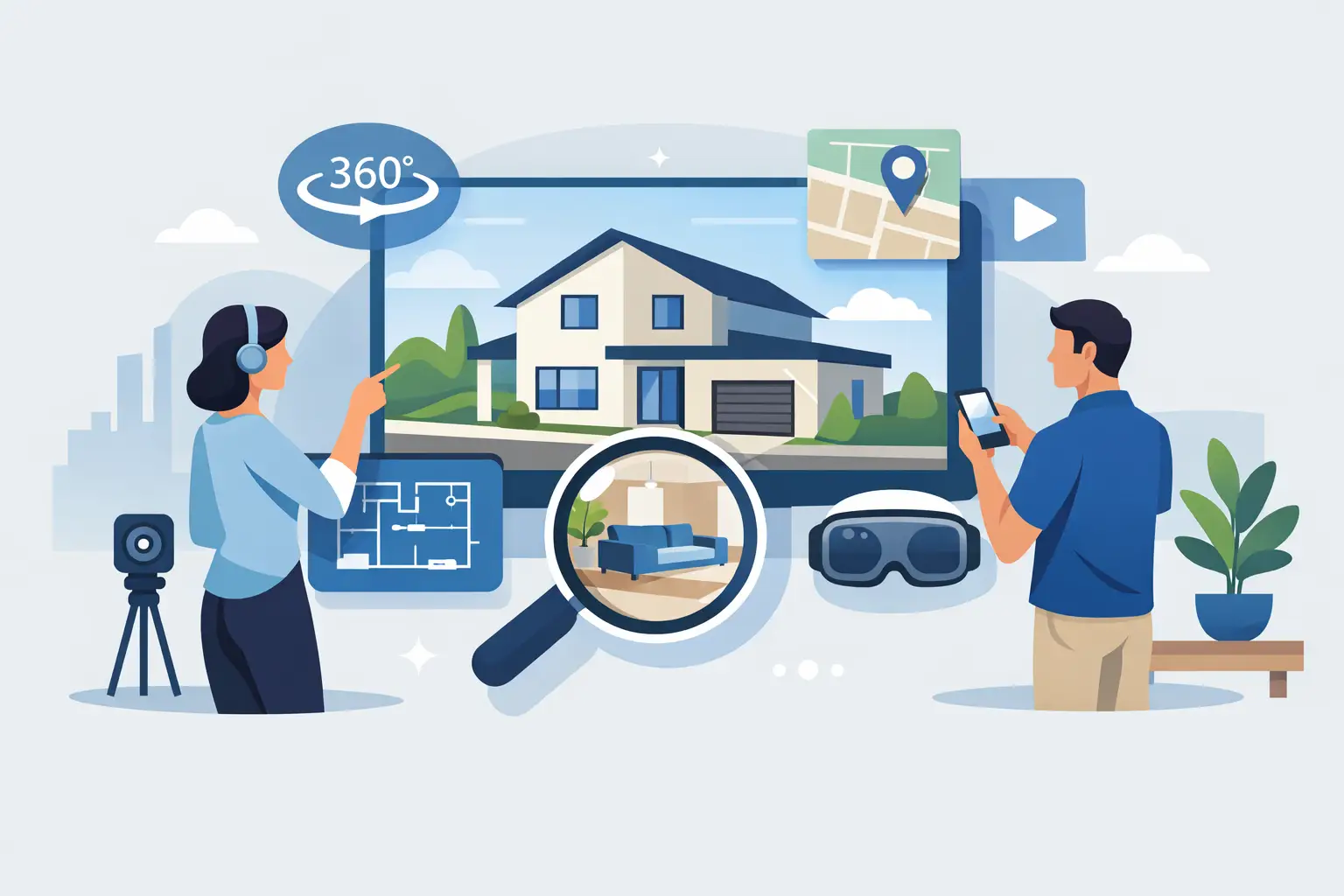
A buyer lands on a listing and gives it about five seconds before deciding whether to keep scrolling. That is why the best virtual tour features for buyers are not just nice extras. They directly affect how long someone stays on the listing, how confident they feel, and whether they book a showing.
For agents, that matters because virtual tours can either move a buyer closer to action or create more confusion. A good tour helps buyers understand layout, flow, and condition before they ever step inside. A weak one can make a solid listing feel harder to read than it really is. The difference usually comes down to the features built into the tour, not just the fact that a tour exists.
What buyers actually want from a virtual tour
Most buyers are not looking for flashy tech. They want clarity. They want to know whether the kitchen opens to the living area, whether the upstairs layout makes sense, and whether the home feels bright, cramped, updated, or awkward.
That is why the strongest tours help buyers answer practical questions fast. The more clearly a listing communicates space and flow, the more likely a buyer is to take the next step. This is especially true for out-of-town buyers, busy families, and anyone narrowing down options before scheduling a full day of showings.
The best virtual tour features for buyers
1. Easy room-to-room navigation
If a buyer cannot move through the home naturally, the tour starts working against the listing. Good navigation should feel simple and predictable. Buyers should be able to move from the entry to the main living spaces, then into bedrooms, baths, and bonus areas without getting lost or clicking around blindly.
This matters more than many agents realize. When navigation is clunky, buyers stop focusing on the home and start fighting the interface. That creates friction right at the point where the listing should be building momentum.
The best tours make movement intuitive. A buyer should understand where they are in the home and where to go next. If they can mentally map the property while touring it online, they are far more likely to feel ready for an in-person visit.
2. A clear sense of floor plan and flow
Photos can make individual rooms look great, but they rarely explain how the home actually lives. Buyers care about flow. They want to know whether the primary suite is private, whether the kitchen connects well to entertaining space, and how separated the secondary bedrooms are.
This is one of the biggest reasons virtual tours help listings convert better. When a tour reveals the relationship between spaces, buyers can picture daily life there. That emotional step matters. It turns a collection of rooms into a home that feels usable.
There is a trade-off here, though. A tour that shows layout too honestly may reveal awkward transitions or tighter areas that still photos might soften. But that is usually a good thing in the long run. Clear expectations lead to better-qualified showings and fewer wasted appointments.
3. High image quality in every room
A virtual tour only performs if the visuals hold up. Buyers notice dark corners, blown-out windows, color casts, and blurry details immediately. They may not describe the problem in technical terms, but they will feel it. The home starts to seem lower quality, less cared for, or harder to trust.
Strong image quality does more than make the listing look polished. It helps buyers judge finishes, condition, and natural light with more confidence. That confidence can be the difference between a casual click and a showing request.
Consistency is key here. One bright, sharp room followed by three dim ones makes the whole presentation feel uneven. If the goal is more clicks, more showings, and stronger offers, every part of the tour needs to support the same professional standard.
4. Floor plans that support the tour
A virtual tour is more effective when buyers can pair it with a floor plan. The tour shows the experience of moving through the home. The floor plan confirms dimensions, orientation, and room relationships. Together, they answer the questions buyers usually ask before booking a showing.
For agents, this pairing often reduces confusion during follow-up. Buyers are less likely to ask where the laundry is, whether there is a direct path from the garage, or how the upper level is arranged if they can see those answers clearly from the start.
This is one of the most practical upgrades you can make to listing media because it serves both emotional and analytical buyers. Some people buy based on feeling. Others need structure. A tour plus floor plan covers both.
Best virtual tour features for buyers who are comparing listings fast
5. Mobile-friendly viewing
A large share of buyers will first see your listing on a phone, not a desktop. If the virtual tour loads slowly, feels awkward on mobile, or requires too much pinching and zooming, you lose people before the home has a fair chance.
Mobile-friendly design is not a technical bonus. It is baseline performance. Buyers are checking listings between meetings, in the school pickup line, or while sitting in another showing. The tour has to work well in those real-life conditions.
Fast loading, simple controls, and readable labels all help. If a buyer can tour the home easily from their phone, they are more likely to stay engaged long enough to decide whether the property deserves a closer look.
6. Helpful labels and feature callouts
Not every value point is obvious at first glance. A virtual tour can do more work when it points out details buyers might miss, such as a renovated bath, custom built-ins, new flooring, or access to outdoor living areas.
The key is restraint. Too many labels make the tour feel like an ad instead of a useful tool. But a few smart callouts can guide attention where it belongs and strengthen the buyer’s understanding of the home.
This is especially useful in competitive markets where buyers are comparing several similar properties. If one listing makes important upgrades easy to spot and another leaves buyers guessing, the clearer presentation usually wins more interest.
7. A realistic representation of space
Buyers want accuracy, even when they do not say it directly. Overly distorted views, strange angles, or editing that changes the feel of a room can create disappointment when they arrive in person. That disappointment hurts trust, and trust is what gets buyers from online interest to written offer.
The best virtual tours present the home at its strongest while still feeling truthful. Rooms should look bright and inviting, but they should also look like themselves. If the media creates a gap between online expectations and the real showing experience, the listing loses momentum.
For agents, this is where professional execution pays off. Honest, well-produced visuals attract the right buyers instead of just more browsers.
What features matter most by listing type
Not every listing needs the same emphasis. A compact starter home may benefit most from clean navigation and a floor plan that proves smart use of space. A larger property may need the tour to clarify level changes, guest areas, or outdoor connections. A renovated home may gain more from crisp image quality and callouts that spotlight upgrades.
It also depends on buyer pool. In markets like Waynesboro, Staunton, Harrisonburg, and Charlottesville, virtual tours can be especially helpful for relocation buyers and anyone trying to narrow options before making the drive. Those buyers need clear information fast. If the tour answers the big questions upfront, the showing is more likely to happen.
What agents should look for before ordering a tour
If you are choosing a media partner, do not stop at asking whether they offer virtual tours. Ask how the tour helps buyers understand layout. Ask whether it works well on mobile. Ask how image quality is handled across different lighting conditions. Ask whether a floor plan can be included to support the experience.
Those details affect results far more than a generic tour checkbox on a pricing page. A strong virtual tour should reduce friction, qualify buyer interest, and make the listing easier to say yes to.
That is the standard serious agents should expect. Not more media for the sake of more media, but better presentation that drives action.
A virtual tour earns its keep when a buyer finishes it with fewer questions, more confidence, and a clear reason to book the showing.
Listing photos that sell homes faster.
Professional real estate media with 24-hour delivery across Waynesboro, Staunton, and the Shenandoah Valley.
Book a Shoot