
Drone Photography vs Ground Photos
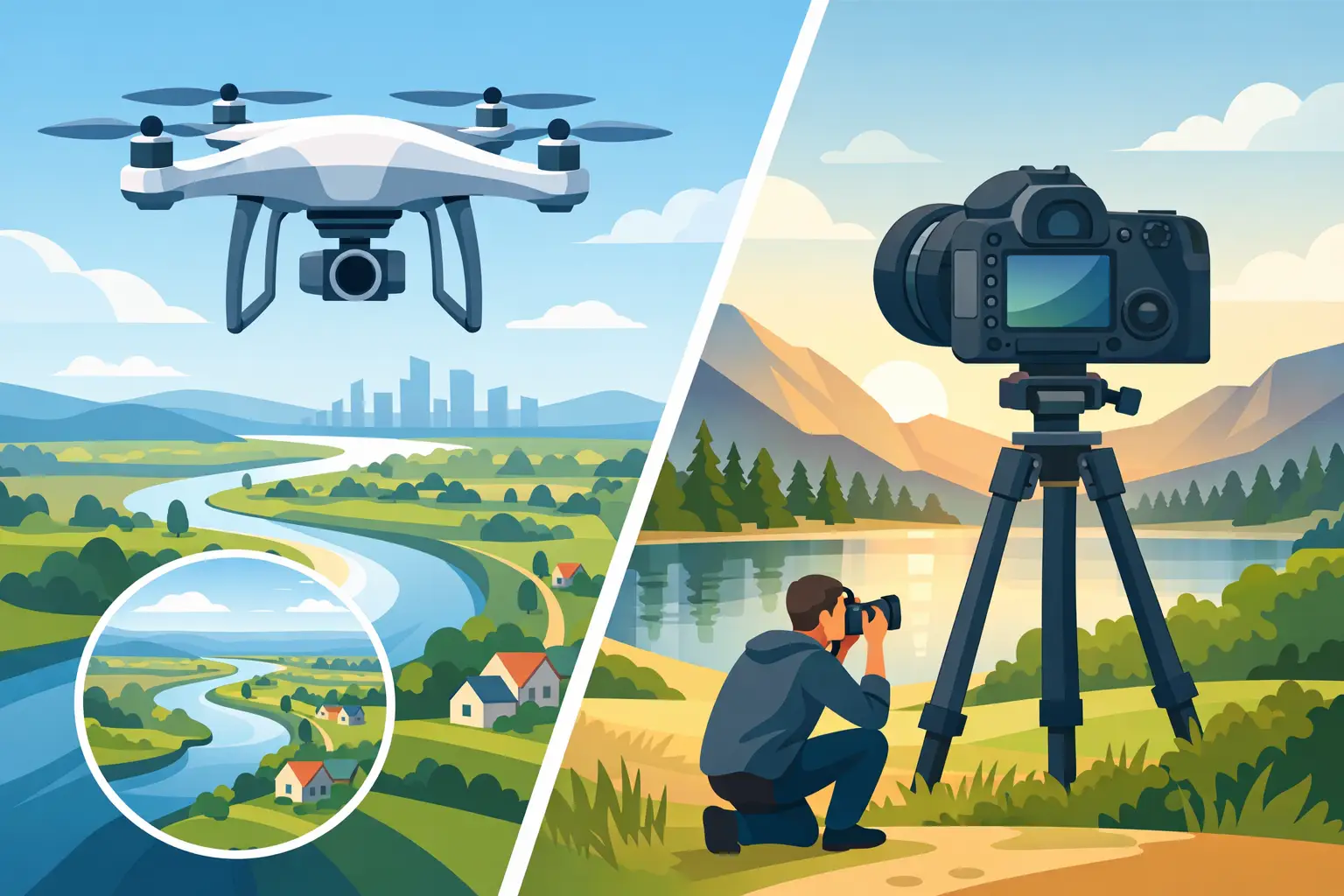
A buyer scrolls past a listing in two seconds or less. If the first image does not tell the story fast, the click never happens. That is why drone photography vs ground photos is not really a gear question for real estate agents. It is a marketing question. Which angle gets attention, creates context, and moves a buyer from browsing to booking a showing?
For most listings, the answer is not one or the other. It is knowing what each image type does best and using both with purpose. Ground photos sell the house itself. Drone photos sell the setting, the lot, and the lifestyle around it. When you match the image to the property, you get stronger listing presentation, more buyer interest, and better odds of converting attention into action.
Drone photography vs ground photos: what changes the buyer’s first impression?
Ground photos put the buyer at eye level. That matters because it feels natural and familiar. Buyers can picture themselves walking up to the front door, standing in the kitchen, or looking out from the back patio. If your goal is to show finishes, room flow, and condition, ground photography carries most of the weight.
Drone photography changes the frame completely. It pulls the property out of isolation and places it in context. Buyers can see driveway access, neighboring spacing, tree cover, mountain views, water features, acreage, outbuildings, or how close the home is to amenities. For some listings, that context is the selling point. Without an aerial image, the online presentation feels incomplete.
This is where agents sometimes miss the mark. They assume drone images always make a listing look more premium. Sometimes they do. Sometimes they just add shots that do not answer a buyer’s real questions. Aerials are strongest when they reveal something useful that cannot be understood from the ground.
What ground photos do better
Ground photography is still the core of every strong listing package because buyers need to understand the home itself. They want to see the front elevation clearly. They want clean, well-lit interior images that make the layout feel open and easy to follow. They want backyard photos that show usable outdoor space at a believable scale.
That eye-level perspective also helps with trust. If every image is too wide, too elevated, or too stylized, buyers can feel like the listing is hiding something. Good ground photos give the property a clear, honest presentation while still making it look polished and desirable.
For homes in tighter neighborhoods, ground photos often do more sales work than drone images. Aerials can expose rooflines, lot limitations, or nearby homes packed closely together. That does not mean you avoid drone photography entirely. It means you use it carefully. If the neighborhood has strong curb appeal, a nearby park, or a convenient location worth highlighting, one or two aerials may help. But the hero images still need to come from the ground.
Ground shots also do the heavy lifting inside the home. Drone photography does not replace the need for strong interior composition, balanced lighting, and thoughtful sequencing. Buyers decide whether a home feels updated, spacious, and worth a visit based largely on interior photos.
Where drone photography wins
Drone photography earns its place when the property has land, views, privacy, or a location advantage that deserves visibility. In the Shenandoah Valley, that often means homes with mountain backdrops, larger lots, farms, custom builds with long driveways, or properties where the outdoor setting is just as valuable as the square footage.
Aerial images can make the layout of the property immediately clear. A buyer can understand the relationship between the house, the garage, the pool, the barn, and the property line in one frame. That saves mental work. And in online marketing, clarity is performance.
Drone photography is also effective for showing proximity. If a home is close to a golf course, tucked beside open land, or positioned in a way that creates exceptional privacy, the aerial view can communicate that faster than a paragraph in the listing description.
But there is a trade-off. Drone photos can be impressive without being persuasive. A beautiful overhead image may get attention, but if it does not help the buyer understand why this home is a better fit, it becomes visual filler. The best aerials are not included because they look expensive. They are included because they answer a question the buyer already has.
Drone photography vs ground photos for different listing types
Entry-level and mid-range suburban homes usually need restraint. In these cases, strong ground photography is the priority because buyers are comparing condition, layout, kitchen quality, bathroom updates, and curb appeal. Drone photos may still help, especially if the lot shape, backyard depth, or neighborhood setting is a differentiator. But they should support the listing, not take over the gallery.
Luxury homes usually benefit from both. Buyers at higher price points expect a more complete visual package, and aerials often help justify value by showing scale, privacy, architecture, and site placement. If the home sits on acreage or has premium outdoor features, drone photography can strengthen the story in a way ground photos cannot.
Rural properties, farms, and homes on acreage are where drone photography often becomes essential. Ground images can make a ten-acre property feel like any other house with a backyard. Aerials reveal what the buyer is actually paying for.
Townhomes, condos, and tightly spaced neighborhoods require more judgment. Sometimes a drone image helps establish location near downtown, a trail system, or community amenities. Sometimes it only highlights density and parking. In those cases, the safer play is to lead with polished ground photos and use aerials only if they add real value.
How to decide what the listing needs
Start with the question buyers will ask first when they see the home online. Is the main appeal the interior finish level? Is it the setting? Is it the lot? Is it privacy? Is it the neighborhood or the view? Your image plan should answer that first question fast.
If the home’s biggest advantage is visible from the street and inside the home, ground photos should carry the gallery. If the biggest advantage only makes sense from above, drone photography deserves a larger role.
A practical rule is simple. Use ground photography to sell features. Use drone photography to sell context. When both matter, both belong in the package.
It also helps to think about where the images will be used beyond the MLS. Listing presentations, social posts, email marketing, and just-listed campaigns all benefit from having the right mix. Aerial images can grab attention in marketing. Ground images close the gap by giving buyers the confidence to schedule a showing.
Common mistakes agents make
One mistake is treating drone photos like a status upgrade instead of a strategy. Buyers do not reward a listing just because aerials were included. They respond when those images make the property easier to understand and more appealing.
Another mistake is underinvesting in ground photography because drone images feel more dramatic. Dramatic is not the same as effective. If the kitchen is dark, the living room looks cramped, or the front exterior feels flat, a few strong aerials will not save the listing presentation.
The opposite mistake happens too. Some agents skip drone photography because they assume it is only for luxury homes. That leaves value on the table when the property has land, views, or layout advantages that should be obvious from the first scroll.
There is also the issue of sequence. If the gallery opens with five overhead shots before buyers see the front of the home, the presentation can feel disjointed. The image order should guide buyers naturally. Start with the strongest selling image, build trust with clear ground photos, and use aerials where they sharpen the story.
Cost, speed, and return on effort
Agents do not need more marketing theory. They need media that helps listings perform without adding friction. Drone photography adds value when it strengthens the presentation enough to increase clicks, justify price perception, or improve showing activity. When it does not, it becomes a nice extra instead of a smart investment.
The good news is that this decision does not have to slow you down. For many agents, the best approach is to build media around the features buyers will care about first. If the home is all about finishes and flow, prioritize standard photos. If the setting is part of the pitch, add drone coverage. If both matter, combine them and keep the gallery focused.
That keeps your marketing efficient and your listing appointment pitch stronger. You are not selling photography for its own sake. You are showing sellers that you know how to position their property to compete.
The best answer is usually a smart mix
For most listings, drone photography vs ground photos is not a winner-take-all decision. It is about choosing the right visual tools for the property and the market. A well-shot ground gallery builds trust, shows condition, and helps buyers picture daily life in the home. A well-used aerial set adds context, highlights value, and gives the listing a stronger online presence.
That is especially true for agents who need every listing to perform, not just look good. Strong media should help you win the appointment, create more clicks, increase showings, and support stronger offers. That only happens when each photo has a job.
If you are marketing homes in places like Waynesboro, Staunton, or Charlottesville, that balance matters even more because no two listings sell the same way. Some need the view. Some need the kitchen. Some need both. The strongest visual strategy is the one that makes the buyer understand the property’s value before they ever step inside.
When you are choosing between aerial and eye-level coverage, do not ask which one looks more impressive. Ask which one helps this listing sell faster.
Listing photos that sell homes faster.
Professional real estate media with 24-hour delivery across Waynesboro, Staunton, and the Shenandoah Valley.
Book a Shoot