Drone Photos vs Standard Listing Photos
A buyer scrolls past your listing in about the time it takes to sip coffee. That is why the choice between drone photos vs standard listing photos is not a cosmetic detail. It affects click-through rate, perceived value, and whether a buyer decides this home is worth seeing in person.
For agents, the real question is not which format is better in the abstract. It is which one helps this specific property earn more attention and more qualified showings. Sometimes the answer is aerial coverage. Sometimes it is polished ground-level photography. Often, the strongest marketing comes from using both with a clear purpose.
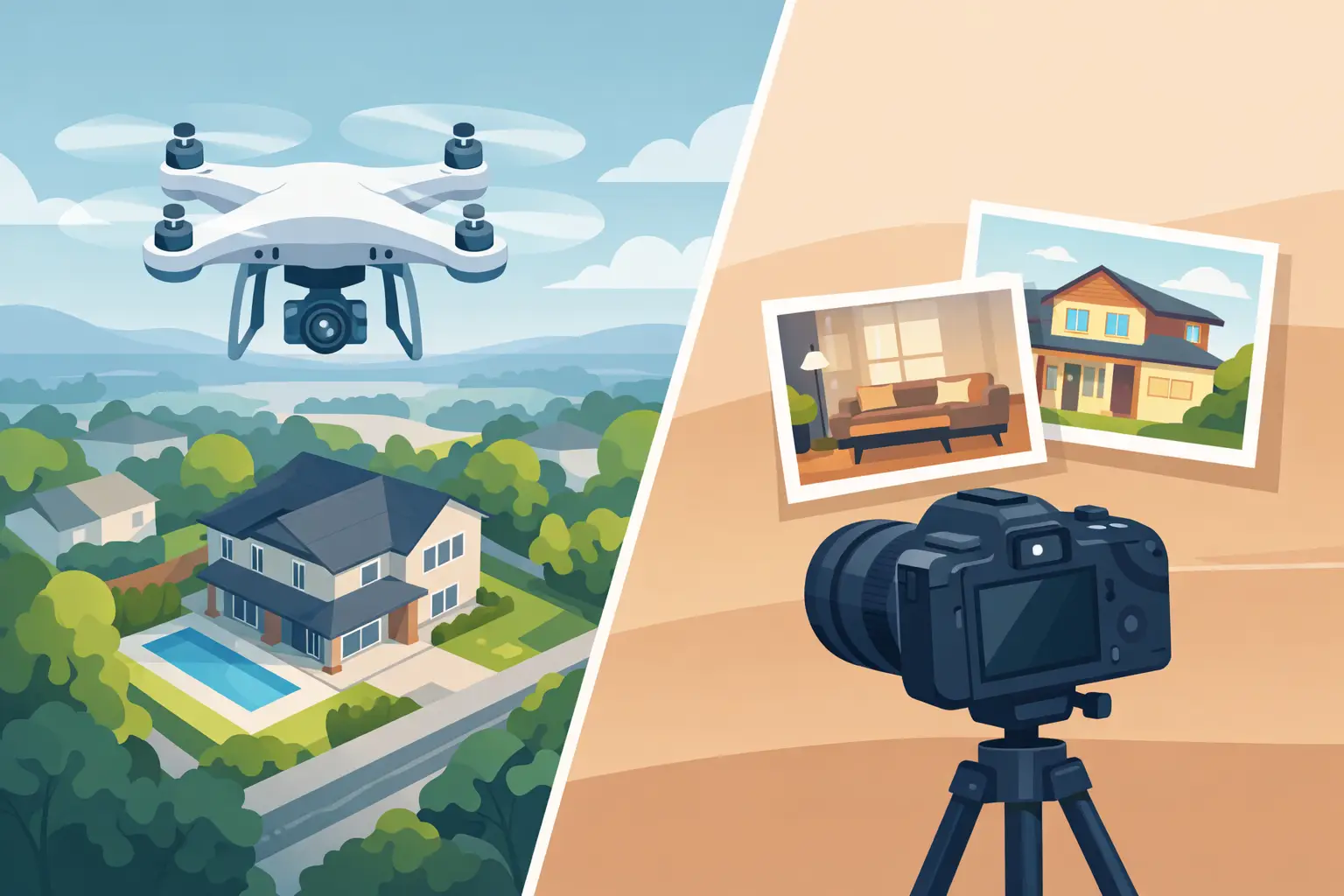
Drone photos vs standard listing photos: what each does best
Standard listing photos carry the load on almost every property. They show layout, light, finishes, condition, and flow from room to room. Buyers use them to answer practical questions fast: Is the kitchen updated? Does the living room feel bright? Is the primary bath worth the asking price? If those answers are not clear, the listing loses momentum.
Drone photos do something different. They provide context. They show the lot, the setting, the approach, the views, nearby water or mountains, and the relationship between structures on the property. Aerials can make a home feel more substantial because they help buyers understand what they are getting beyond the walls.
That difference matters. Standard photos sell the interior experience. Drone photos sell the property story.
When standard listing photos should lead
If you can only invest in one type of media, professional standard photography is usually the first call. That is because most buyers still make their showing decisions based on interior presentation. Bedrooms, living spaces, kitchens, bathrooms, and curb appeal from eye level do the heavy lifting.
This is especially true for smaller in-town homes, condos, townhomes, and properties on compact lots where aerial images may not reveal much that ground-level images cannot. If the main selling point is a renovated kitchen, strong natural light, or a smart floor plan, drone coverage will not carry the same weight as well-composed interior photos.
Standard listing photos also create consistency across platforms. MLS galleries, portals, and social posts still depend on clean, bright, accurate images that make the home look inviting without feeling misleading. Good real estate photography does not just document rooms. It helps buyers imagine themselves moving through the space.
For most listings, that is the baseline requirement.
When drone photos earn their spot
Drone photography pays off when the property has something meaningful to show from above. Acreage is the obvious example, but it is far from the only one. Aerials are valuable when they reveal privacy, lot shape, tree lines, outbuildings, topography, proximity to amenities, or scenic surroundings that buyers cannot fully understand from the driveway.
In the Shenandoah Valley and nearby markets, this comes up often. Homes with mountain views, larger parcels, barns, guest houses, long private drives, creek frontage, or a strong neighborhood setting can benefit from aerial coverage because the land is part of the sale. If buyers are paying for more than the square footage inside the home, the media should prove it.
Drone photos also help with higher-priced listings where perceived value matters early. Aerial images can elevate the presentation and make the listing feel more complete. That does not mean every luxury listing needs drone work by default. It means the right luxury listing often gains from showing the full scale of the property in a way standard photography cannot.
The trade-off agents should think about
Drone shots can grab attention, but they are not a substitute for strong interior photography. This is the mistake that hurts listings. An opening gallery with dramatic aerials may earn the click, but if the interior images are weak, buyers leave fast.
On the other hand, relying only on standard photos can undersell a property with land, views, or a unique setting. In that case, buyers may assume the lot is average or miss features that justify the price.
So the trade-off is simple. Standard photos answer, “Do I want to live in this house?” Drone photos answer, “Do I want this property?” A strong listing knows which question needs more emphasis.
How buyers actually use these images
Buyers rarely view listing photos like photographers. They use them to reduce uncertainty. They want to understand where the home sits, how close the neighbors are, how the yard lays, and whether the setting matches the price. Then they want confirmation that the interior lives up to the outside promise.
That is why sequencing matters. Ground-level curb appeal and key interior rooms should still form the backbone of the gallery. Drone photos work best when they add missing context, not when they crowd out the rooms buyers care about most.
If the aerials show something buyers cannot otherwise tell, they help. If they repeat what is already obvious from standard exterior photos, they are less likely to move the needle.
Which listings benefit most from drone photos vs standard listing photos
The best candidates for drone coverage usually share one thing: the land or location is part of the value proposition. That includes homes on large lots, rural properties, estates, homes with notable views, waterfront or creekside properties, equestrian setups, homes with detached structures, and properties where access or orientation matters.
By contrast, standard listing photos tend to be enough for many suburban resales where the story is mainly inside the home. A neat backyard and nice curb appeal can still be shown effectively from the ground. In those cases, the better investment may be stronger interior coverage, twilight images, or floor plans rather than aerial photography.
This is where experienced guidance matters. The right media package should match the property, not a one-size-fits-all checklist.
Cost, speed, and return on effort
Agents do not need more marketing theory. They need media that helps listings perform without adding friction. Drone photography adds value when it strengthens the presentation enough to increase clicks, justify price perception, or improve showing activity. When it does not, it becomes a nice extra instead of a smart investment.
The good news is that this decision does not have to slow you down. For many agents, the best approach is to build media around the features buyers will care about first. If the home is all about finishes and flow, prioritize standard photos. If the setting is part of the pitch, add drone coverage. If both matter, combine them and keep the gallery focused.
That keeps your marketing efficient and your listing appointment pitch stronger. You are not selling photography for its own sake. You are showing sellers that you know how to position their property to compete.
A smarter way to choose the right media
Think about what would disappoint a buyer if it were missing from the listing. If they showed up and said, “I had no idea the lot was this impressive,” you probably needed drone photos. If they arrived and said, “The kitchen looked better online,” your standard photography needed to do more work.
That simple test helps cut through the noise.
For many agents, the winning formula is not drone photos or standard listing photos. It is standard photos first, with drone coverage added when the property gives buyers a real reason to care about what they can see from above. That approach protects your budget, supports faster decision-making, and keeps the focus where it belongs: more clicks, more showings, and better offers.
If you want your listing media to perform, not just fill a gallery, choose the visuals that tell the truth buyers need to see fast.
Listing photos that sell homes faster.
Professional real estate media with 24-hour delivery across Waynesboro, Staunton, and the Shenandoah Valley.
Book a Shoot