The Future of Drone Photography in Real Estate
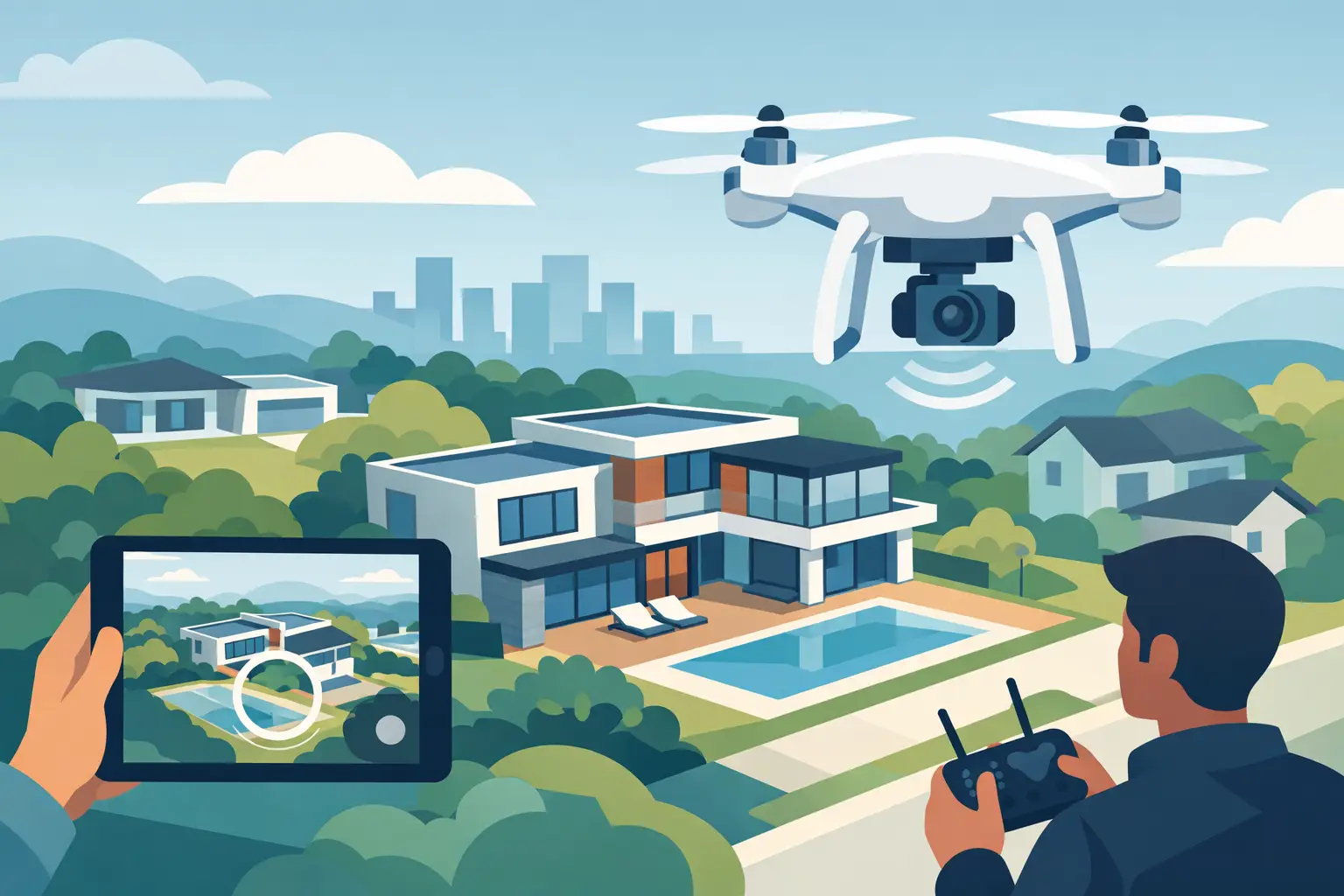
Aerial media used to be the extra line item agents added for luxury listings and acreage. That is changing fast. The future of drone photography in real estate is not about flashy footage for a handful of high-end homes. It is about giving more listings a stronger first impression, better context, and more reasons for buyers to book a showing.
For agents, that shift matters because online attention is harder to win than ever. Buyers scroll quickly, compare instantly, and make snap judgments from thumbnails before they ever read the property description. If your visuals do not communicate setting, scale, and standout features in seconds, you lose clicks. Drone photography is becoming one of the clearest ways to solve that problem.
Why the future of drone photography in real estate looks practical
The biggest change ahead is not style. It is utility.
Aerial photography is moving from “nice to have” to “strategic standard” because it answers buyer questions faster than ground-level images alone. Is the home tucked into trees or sitting wide open? How close is the neighboring property? How large is the lot really? Is there a mountain view, water feature, detached garage, pool, or outdoor living space worth highlighting? A drone can answer all of that in a few frames.
That matters in competitive markets where buyers often decide which homes to tour based on speed and clarity. Listings that remove uncertainty tend to generate better engagement. More engagement often means more showings. More showings create more chances for stronger offers.
This is also why drone media is becoming more useful for everyday residential listings, not just estates. In places like Waynesboro, Staunton, Harrisonburg, and Charlottesville, many homes have location advantages that standard photography cannot fully explain. A property near trails, mountain views, open land, or a walkable neighborhood benefit can gain real marketing lift from an aerial angle.
Buyers want context, not just pretty shots
The old version of drone media leaned heavily on cinematic appeal. There is still room for that, especially in video, but buyers are getting more selective. They do not just want dramatic footage. They want visual proof.
That is where the next phase of aerial content gets stronger. The best drone photography will show context with intention. A wide hero image that frames the home within the lot. A roofline angle that clarifies additions and outdoor features. A front elevation shot that makes the home feel established in its setting. These are not decorative images. They help buyers understand what they are looking at.
For listing agents, that creates a better sales tool in two directions. First, it improves online performance. Second, it strengthens your listing presentation. When you can show sellers exactly how aerial media helps a property stand out, you are not selling photography. You are selling attention and market positioning.
The future of drone photography in real estate is tied to speed
Quality still matters, but speed is becoming part of the value.
Aerial content works best when it fits into a reliable listing workflow. Agents do not want to coordinate one vendor for interior photos, another for drone work, and then wait days for final delivery. As real estate marketing gets more systemized, the providers who win will be the ones who make drone media easy to book, easy to bundle, and fast to deliver.
That is a big part of where the industry is heading. Drone photography is no longer being treated as a specialty add-on that slows the project down. It is becoming part of a repeatable package that supports faster go-live timelines.
For busy agents, this is not a minor operational detail. A delayed listing launch can cost momentum. If aerial media can be captured and delivered alongside the rest of the visual package, it becomes much easier to use consistently. Consistency is what turns better marketing into better business.
Smarter drone use will beat more drone use
Not every listing needs ten aerial images and a long cinematic video. In fact, overusing drone media can weaken a listing if the footage feels repetitive or disconnected from what buyers actually care about.
The future is not about adding more aerial content. It is about using it more precisely.
A suburban home on a compact lot may only need two strong drone images to establish setting and neighborhood appeal. A rural property may need a fuller aerial story to show boundaries, driveway approach, outbuildings, and topography. A home with outdoor upgrades might benefit from overhead angles that connect the patio, pool, and rear elevation in one clean view.
This is where experienced visual strategy matters. The question is not “Can we fly a drone here?” It is “What aerial view will help this listing earn more clicks and more showings?”
Compliance and trust will shape who gets hired
As drone use expands, the market will get more crowded. That usually brings two things: more options and more inconsistency.
Agents should expect drone photography in real estate to become more standardized on the client side and more specialized on the provider side. Sellers and agents will increasingly assume aerial capability is available. At the same time, the difference between a dependable operator and a risky one will become more obvious.
That includes legal flight compliance, safe operation near neighborhoods, weather judgment, image quality, editing consistency, and knowing when a property should not be photographed from certain angles. It also includes communication. If a flight cannot happen because of weather or airspace restrictions, agents need a clear plan, not vague excuses.
In other words, drone work is becoming less about owning equipment and more about running a reliable process. For agents, that is good news. The right partner reduces friction, protects your brand, and keeps the listing on schedule.
Drone photography will work best as part of a full media strategy
Aerial content is powerful on its own, but it performs best when it supports the rest of the listing package.
Drone images get attention. Interior photography builds desire. Floor plans improve understanding. Twilight images add emotion when the home calls for it. Virtual staging helps buyers interpret empty spaces. The future of real estate marketing is not one magic asset. It is a coordinated set of visuals that answer different buyer questions at the right moments.
That is why agents should think less about whether drone photography is “worth it” and more about when it adds the most leverage. On some listings, drone media will be the lead image that wins the click. On others, it will support the story by showing land, privacy, or neighborhood positioning that interior images cannot capture.
The strongest listing campaigns will use each asset with purpose rather than treating every service as a checkbox.
What agents should expect over the next few years
Expect aerial photography to become more common across mid-range listings, especially where lot shape, setting, or nearby amenities affect buyer interest. Expect sellers to ask about it more often in listing appointments. Expect buyers to view missing aerial context as a gap, particularly when the property has outdoor value that deserves to be shown.
You should also expect the bar to rise. Average drone shots will not impress for long. Buyers are already used to seeing aerial images. What will stand out is clean composition, useful angles, accurate color, and media that feels connected to a sales strategy.
This creates an opportunity for agents who want to sharpen their marketing without adding more complexity. When drone photography is part of a dependable, fast-turn process, it helps you present listings at a higher level without adding unnecessary back-and-forth. That matters whether you are trying to win more listings, justify your commission, or build a more premium brand in your market.
Villa Views sees this firsthand with agents who want marketing that is not just polished, but productive. The point is not to chase trends. The point is to use the right media to create more buyer action.
The real advantage is clearer storytelling
The future of drone photography in real estate is not really about drones. It is about clearer storytelling at the moment buyers are deciding what deserves their attention.
A strong aerial image can explain a property faster than a paragraph ever will. It can show scale, setting, privacy, and lifestyle in one glance. When used well, that does more than make a listing look good. It helps the right buyers understand the value sooner, and that is what turns marketing into momentum.
As more agents adopt drone media, the edge will not come from simply offering it. The edge will come from using it with purpose, delivering it fast, and making it part of a listing strategy built to win the click and earn the showing.
Listing photos that sell homes faster.
Professional real estate media with 24-hour delivery across Waynesboro, Staunton, and the Shenandoah Valley.
Book a Shoot