
Guide to Aerial Listing Media for Agents
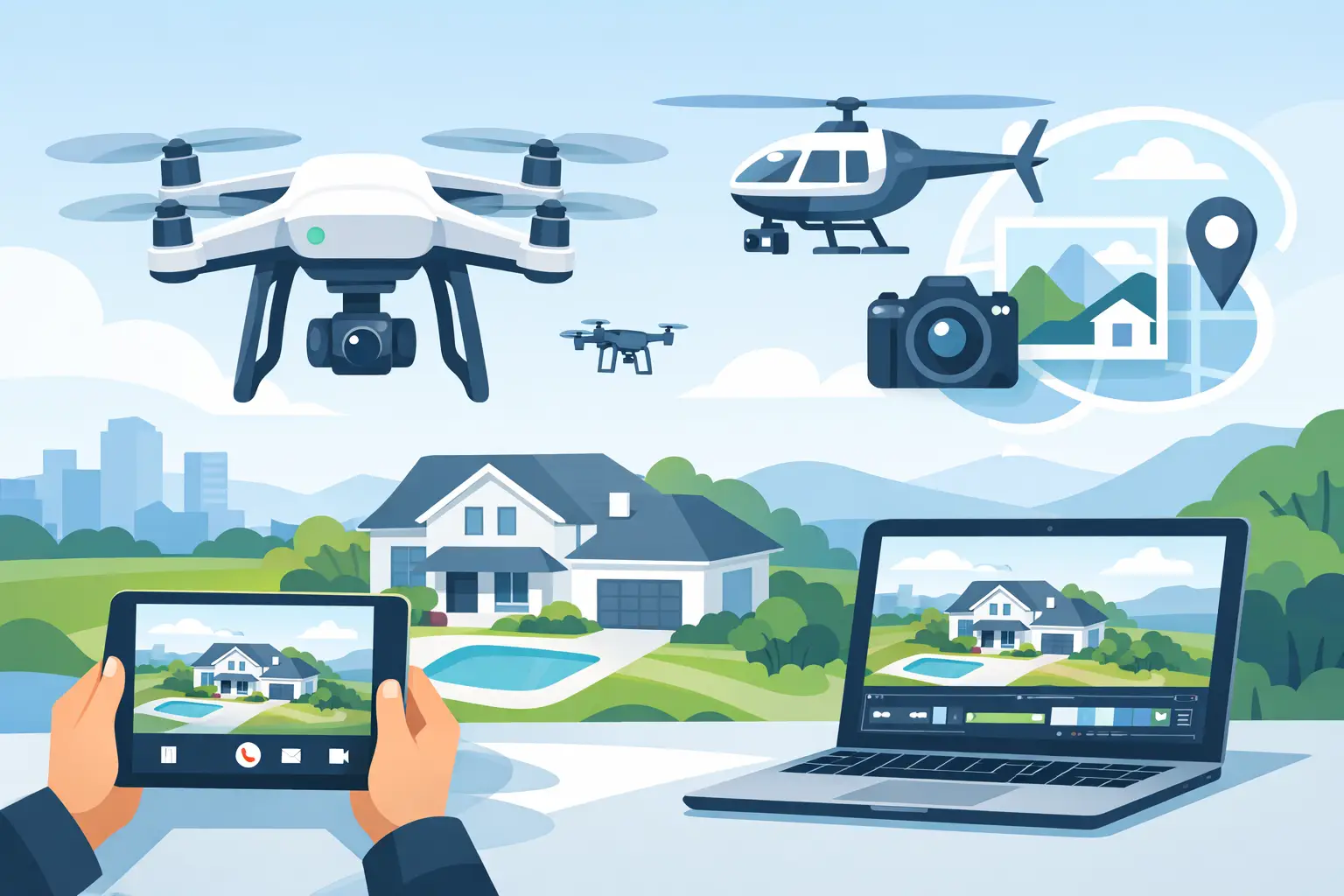
Aerial media can make a listing look expensive, important, and worth a closer look in the first two seconds. It can also waste budget fast if the property, the angle, and the marketing plan do not line up. This guide to aerial listing media is built for agents who need the shot list to support the sale, not just fill space in the gallery.
For the right listing, drone photos and video do three jobs at once. They create a stronger thumbnail in the MLS feed, they answer location questions buyers cannot solve from interior photos, and they help sellers see that your marketing plan goes beyond the basics. That matters in listing presentations, especially when you are competing on professionalism, speed, and perceived value.
What aerial listing media actually sells
The biggest mistake with drone coverage is assuming it sells the house by itself. Usually, it sells context. Buyers use aerial images to understand land shape, setbacks, neighboring properties, views, tree lines, water access, road frontage, and how the home sits on the lot. On some listings, that context is a major value driver. On others, it is barely relevant.
Aerial media tends to perform best when the property has something the ground cannot explain well. Think acreage, mountain views, a long private drive, a corner lot, proximity to a golf course, outbuildings, a pool, a vineyard setting, or a home positioned above surrounding rooftops. In markets around Waynesboro, Staunton, Harrisonburg, and Charlottesville, that often means rural edges, view lots, and homes where land value is part of the story.
If the home is on a tight suburban lot with visible neighboring roofs in every direction, drone coverage may still help, but the value is narrower. A clean overhead to show lot boundaries and one elevated hero image may be enough. More footage does not automatically mean more impact.
A guide to aerial listing media by property type
The best use of aerials changes with the listing.
For standard residential homes in established neighborhoods, aerial photography is usually a support piece. One or two strong images can show the lot, nearby green space, or how close the home is to a desirable feature without overplaying it. In these cases, too much drone content can make the listing feel padded.
For luxury homes, aerial media often carries more weight. Buyers at higher price points expect a fuller visual package, and they are more likely to care about privacy, approach, outdoor living spaces, and the relationship between the house and the land. Here, a mix of stills and short video clips can elevate the presentation and justify the premium feel of the listing.
For rural, farm, or estate properties, aerial coverage is often essential rather than optional. Ground photography cannot explain a ten-acre layout, fencing, barns, trails, or a creek line nearly as efficiently as a few well-planned drone shots. If land is part of the value, aerial media should be part of the core package.
For investment or builder listings, aerials help frame development potential, access roads, neighboring uses, and the broader setting. The visual goal is less emotional and more informational, but it is still sales-driven. Buyers want clarity fast.
Choosing between aerial photos and aerial video
Agents sometimes ask whether they should order drone photos, drone video, or both. The honest answer is that it depends on how the listing will be marketed.
Aerial photos are usually the first priority. They are flexible, MLS-friendly, and easy to use across flyers, social posts, listing presentations, and property sites. A strong still image can communicate value in one glance. If budget is tight, start here.
Aerial video becomes more useful when movement tells the story better than a still frame. Long driveways, approach shots, sweeping views, waterfront edges, and estate entrances all benefit from motion. Video also helps when you want social content that stops the scroll. But video is not a replacement for strong photography. If the stills are weak, adding motion will not fix the presentation.
For many listings, the best answer is a balanced package: a small set of polished aerial stills plus a few purposeful video clips. Enough to create range, not so much that the final media feels repetitive.
What makes aerial listing media effective
The best drone work is not about flying higher. It is about flying with intent.
An effective aerial image has a clear subject. The home should still read as the star, even when the frame includes land or surrounding amenities. If the viewer has to hunt for the house, the shot is not doing its job.
Timing matters too. Midday can work for certain overheads, but softer light often gives aerial images more depth and polish. Seasonal conditions matter just as much. Bare winter trees may reveal lot lines and mountain views more clearly, while spring and summer can make the grounds look fuller and more inviting. Neither is universally better. The property decides.
Weather is another trade-off agents should take seriously. Bright but hazy conditions can flatten distant views. Wind can limit flight options and reduce video smoothness. Overcast skies can work for consistency, but they may not flatter every exterior. Reliable scheduling matters, but so does knowing when a reshoot or slight shift in timing will improve the result.
Common mistakes agents make with drone media
The most common mistake is ordering aerials because they feel premium, not because they support the listing strategy. Buyers notice when a gallery is full of high-altitude filler shots that do not answer any real questions.
Another mistake is failing to plan the story before the shoot. If the selling points are the rear patio, detached garage, and open field behind the house, those need to shape the aerial shot list. Good media starts before takeoff.
Some agents also underestimate compliance and logistics. Drone work is not just another camera angle. Airspace restrictions, weather, privacy concerns, and neighborhood conditions can all affect what is possible on a given property. That is why working with an experienced, licensed operator matters. Fast turnaround is valuable, but safe and legal execution comes first.
Then there is overediting. Saturated grass, fake-looking skies, and overly dramatic color can make aerial images feel less credible. In real estate, polished beats flashy. The goal is to create confidence, not suspicion.
How to decide if a listing needs aerial media
Ask a simple question: what can a buyer understand from the air that they cannot understand from the ground?
If the answer is lot size, layout, view, privacy, access, amenities, or setting, aerials likely deserve a place in the package. If the answer is not much, keep the drone coverage minimal and put budget toward the media that will do more work, such as strong interior photography, twilight images, floor plans, or a virtual tour.
This is where experienced media planning pays off. Not every listing needs the same bundle. A practical media partner will tell you when drone work adds value and when a smaller, smarter order makes more sense.
Using this guide to aerial listing media in your listing presentation
Aerial content does not just help after the listing goes live. It helps you win the listing in the first place.
Sellers want to know how you will make their property stand out. When you can explain exactly why aerial media fits their home, you come across as strategic rather than generic. That is a stronger position than simply saying you offer drone photos on every listing.
Be specific. Tell them aerials will show the full lot, highlight the mountain view, capture the pool and outdoor entertaining space, or clarify the property’s privacy from neighboring homes. Sellers respond to a clear plan. So do buyers.
This approach also protects your marketing budget. Instead of treating drone coverage like a default add-on, you are matching the service to the sale. That is better for your margins, better for your client, and better for the final listing performance.
The best aerial media feels useful, not excessive
When aerial listing media works, it does not call attention to itself as a gimmick. It simply makes the property easier to understand and more compelling to click. That is the standard worth aiming for.
If you are building media for speed, stronger presentation, and more serious buyer interest, use drone coverage where it earns its place. A few well-planned aerial assets will outperform a bloated gallery every time. The smart move is not ordering more media. It is ordering the right media for the story this property needs to tell.
Listing photos that sell homes faster.
Professional real estate media with 24-hour delivery across Waynesboro, Staunton, and the Shenandoah Valley.
Book a Shoot