
Guide to Real Estate Twilight Photography
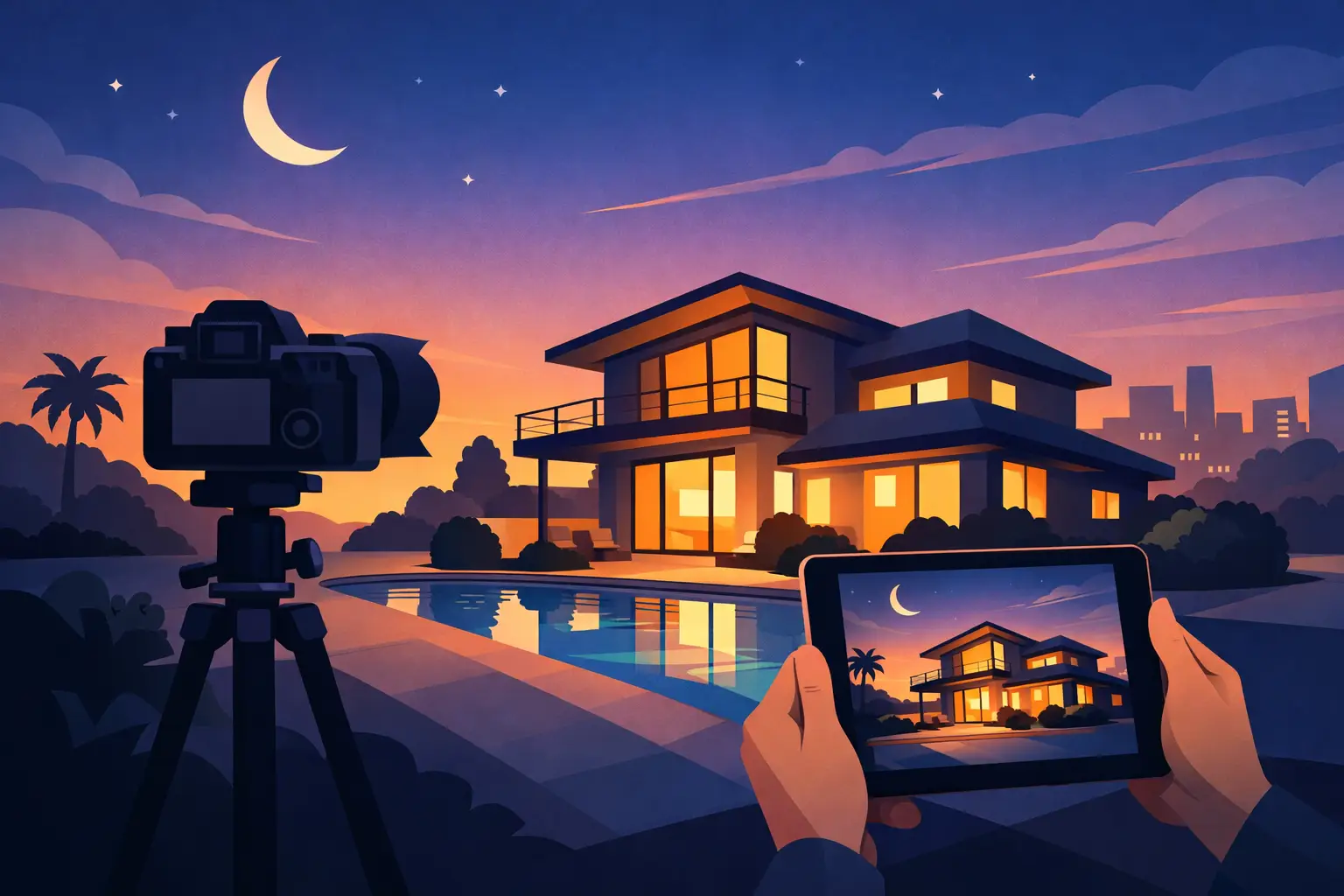
That one listing photo taken just after sunset often does more work than the other 30 combined. Buyers stop scrolling, click through, and start assigning a higher value to the home before they read a single property detail. That is why this guide to real estate twilight photography matters for agents who want stronger listing presentation, more attention online, and better showing momentum.
Twilight images are not for every property. They take more planning, tighter timing, and a seller who is ready on the dot. But when the home, weather, and marketing strategy line up, they can give a listing a premium look that stands out fast – especially in crowded feed-driven markets where first impressions decide whether a buyer clicks or keeps moving.
What real estate twilight photography actually does
A strong twilight photo compresses a lot of marketing value into one frame. It highlights warm interior lighting, clean landscaping, pool lighting, outdoor entertaining areas, and architectural lines in a way daytime photography usually cannot. The result is less about documenting the property and more about shaping perceived desirability.
For agents, that matters because buyers shop with emotion before they justify with logic. A twilight exterior can make a home feel private, upscale, calm, and move-in ready. That emotional lift often translates into higher engagement on the MLS, better performance on social media, and stronger visual credibility in listing presentations.
There is also a branding benefit. If your marketing consistently looks sharper than competing agents in your farm area, sellers notice. Twilight photography is one of those details that helps communicate, without saying it directly, that you market homes at a higher level.
When to use this guide to real estate twilight photography
Twilight is a strategic upgrade, not an automatic add-on. Some listings benefit a lot. Others do just fine with strong daytime coverage.
The best candidates usually have exterior lighting, large windows, outdoor living spaces, pools, fire pits, custom landscaping, or an upscale front elevation. Homes with a dramatic approach, strong symmetry, or warm interior finishes also tend to photograph well at dusk. If a property looks especially attractive when lights are on, twilight has a job to do.
The less obvious truth is that twilight can also help average homes look more polished, but only up to a point. If the driveway is cracked, the porch light colors don’t match, and the landscaping is thin, the softer evening light will not magically fix weak presentation. Twilight improves good preparation. It does not replace it.
Timing is the whole game
Twilight photography happens in a narrow window. That is what makes it effective and what makes it easy to get wrong.
The sweet spot usually lasts only a few minutes, often shortly after sunset when the sky still holds deep blue color but the home lighting reads warm and balanced. Too early and the sky feels flat while exterior lights look weak. Too late and the house can fall into muddy shadow or pick up heavy contrast that looks less natural.
This is why seller readiness matters more for twilight than daytime sessions. Every interior light that should be on needs to be on. Cars need to be gone. Patio furniture should be in place. Pool lights need to work. If the homeowner is still wiping counters while the sky is changing, you miss the shot.
For busy agents, that is one of the main trade-offs. Twilight can deliver premium marketing assets, but it demands precision from everyone involved.
Prep the property for twilight results
A twilight shoot starts long before the camera comes out. The property has to be staged for exterior performance.
The first priority is lighting consistency. Replace burnt-out bulbs and make sure color temperatures match as closely as possible. Mixed bulbs can create a patchy look where one window reads warm yellow and another reads cold blue. That inconsistency stands out more at dusk than agents expect.
Next, clean up the exterior with intention. Bring in cushions, straighten furniture, sweep porches, skim the pool if there is one, and hide bins and hoses. Twilight draws attention to atmosphere, which means distractions become more obvious. A glowing patio looks great. A glowing patio with a leaf blower in the corner does not.
Window treatment matters too. Open blinds where appropriate to let interior light glow outward, but be selective. A wall of crooked mini blinds can hurt more than help. In some homes, a cleaner look comes from keeping certain rooms simple and not trying to showcase every space from the exterior.
Finally, think about curb composition. If the hero shot is from the front, make sure the landscaping, walkway, and entry sequence look intentional. If the value is in the backyard, the outdoor area should be fully set and lit before the sun starts dropping.
Weather can help or hurt
Not every evening is a twilight evening. A clear sky can work beautifully, but a little cloud texture often makes the final image stronger by adding depth and color to the background. On the other hand, heavy overcast usually flattens the scene and removes the dramatic sky buyers respond to.
Wind is another factor that gets overlooked. If trees are moving heavily or patio umbrellas are shaking, the polished feel of the image drops fast. Light rain can sometimes create moody reflections, but in real estate marketing it usually adds risk, delay, and prep headaches with limited upside.
The practical takeaway is simple: twilight should be scheduled with some flexibility when possible. If the listing timeline is tight, you may have to shoot in less-than-perfect conditions. But if the property is premium and the images are a key part of launch strategy, waiting for the right evening can be worth it.
Why professional execution matters more at dusk
Twilight looks simple when you see the finished image. It is not simple in the field.
The photographer has to balance ambient sky light, interior light, exterior fixtures, and the reflective surfaces on the property without making the image look fake or overprocessed. Vertical lines need to stay clean. Window glow should feel natural. The sky should hold color without turning electric blue. Exposure blending and careful editing often play a major role.
That is where agents can lose time and money trying to cut corners. A weak twilight image is worse than no twilight image at all because it signals inconsistency. If the front of the home is too dark, the lights blow out, or the colors feel unnatural, the listing can end up looking cheaper instead of more premium.
For agents who sell multiple listings a month, consistency matters as much as quality. A dependable media partner with a clear prep process, a defined booking workflow, and fast turnaround is often more valuable than chasing a one-off artistic shot that creates scheduling friction.
How to use twilight images in your listing marketing
The best twilight photo is usually the attention-grabber, not the entire gallery. In most cases, one to three twilight exteriors are enough. The main role is to lead the marketing, stop the scroll, and elevate perceived value before buyers move into the full daytime set.
That means your strongest twilight frame often belongs in the cover position for the MLS when rules allow, as the lead image in social promotion, and in listing appointment materials when you are demonstrating the difference between standard marketing and high-conversion presentation.
There is a practical side here too. If a property has great daylight interiors and a dramatic dusk exterior, the combination works better than forcing the whole shoot into twilight. Buyers still need clear, accurate daytime views of layout, finishes, and room relationships. Twilight should add impact, not replace utility.
Common mistakes agents can avoid
The most common mistake is ordering twilight because it sounds premium without asking whether the property is actually a fit. The second is poor prep. The third is trying to squeeze the session into a seller schedule that leaves no room for timing discipline.
Another issue is expecting twilight to fix a stale listing by itself. It can help re-energize attention, but it works best as part of a full visual strategy that includes strong daytime photography, clean property prep, and accurate pricing. Better photos can increase clicks and showings. They cannot solve every marketing problem upstream.
If you work in markets like Waynesboro, Staunton, Harrisonburg, or Charlottesville, where listings often compete on both lifestyle and value, twilight can be a smart differentiator when the home has the right visual assets. Used selectively, it gives you a sharper tool for the listings where presentation really moves the needle.
A good twilight image makes buyers feel something before they compare square footage. That is the real advantage. When the property is ready and the timing is right, twilight photography does more than make a listing look nice – it gives the home a stronger case for the click, the showing, and the offer.
Listing photos that sell homes faster.
Professional real estate media with 24-hour delivery across Waynesboro, Staunton, and the Shenandoah Valley.
Book a Shoot