
A Listing Media Script That Wins Appointments
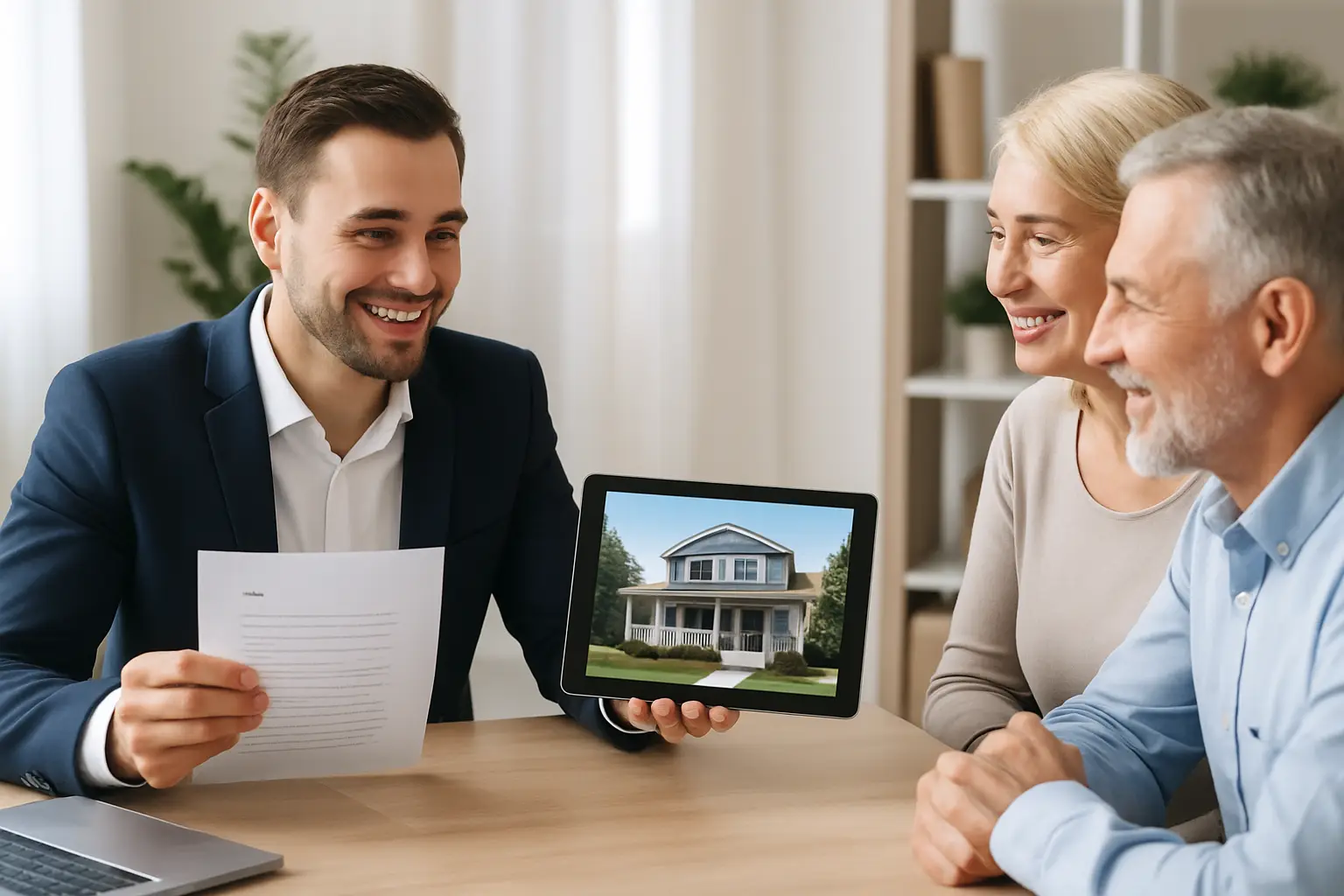
Your seller is watching you like a hawk in the first five minutes.
Not because they are trying to be difficult – but because they have one real question: “Are you going to get my home in front of the right buyers fast, and are you going to make it look worth the price?”
That’s why listing media belongs early in your appointment. Not as a throwaway “we do pro photos,” but as a simple, confident plan tied to clicks, showings, and offers.
Below is a realtor listing appointment media script you can use as-is or tailor to your market. It’s built to sound natural in a living room, not like a pitch deck. It also includes a few “if they say X, you say Y” moments so you can handle the common objections without getting defensive.
The realtor listing appointment media script (spoken)
“Before we talk about price, I want to talk about marketing – because marketing is what creates the showing activity that protects your price.
Most buyers are going to meet your home online first. They’re scrolling fast, comparing options fast, and deciding what’s worth touring in person. So our job is to win that first impression and get them to click, save, and schedule a showing.
That starts with professional media – not because it’s trendy, but because it consistently drives more views and more in-person interest.
Here’s the plan I use for every listing, and I tailor it based on your home’s strengths and your timeline.”
Step 1: “We prep the home for camera, not just for company”
“I’ll give you a simple prep checklist, and I’ll walk through the home with you quickly to flag the few things that actually matter on camera. The goal is not perfection. The goal is clean sightlines, good light, and rooms that feel easy to move through.
Little adjustments – like how we set the bedding, clear the counters, or open the blinds – change how big and bright the home feels online. That directly impacts whether someone books a showing.”
Step 2: “We lead with photos that earn the click”
“Your main photos are your ad. They’re what buyers see on the search results page and the listing grid. If the images look dark, cramped, or inconsistent, buyers assume the home is harder to live in or not worth the price.
We use professional listing photography so the home looks clean, accurate, and inviting – with straight lines, true-to-life color, and a consistent feel room to room. That’s how you get more clicks, more saves, and more showing requests.”
Step 3: “We add the right upgrades based on the home”
“Not every home needs every media add-on. I build a package that matches what will move the needle.
If you have land, views, outbuildings, or a neighborhood setting that matters, we use aerial. If the layout is a big selling point, we add a 3D tour and floor plan. If we’re targeting buyers relocating or shopping from out of town, those tools help them commit to a showing sooner.
And if we’re positioning the home as a premium listing, twilight images can make the curb appeal feel high-end and stand out in a feed full of midday shots.”
Step 4: “We launch fast, then we watch the market respond”
“Speed matters. The first week is when you get the highest attention. We want your listing to hit the market looking its best, with full media live, so we don’t waste that early demand.
Once we launch, we pay attention to the signals: online views, saves, showing volume, and buyer feedback. If activity is strong, we protect your price. If it’s soft, we adjust quickly – because sitting is what costs money.”
What to say when sellers ask, “Do we really need all that?”
“Fair question. You don’t need ‘all the things.’ You need the right things.
Here’s how I think about it: buyers choose what to tour based on what they can understand and feel online. Photos are the baseline. Then we pick the add-ons that remove uncertainty.
If the home sells on space and flow, 3D and floor plans help. If it sells on setting, aerial helps. If it sells on lifestyle and emotion, video and twilight help.
So I’m not here to upsell you. I’m here to make sure your home competes, and that we’re not leaving showings on the table.”
What to say when they say, “My friend just used an iPhone”
“I’ve seen iPhone listings sell too – especially when inventory is tight. The question is what you give up.
Phone photos tend to create two problems: they don’t show space accurately, and they don’t present the home consistently. Buyers may still click, but you usually get fewer high-intent showings, and you can invite lowball thinking because the home doesn’t look as polished as competing listings.
If your goal is to sell quickly and protect the strongest price the market will support, professional media is one of the easiest advantages to control.”
What to say when they say, “We don’t want the house all over the internet”
“I respect that. We can be smart about it.
In most cases, the best results come from broad exposure because that’s how you create competition. But we can talk about what you’re comfortable with – for example, timing the public launch, limiting certain angles, or making sure personal items and sensitive information are removed.
My job is to balance privacy with performance so you don’t pay a price for caution you didn’t mean to take.”
What to say when they ask, “How is this different from other agents?”
“A lot of agents say ‘professional marketing.’ The difference is that I run it like a repeatable process.
We prep the home for camera, we produce the media fast, and we launch with a complete presentation. Then we track response and adjust based on what buyers are doing, not what we hope they’ll do.
That consistency matters because buyers compare homes side by side. When your listing looks more premium online, you attract more serious buyers and you tend to get cleaner negotiations.”
How to tailor the script by price point
You can use the same structure for every listing, but your emphasis should change depending on the home.
Entry-level and mid-market homes
Keep it simple and confidence-based. Sellers here often worry about cost, but they also need speed.
Use language like: “We’re going for maximum attention in week one” and “We want the listing to look like the best value in its bracket.” Focus on photography as the baseline and add floor plans or a 3D tour when layout is a common deal-breaker.
Move-up and premium homes
These sellers care about positioning and buyer quality. Talk about brand impression.
Use language like: “We’re competing for the buyer who can pay your price comfortably” and “We’re creating a premium first impression before someone ever books a private showing.” Twilight, drone, and video become easier to justify here because the cost of a weak launch is higher.
Unique properties and rural listings
Lead with clarity. Buyers hesitate when they can’t understand what they’re getting.
Use language like: “We’re going to remove uncertainty” and “We’ll show the full scope – home, land, access, and outbuildings – so the right buyer self-selects faster.” Aerial, floor plans, and a 3D tour often do real work on these.
A short version you can use in the first 60 seconds
If you want a tight opener that doesn’t feel like a monologue, use this:
“Buyers meet your home online first, and they decide quickly what’s worth touring. So we’re going to launch with professional media that makes the home look clean, bright, and accurate – and then we’ll add the pieces that help buyers understand the layout and the setting. More clarity online means more showings, and more showings is what protects your price.”
How to make this script feel real (not rehearsed)
The words matter less than the order and the intent. If you want this to land, do three things.
First, point to something in the home. “This kitchen photographs well because of the natural light,” or “The backyard is a selling feature, so aerial will help.” When you connect media choices to the actual property, it stops sounding generic.
Second, tie everything back to buyer behavior. Sellers don’t wake up excited about a 3D tour. They do care about fewer days on market, more showings, and stronger offers.
Third, be honest about trade-offs. If a home is cluttered or mid-renovation, say: “We can still shoot, but the media will reflect what’s here. If we want top-dollar attention, I recommend we spend two hours prepping so the listing hits the market clean.” That kind of candor builds trust.
A practical note on execution
Your script works best when your vendor workflow is predictable. Sellers can feel the difference between “we’ll figure it out” and “here’s what happens next.”
If you want an example of productized listing media that’s built for speed and consistency – photography, drone, 3D tours, twilight, virtual staging, and floor plans with straightforward scheduling – that’s exactly how we run it at Villa Views.
The strongest version of you in a listing appointment is calm, specific, and outcome-focused. Sellers don’t need more hype. They need a plan that sounds like it will happen on time, look great online, and create the kind of demand that makes negotiating easy.
Listing photos that sell homes faster.
Professional real estate media with 24-hour delivery across Waynesboro, Staunton, and the Shenandoah Valley.
Book a Shoot