
Review Virtual Staging for Vacant Listings
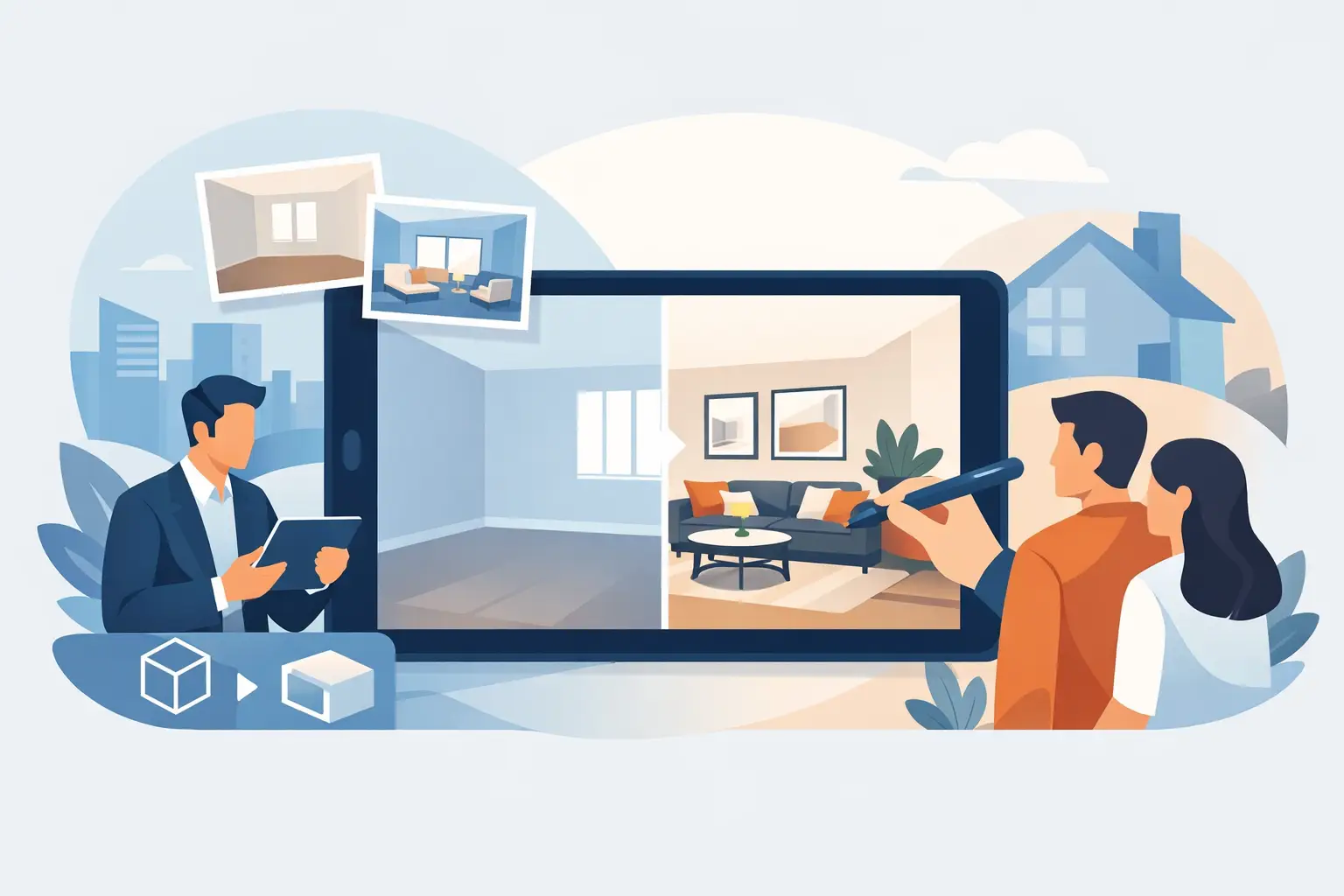
A vacant listing can look clean in person and still fall flat online. Buyers scroll fast, and empty rooms rarely help them picture scale, function, or how the home could actually live. That is why agents often need to review virtual staging for vacant listings before they decide how to market a property, especially when the goal is simple: more clicks, more showings, and fewer days spent explaining “the room is bigger than it looks.”
Virtual staging is not magic, and it is not the right call for every property. But when it is used well, it solves a very specific problem. It gives buyers a visual starting point without the cost, scheduling, and logistics of hauling in physical furniture for a short-term listing campaign.
Why review virtual staging for vacant listings at all?
Because vacant homes ask buyers to do too much work.
Most buyers are not designers. They are not mentally dropping a sectional into the living room, measuring a king bed in the primary suite, or deciding whether that odd bonus room should be an office, nursery, or workout space. When listing photos leave all of that unanswered, buyers tend to move on to the next home that feels easier to understand.
That is where virtual staging earns its keep. It can define a room, soften empty space, and give buyers context in the first few seconds. For agents, that often means stronger online presentation, a more polished listing image, and better engagement before the first showing is even booked.
Still, results depend on execution. A bad virtually staged image can hurt trust faster than an empty room ever would. If the furniture scale is off, the style fights the house, or the edits look fake, buyers notice. So the real question is not whether virtual staging exists. It is whether it helps this listing sell better.
What virtual staging does well
At its best, virtual staging makes a vacant home easier to read.
A large family room can suddenly look proportionate instead of awkwardly empty. A small bedroom can show that it works as a real bedroom, not just a box with a window. An open-concept area can be broken into a dining zone and living zone so buyers understand the flow. That kind of clarity matters because buyers are making snap decisions from a phone screen.
It also helps protect a listing from one of the biggest online problems vacant homes face: they can look colder, smaller, and less inviting than they actually are. Empty rooms often emphasize blank walls, harsh light, and floor space without giving the eye anywhere to land. Good staging gives shape to the image. It creates a focal point and makes the room feel usable.
There is also a practical budget advantage. Physical staging can be worth it on the right listing, but it is a bigger commitment in cost, timing, and coordination. Virtual staging gives agents a faster way to improve presentation when the property needs help now, not after a furniture install schedule opens up.
Where virtual staging can go wrong
This is the part agents should take seriously.
Virtual staging works best when the underlying photography is strong. If the room is poorly lit, shot from the wrong angle, or missing key views, digital furniture will not fix the core problem. It may even make the image feel more artificial. Clean composition and accurate room representation still come first.
Style mismatch is another common mistake. A modern luxury setup inside a modest ranch can feel dishonest. The goal is not to impress with trendy furniture for its own sake. The goal is to help the likely buyer imagine living there. That means the staging should fit the price point, architecture, and buyer profile.
There is also a compliance and expectation issue. Buyers should not feel misled. If a room has flaws, awkward dimensions, or layout limitations, staging should not hide them. It should interpret the space honestly. The best virtually staged photos make a home feel more understandable, not more fictional.
How to review virtual staging for vacant listings the right way
Start with the question that matters most: what is confusing or underperforming in the empty photos?
If the answer is “nothing,” you may not need staging. Some homes photograph beautifully vacant, especially new construction, highly updated properties, or homes with standout architecture. In those cases, clean, bright, empty-room images can feel intentional and high-end.
But if the listing has a large undefined room, an awkward secondary bedroom, a basement flex area, or a main living space that looks smaller online than it feels in person, staging is usually worth reviewing. These are the rooms where context drives buyer action.
Next, look at likely buyer objections. Are people going to question whether the dining area fits a real table? Will they wonder how to use the loft? Is the living room shape unclear? Virtual staging is most effective when it answers specific doubts that could keep someone from scheduling a showing.
Then consider market position. In more competitive segments, where several listings are chasing the same buyer pool, polished presentation matters more. If nearby homes already look dialed-in online, bare rooms can make your listing feel less finished, even if the property itself is strong.
Which rooms usually deserve staging first
Not every room needs it.
The living room, primary bedroom, dining area, and flex spaces usually provide the best return because they help define how the home lives. Buyers care about where they will gather, sleep, work, and eat. If those spaces feel clear in photos, the listing often performs better overall.
Secondary bathrooms, laundry rooms, and utility spaces rarely need virtual staging. Kitchens are another case where less is often more. If the kitchen is updated and photographs well, adding digital decor can clutter the image instead of helping it.
For most listings, selective staging beats overdoing it. A handful of strategically staged images can carry the story without making the whole gallery feel overproduced.
Empty vs virtually staged photos
This is not always an either-or choice.
In many cases, the strongest approach is to use virtually staged images to lead with impact while still keeping the photography grounded in reality. That balance helps buyers connect emotionally without feeling tricked. It also gives agents more flexibility across the MLS, social media, listing presentations, and property marketing.
The trade-off is straightforward. Empty photos show the property exactly as it is, but they often ask more imagination from the buyer. Virtually staged photos build emotional connection and room clarity, but only if they are realistic and professionally handled.
If the home has unusual dimensions, premium finishes, or design details that should stand on their own, empty photos may carry more authority. If the space is hard to interpret or feels cold online, staged images usually do more selling.
What agents should expect from a quality provider
If you are outsourcing virtual staging, speed and consistency matter almost as much as the final image.
You want edits that match the home, not random furniture dropped into a file. You want natural proportions, clean shadows, and a style that supports the listing price point. And you want a process that does not create more back-and-forth when you are trying to launch quickly.
This is especially relevant for agents managing multiple listings across markets like Waynesboro, Staunton, Harrisonburg, and Charlottesville, where timing can be the difference between riding launch-week momentum and missing it. A polished result delivered fast is not just a convenience. It supports showings while buyer attention is highest.
A good provider also understands the bigger goal. Virtual staging is not decoration. It is marketing. The finished image should help the listing earn attention, communicate value, and move buyers one step closer to booking a showing.
The real verdict on virtual staging
When agents review virtual staging for vacant listings, the smartest answer is usually not “always” or “never.” It is “when the photos need help telling the story.”
Used selectively and done well, virtual staging can make vacant listings feel warmer, clearer, and more clickable. It can reduce buyer uncertainty, improve first impressions, and help the home compete online where the sale often starts. Used poorly, it can make a listing feel overedited and raise doubts that do not need to exist.
The best standard is simple: if staging helps buyers understand the home faster and believe in the space more easily, it is doing its job. If it distracts from the property or creates a version of the home that buyers will not recognize in person, it is working against you.
For busy agents, that is the filter worth keeping. Choose the option that makes the listing easier to shop, easier to trust, and easier to say yes to when the showing request comes in.
Listing photos that sell homes faster.
Professional real estate media with 24-hour delivery across Waynesboro, Staunton, and the Shenandoah Valley.
Book a Shoot