
Virtual Staging vs Empty Room Photos
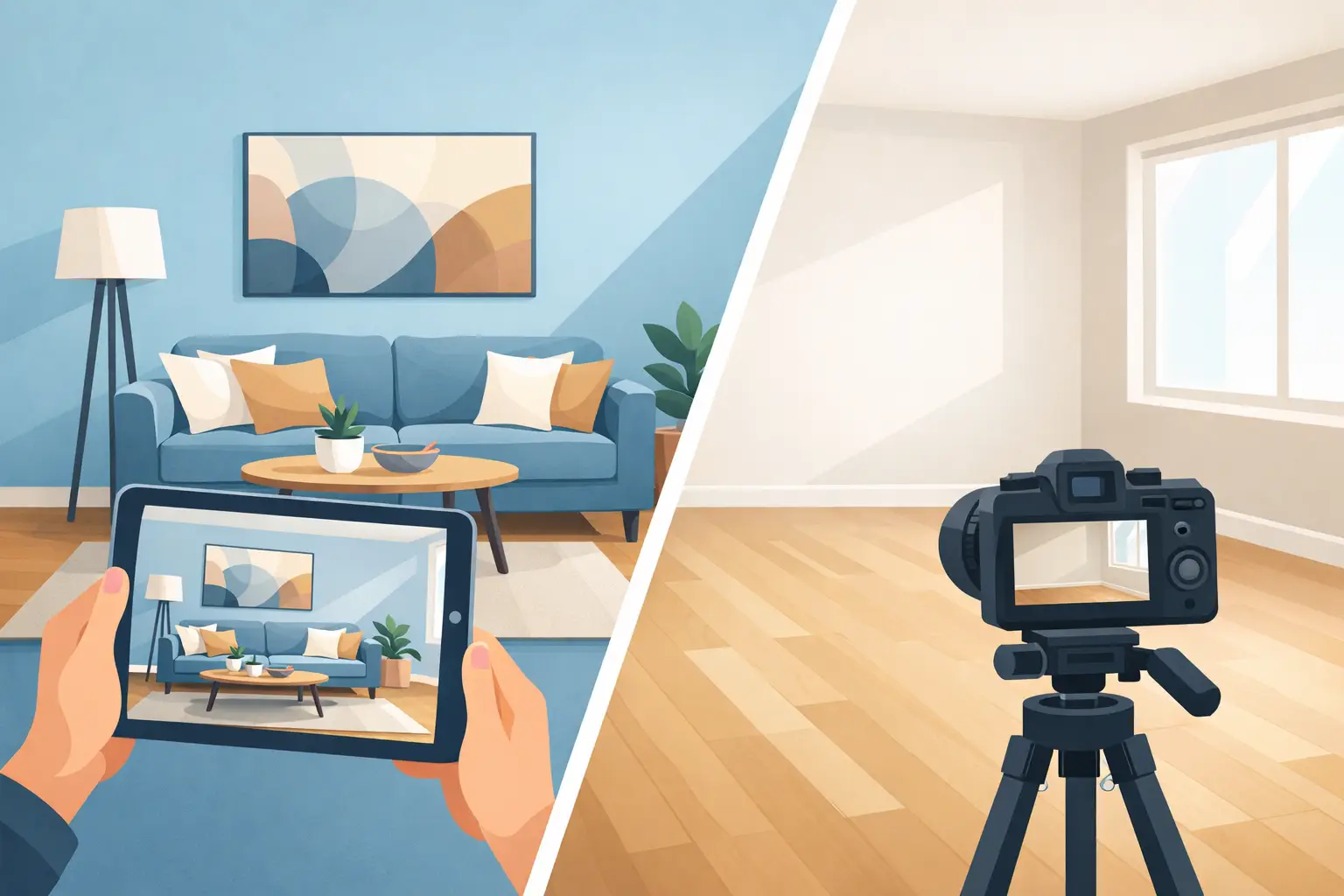
A vacant living room can make a $600,000 listing feel smaller, colder, and harder to place. That is the real issue behind virtual staging vs empty room photos. Buyers are not just judging square footage. They are deciding, in a few seconds, whether a home feels worth seeing in person.
For agents, that decision shows up fast in clicks, saves, showings, and the tone of buyer feedback. Empty room photos are honest and straightforward, but they often leave too much work for the buyer’s imagination. Virtual staging can create instant context and emotional pull, but only when it is done cleanly and used in the right situations. The better choice depends on the property, the likely buyer, and how competitive you need the listing to look online.
Virtual staging vs empty room photos: what changes buyer response?
The biggest difference is not cosmetic. It is psychological. Empty rooms show the space exactly as it is, but they often photograph flat. Wide-angle images can still look bare, and buyers may struggle to judge scale, furniture placement, or how a room is supposed to function.
Virtual staging answers that problem by giving the room a purpose. A spare bedroom becomes a home office. An awkward nook turns into a reading area. An open-concept main floor starts to read as a defined living and dining space instead of one large blank area. That added context can improve first impressions quickly.
This matters because most buyers meet the home online before they ever step through the door. If the listing photos do not hold attention, the showing may never happen. In that sense, virtual staging is less about decoration and more about reducing uncertainty.
That said, empty room photos still have value. Some buyers prefer a clean, undecorated look because it feels more transparent. Investors, renovators, and experienced buyers may want to assess layout and condition without any visual layer added. In higher-end homes with strong architecture, quality finishes, or standout windows and natural light, empty rooms can also perform well because the property itself carries the image.
When empty room photos work best
There are times when empty room photos are the right call, and forcing virtual staging would not improve the listing.
If the home has just been renovated, bare rooms can highlight new flooring, fresh paint, trim work, and other finish details. In these cases, the clean look supports the message that the home is move-in ready. The same can be true for new construction, where buyers often expect a crisp presentation and want to focus on materials, layout, and natural light.
Empty room photos also make sense when the floor plan is simple and intuitive. If buyers can understand the room at a glance, staging may add little. And if the listing price point or expected days on market do not justify extra marketing layers, simple professional photography may be enough.
The key phrase there is professional photography. Empty rooms are much less forgiving than furnished ones. Lighting, composition, window balance, and perspective all have to work harder because there is no furniture to soften the scene or guide the eye. A vacant room photographed well can feel bright and clean. A vacant room photographed poorly feels unfinished.
When virtual staging earns its keep
Virtual staging tends to deliver the best return when a room is hard to read or when the listing needs more stopping power in a crowded feed.
Vacant condos, spec homes, inherited properties, and partially updated homes are common examples. These listings often have good bones but lack warmth. Buyers scroll past them because the rooms do not tell a clear story. With virtual staging, you can show how the room lives, not just how it measures.
This is especially useful for smaller bedrooms, basement bonus rooms, lofts, and open living areas. Buyers regularly misjudge these spaces in empty photos. They either think the room is too small or cannot figure out what fits. Staging solves that by answering the question before it becomes an objection.
There is also a branding advantage for agents. A listing with polished, believable virtual staging can look more complete and market-ready from day one. That helps in listing presentations too. Sellers want to know how you will make their property stand out. A smart media plan is a stronger answer than hoping buyers will imagine the potential on their own.
The trade-offs agents should think about
The debate around virtual staging vs empty room photos is not about right or wrong. It is about fit.
Virtual staging usually wins on attention. The photos feel warmer, more aspirational, and easier to connect with emotionally. That can lead to better online engagement and more showing interest.
Empty room photos usually win on absolute transparency. What buyers see is exactly what is there. That can reduce the chance of disappointment if someone walks in expecting a room to feel fuller or larger because of the staging choices shown online.
There is also a quality question. Strong virtual staging looks natural, respects scale, and matches the home’s style. Weak virtual staging does the opposite. Oversized furniture, trendy decor that clashes with the property, or unrealistic lighting can hurt trust fast. If buyers think the listing photos are trying too hard, the marketing starts working against you.
That is why the standard matters more than the tool. Virtual staging is powerful when it is believable. Empty room photography is effective when the room has enough visual strength to stand on its own.
A practical approach: use both strategically
For many listings, the best answer is not choosing one over the other. It is using both with intent.
You might lead the gallery with virtually staged versions of the main living room, primary bedroom, and dining area because those are the spaces where buyers most need context. Then you can include corresponding empty room photos later in the gallery or use unstaged images for secondary rooms where function is already obvious.
This approach gives you the benefit of emotional appeal without giving up clarity. It also helps set realistic expectations for showings. Buyers get inspired by the staged version, but they are not left guessing that the room comes furnished.
If you take this route, disclosure matters. Buyers should understand that the furniture is digitally added. That is not just best practice. It protects trust and keeps the conversation focused on the home rather than the marketing.
How to decide for your next listing
Start with the buyer, not the room. Ask what this audience needs in order to say yes to a showing.
If you are marketing to first-time buyers or move-up buyers who respond to lifestyle cues, virtual staging often helps. These buyers tend to engage more when the home feels livable and easy to picture. If you are marketing to builders, investors, or buyers who care mainly about footprint and condition, empty room photos may be enough.
Next, look at competition. If similar listings nearby are professionally marketed with staged imagery, bare rooms may feel underpowered by comparison. In competitive markets like Charlottesville or Harrisonburg, where buyers often decide quickly which homes make the short list, presentation can directly affect showing volume.
Then consider the room itself. Does it have clear purpose, strong light, and attractive finishes? Empty photography may work fine. Does it feel awkward, small, or undefined? That is where virtual staging can change the result.
Finally, weigh the cost against the listing opportunity. A modest add-on that improves perceived value and drives more buyer action is often easier to justify than a price reduction after weak launch performance.
What sellers need to hear
Sellers do not always understand why empty rooms can underperform online. Many assume vacant means clean and clean means better. Sometimes that is true. Often it is not.
The conversation is easier when you frame it around buyer behavior. Buyers scroll quickly. They compare homes side by side. They respond to rooms that feel clear, usable, and inviting. Marketing should make the next step easy, which is booking a showing.
That is the real measure. Not whether the photos look fancy, but whether they help turn online attention into in-person traffic.
For agents who want reliable results, the smartest choice is usually the one that reduces buyer guesswork and makes the listing feel ready now. Sometimes that is an expertly photographed empty room. Sometimes it is tasteful virtual staging. The win comes from knowing the difference and using the option that gives your listing the best chance to earn the click, the showing, and the offer.
Listing photos that sell homes faster.
Professional real estate media with 24-hour delivery across Waynesboro, Staunton, and the Shenandoah Valley.
Book a Shoot