
Virtual vs Physical Staging: What Sells Faster?
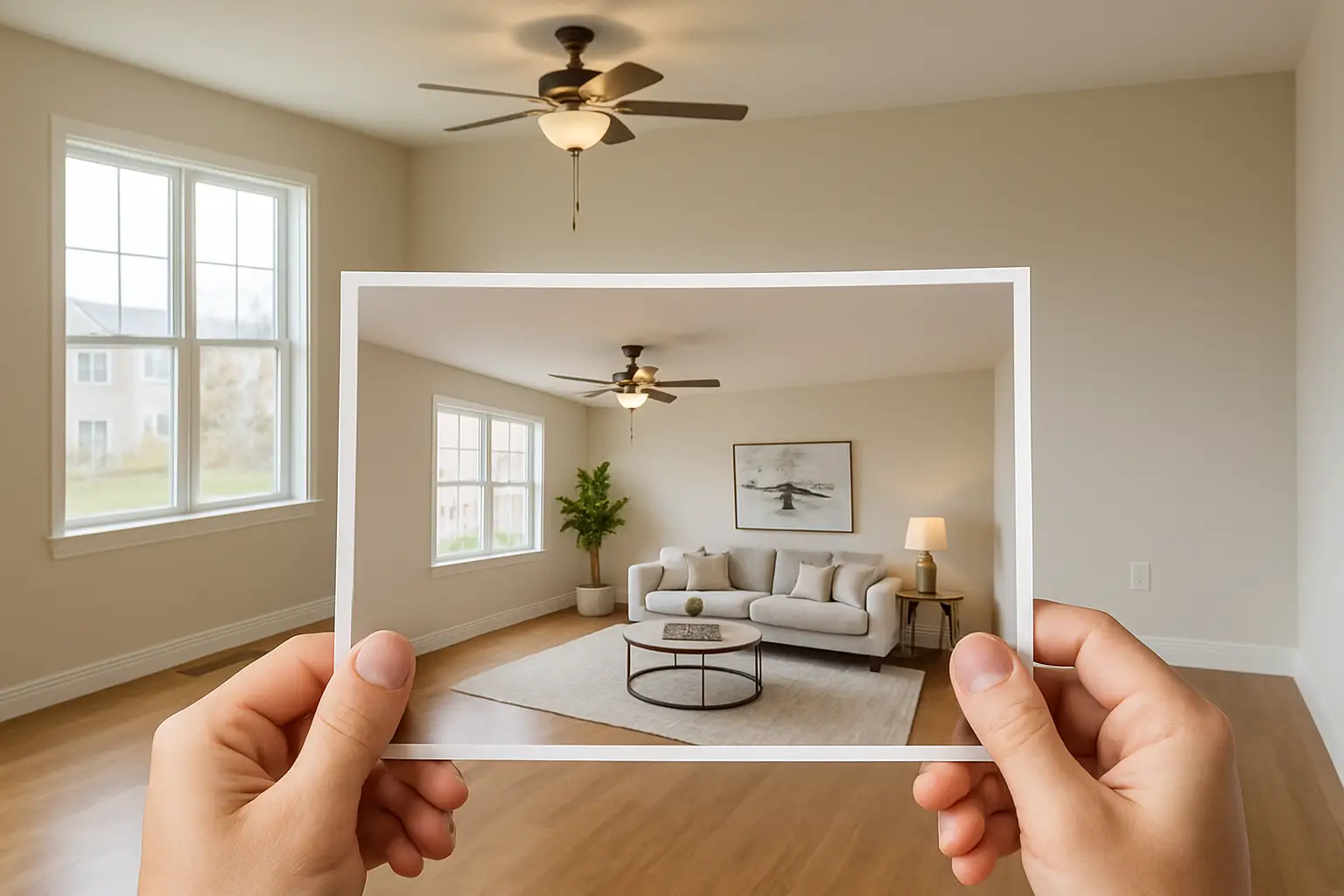
The listing is live, the photos look sharp, and the first question hits your inbox: “Is it staged?”
That question is really code for something else: “Can buyers picture themselves here fast enough to book a showing?” In most Shenandoah Valley markets, you are fighting for attention in the first 3 seconds on a phone screen. Staging is one of the cleanest levers you can pull to turn a scroll into a click, then a click into a showing.
But the real decision is not “Should we stage?” It is virtual staging vs physical staging – and which one fits this property, this timeline, and this seller.
Virtual staging vs physical staging: the real difference
Both approaches do the same job: they add context, scale, and emotional pull to empty or underwhelming rooms. They help buyers understand how a home lives.
The difference is how that context is created.
Physical staging uses real furniture and decor placed in the home. It changes the in-person experience and can change how a room photographs because light and reflections behave differently around real objects.
Virtual staging adds furniture digitally to listing photos. It changes the online experience immediately and can be targeted room-by-room with specific styles, but it does not change what a buyer sees at the showing.
The smart play is choosing the method that matches your highest friction point: getting more online engagement, making the showing feel “finished,” or aligning the marketing with the price point.
When virtual staging is the best move
Virtual staging shines when your biggest problem is the first impression online. If the home is vacant, awkwardly furnished, or full of dated pieces that distract from the bones, virtual staging gives you a fast reset.
It is also the most flexible option. You can stage one room and leave the rest alone. You can pick a style that fits the neighborhood and price point. You can keep the look consistent across the whole listing instead of relying on whatever furniture happens to be available in a warehouse.
Another big win is speed. When you have a seller who finally said yes on Thursday and wants to go live Monday, virtual staging keeps your marketing from waiting on logistics. In a competitive listing appointment, that speed matters because “we can have it live fast” is not just a convenience – it is a strategy.
Virtual staging tends to work especially well for:
- Vacant homes where empty rooms feel smaller and colder online
- Investor flips where you want a clean, modern aesthetic without moving anything in
- Rentals or tenant-occupied homes where staging is not realistic
- Listings where you only need to solve two or three problem rooms (living room, primary bedroom, bonus space)
The trade-off is simple: you must set expectations. If the online photos show a styled living room but the buyer walks into an empty space, the showing has to be guided correctly. Most agents handle that by being clear in the listing remarks and by using virtual staging to show “possibility,” not fantasy.
When physical staging earns its keep
Physical staging is strongest when the showing experience is the deal-maker.
If the home is higher-end, has an open layout that needs defined zones, or has rooms that feel challenging in person (narrow living room, low ceilings, weird angles), physical staging can be the difference between “I don’t know where my stuff goes” and “this makes sense.”
It also helps with buyer confidence. Real furniture makes scale feel trustworthy. It can soften flaws that do not photograph well, like scuffed floors or uneven wall texture, because the room stops being a blank canvas.
Physical staging tends to be worth it for:
- Premium listings where the marketing needs to match the price
- Homes with unique architecture that buyers struggle to interpret
- Properties where you expect heavy showing traffic and want the space to feel inviting every time
- Situations where the seller needs a stronger “wow” factor to justify a firm list price
The obvious trade-offs are cost and coordination. Physical staging requires access, scheduling, and a plan for keeping the home show-ready. If the seller is living in the property with kids, pets, or an unpredictable work schedule, maintaining a staged look can turn into daily friction.
Cost, timeline, and risk: what agents actually manage
Most staging advice online ignores the three things you are managing at once: seller expectations, calendar pressure, and risk.
Cost is not just the staging invoice. It is whether the seller will cooperate, whether the home will show cleanly, and whether you will spend your own time smoothing the process. Virtual staging is usually lower cost and easier to approve because it is not intrusive. Physical staging is a bigger commitment, but can be easier to justify when you are trying to win a premium price point.
Timeline is where virtual staging often wins. If you can launch faster, you are more likely to hit the window where the listing feels “new,” which can increase early showing volume. Physical staging can slow that down if you are waiting on delivery dates or coordinating access.
Risk is about mismatch. Virtual staging risk is buyer disappointment if the in-person experience does not align. Physical staging risk is operational: damage, wear, and the property not being maintained. Either way, the goal is the same: avoid anything that creates doubt.
Buyer psychology: what actually changes behavior
Buyers do not buy staging. They buy clarity.
Staging helps a buyer answer three questions quickly:
- How big is this room, really?
- How would I use it day-to-day?
- Does this feel like a place I want to spend time?
Virtual staging answers those questions online. Physical staging answers them in person.
That is why the best decision often depends on where your listing is weakest. If your showings are slow because the photos are not pulling clicks, virtual staging can raise the floor fast. If you are getting plenty of showings but offers are soft because the home does not “feel” right in person, physical staging can lift the ceiling.
A practical decision framework you can use in a listing appointment
Instead of turning staging into a philosophical debate, anchor it to the property and the plan.
Start with the condition and occupancy.
If the home is vacant, virtual staging is usually the quickest way to prevent “empty box” photos. If the home is occupied but well-furnished, you may not need staging at all – you may need editing, decluttering, and strong photography that controls perspective and light.
Then look at the price tier.
As price rises, expectations rise. Buyers at higher price points tend to punish anything that feels unfinished. Physical staging can be a smart investment because it supports the premium story you are telling.
Finally, look at the layout.
Open concept spaces, bonus rooms, and flex spaces are staging opportunities because buyers need help labeling the space. Virtual staging can do that online, but physical staging can stop confusion at the showing.
The “right” answer is often hybrid.
The hybrid approach: stage where it counts
Many listings do not need a full-home stage. They need targeted clarity.
A common winning combo is physical staging for the main living areas (where the showing impression is strongest) and virtual staging for secondary spaces, like a spare bedroom, office, or awkward nook that needs a purpose. Another approach is using virtual staging to test positioning and style, then using those decisions to guide a lighter physical stage.
Hybrid staging is also a way to keep costs reasonable while still making the marketing feel intentional. You are not staging for decoration. You are staging to remove hesitation.
What to avoid (so staging helps instead of backfiring)
Bad staging – virtual or physical – does not just fail to help. It can reduce trust.
With virtual staging, the biggest mistakes are furniture that is out of scale, styles that do not match the home, and editing that looks obviously artificial. A rustic farmhouse in the Valley with ultra-gloss, high-rise modern furniture creates friction. So does a digitally staged room that ignores the home’s fixed features, like radiators, fireplaces, or tight door swings.
With physical staging, the biggest mistakes are cluttered rooms, undersized rugs, and furniture that blocks natural paths. Buyers should feel like the home flows. If they have to squeeze around a coffee table to get to the patio door, you just created a negative moment.
The goal is always the same: make the space feel bigger, brighter, and easier to live in.
How to pair staging with listing media for maximum ROI
Staging does not work in isolation. It performs best when your media plan supports it.
Virtual staging is only as strong as the base photography. Clean verticals, consistent color, and a natural perspective are what make digital furniture feel believable. Physical staging needs thoughtful composition too, because real furniture can create visual noise if the camera angle is rushed.
If you are already investing in stronger marketing – professional photography, aerials for the lot and setting, a 3D virtual tour for out-of-town buyers, twilight images for presence – staging becomes the amplifier. It turns “nice media” into a story buyers can feel.
For agents who want staging options alongside fast, consistent listing media, this is exactly the kind of workflow we build at Villa Views: production reliability first, then add-ons that increase clicks and showings without adding chaos to your week.
What sellers need to hear
Sellers do not always understand why empty rooms can underperform online. Many assume vacant means clean and clean means better. Sometimes that is true. Often it is not.
The conversation is easier when you frame it around buyer behavior. Buyers scroll quickly. They compare homes side by side. They respond to rooms that feel clear, usable, and inviting. Marketing should make the next step easy, which is booking a showing.
That is the real measure. Not whether the photos look fancy, but whether they help turn online attention into in-person traffic.
For agents who want reliable results, the smartest choice is usually the one that reduces buyer guesswork and makes the listing feel ready now. Sometimes that is an expertly photographed empty room. Sometimes it is tasteful virtual staging. The win comes from knowing the difference and using the option that gives your listing the best chance to earn the click, the showing, and the offer.
Choosing between virtual staging vs physical staging
If you are deciding quickly, use this simple rule: if the home needs help online, go virtual; if it needs help in person, go physical. If it needs both, stage the main decision rooms physically and fill the gaps virtually.
No matter what you choose, keep it honest, keep it aligned with the home, and keep it tied to the outcome you actually want: fewer questions, more showings, and a buyer who walks in already believing the home fits.
The most helpful closing thought is this: staging is not a decoration expense. It is a communication tool. Pick the method that communicates the lifestyle clearly, and the market will do the rest.
Listing photos that sell homes faster.
Professional real estate media with 24-hour delivery across Waynesboro, Staunton, and the Shenandoah Valley.
Book a Shoot