
Drone Photos vs Drone Video for Real Estate
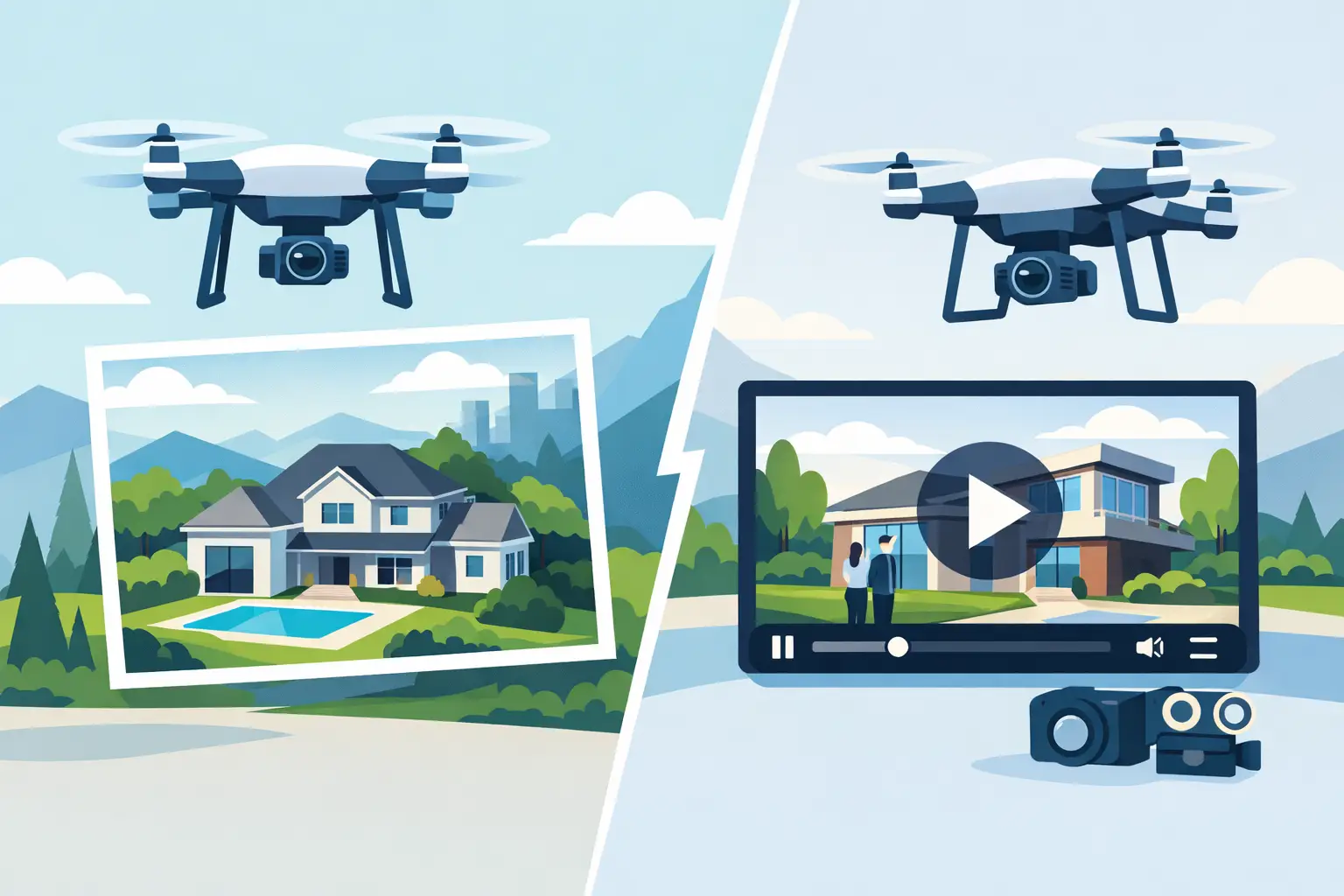
Aerial media can change the first impression of a listing before a buyer reads a single property detail. In the decision between drone photos vs drone video, the right choice is not about adding the most footage or choosing the flashiest option. It is about showing buyers what they cannot understand from ground-level images: the setting, the land, the approach, and the relationship between the home and its surroundings.
For Shenandoah Valley agents, that difference is often substantial. A home near mountain views, vineyards, downtown amenities, open acreage, or a desirable neighborhood needs more than a standard exterior photo to tell the full story. The best aerial strategy gives buyers context quickly, creates a stronger online listing presentation, and helps turn interest into showings.
Drone Photos vs Drone Video: The Core Difference
Drone photography captures the strongest individual views of a property. Drone video creates motion, pace, and a broader sense of place. Both can improve a listing, but they solve different marketing problems.
Aerial photos are usually the better default for most residential listings because buyers and agents consume listing media quickly. A clear overhead image can show a corner lot, a large backyard, a pool, a detached garage, or proximity to a nearby feature in one glance. These images work well across the MLS, property websites, social posts, brochures, and listing presentations.
Drone video adds another layer. A smooth approach toward the home, a pass over the backyard, or a wide reveal of the surrounding landscape can make a property feel more substantial and more memorable. Video is especially useful when the experience of arriving at or moving around the property is part of the value.
The practical question is simple: Does one still aerial image explain the benefit, or does the buyer need motion and a wider story to feel it? If a photo answers the question, start with photos. If the property has a setting worth experiencing, video can earn its place in the media package.
When Drone Photos Deliver the Best Return
Drone photos are efficient, versatile, and easy for buyers to absorb. They are often the strongest option when the listing has a specific physical feature that needs to be seen clearly from above.
Aerial photography is a smart choice for a property with acreage, an unusual lot shape, a long private drive, extensive outdoor living areas, or outbuildings. It also helps show how a home sits within a neighborhood without relying on vague descriptions such as “convenient location” or “beautiful setting.” A well-composed aerial image gives that claim visual proof.
For example, a Staunton home with a deep backyard and mountain backdrop may benefit from an elevated rear image that frames the house, yard, and view together. A Crozet property near trails or vineyards may need a high-angle image that establishes the location. A suburban home with a pool, patio, and fenced yard can use an aerial photo to make the full outdoor package easy to understand.
Photos also offer more flexibility once the shoot is complete. Agents can lead with them in an MLS gallery, feature them in a social carousel, use them in print, or include them in a listing appointment to demonstrate how their marketing stands apart. One strong aerial image can keep working long after the property video has been watched.
Use Photos When the Feature Is Clear From One Frame
Choose drone photos when the listing’s advantage can be understood in a still image. Think lot size, outdoor amenities, rooflines, driveway access, nearby green space, or a standout view. The goal is clarity, not altitude for its own sake.
Aerial photography can also support pricing conversations. When buyers see the usable land, separation from neighbors, or scale of improvements, they have more context for the value behind the list price. It does not replace a strong property description, but it gives the description credibility.
When Drone Video Is Worth Adding
Drone video is most effective when the property has a story that unfolds over distance or movement. It can show the drive in, transition from house to land, or reveal that makes the setting feel special. That is difficult to communicate with isolated still photos.
A home on several acres is a common example. Buyers may want to understand how the residence relates to a barn, pond, pasture, wooded area, or mountain view. Video can connect those pieces in a natural sequence. The same is true for a luxury home with a dramatic approach, a large estate, a waterfront setting, or a property where the surrounding landscape is a major reason to buy.
Video can also help agents build their own brand. A polished aerial clip gives you material for social media, property reels, email campaigns, and future listing presentations. Sellers notice when an agent has a clear, professional plan for presenting a home online. That can help you win the listing before the marketing campaign even starts.
Still, drone video is not automatically better because it moves. A short, purposeful sequence is more valuable than a long flyover with no clear message. Buyers should come away knowing something useful about the property, whether that is the scale of the lot, the privacy of the setting, or the proximity to a local attraction.
Use Video When the Buyer Needs to Feel the Setting
Add drone video when movement creates emotional or practical context. A gradual reveal of Blue Ridge views, a flight down a tree-lined drive, or a transition from a home to its expansive backyard can create the sense of place that earns a second look.
For a standard home on a compact lot, however, a video may add less than a stronger set of interior photos, a floor plan, twilight imagery, or a virtual tour. The best listing media package is built around the property, not a checklist of upgrades.
The Strongest Strategy for Higher-End and Land Listings
For properties with acreage, premium outdoor amenities, major views, or a distinct location, the answer is often not drone photos versus drone video. It is both, used with separate jobs in mind.
Let drone photos handle the proof. Use them to show lot boundaries in a general, non-survey context, outdoor spaces, surrounding terrain, and the home’s placement. Let video handle the emotion and flow. It can show what it feels like to approach the house, look across the land, or experience the view from above.
This combination gives you more ways to market the listing without making the presentation repetitive. The photos strengthen the MLS gallery and give buyers fast information. The video creates social content and a more cinematic asset for a property site or seller campaign.
The key is matching the spend to the likely return. A distinctive Charlottesville-area estate may justify a full aerial photo and video package because the setting is central to its value. A starter home with little visible context may get more traction from clean photography, accurate floor plans, and fast delivery. Good marketing is not about selling every service. It is about investing in the assets that make the next showing more likely.
Plan Aerial Media Before Shoot Day
Aerial work performs best when it is planned around the listing’s selling points. Before booking, identify what needs to be visible from the air. Is it the acreage? The pool? The privacy? The walkability to a nearby district? The view beyond the rear deck? A clear answer helps the media team capture images with a purpose.
Timing matters too. Trees, weather, sun direction, and seasonal conditions can change what an aerial image communicates. A mountain view may be clearer in one direction at a specific time of day. A backyard can look more inviting when it is staged, mowed, and free of vehicles, bins, or temporary clutter. If the aerial story includes a neighborhood feature, consider whether it can be shown accurately without overstating proximity or implying access that does not exist.
Professional operation matters as much as creative framing. Safe flights, airspace awareness, weather judgment, and reliable editing protect the schedule and the quality of the final media. Agents need a partner who can make those calls without creating extra back-and-forth when the listing is ready to launch.
Make the Decision Based on the Listing, Not the Trend
Drone media is not a decoration. Used well, it makes the property easier to understand, easier to remember, and easier to market across the channels that drive buyer attention.
Start with drone photos when you need fast visual proof of land, location, layout, or outdoor amenities. Add drone video when the property’s value depends on movement, scale, and a sense of arrival. For listings where the setting is the headline, use both and give each asset a clear role.
The next time you are preparing a listing, ask one question before you book: What would a serious buyer miss if they only saw this home from the ground? The answer will tell you whether aerial photos, video, or a coordinated package will do the most to generate clicks, showings, and stronger offers.
Listing photos that sell homes faster.
Professional real estate media with 24-hour delivery across Waynesboro, Staunton, and the Shenandoah Valley.
Book a Shoot