
Drone Videography That Makes Listings Move
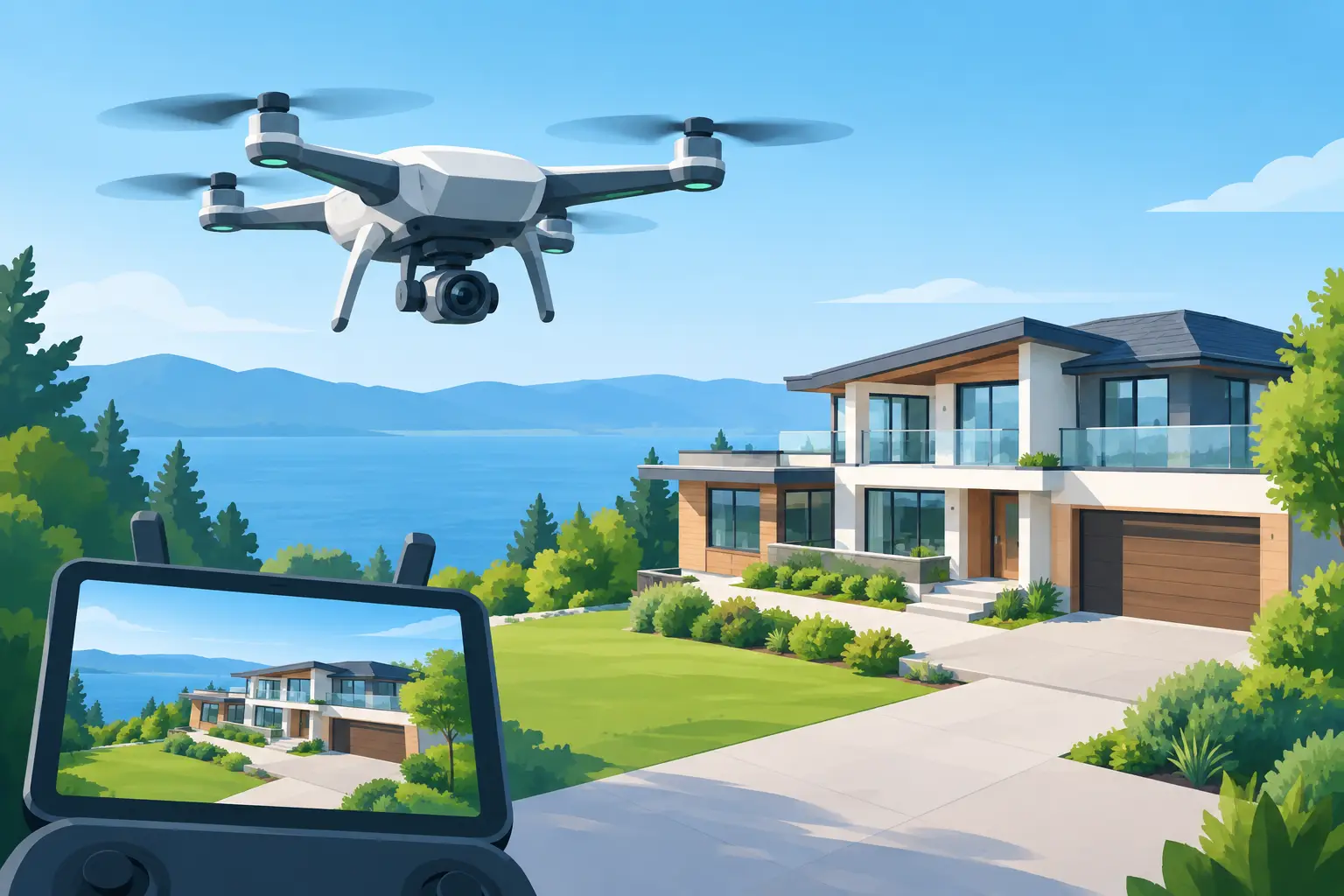
A driveway that curves through mature trees, a home set back from the road, acreage rolling toward a mountain ridge: these are hard to explain with a front elevation photo. Drone videography gives buyers the context they need to understand a property before they decide whether to schedule a showing.
For Shenandoah Valley real estate, aerial video is not just a cinematic extra. It is a practical way to show what makes a property worth clicking, touring, and remembering. When used with a clear plan, it can make the online listing feel more complete without distracting from the home itself.
What Drone Videography Shows That Photos Cannot
Still aerial photography is valuable for showing a lot line, roof condition, setting, or nearby features at a glance. Video adds movement and sequence. It can take a buyer from the approach to the front of the home, rise above the tree line to reveal a view, or show how a house relates to its land, outbuildings, and surrounding neighborhood.
That context matters most when a property has a feature that cannot be fully understood from ground level. A rural home may sit on five acres but look like any other house in the first photo. A drone clip can show usable open ground, wooded privacy, a barn, a creek, a long driveway, or the distance between the home and nearby neighbors.
For in-town and suburban listings, the value may be different. Aerial footage can establish walkability to a park, proximity to a downtown district, a corner-lot position, or the home’s place within a well-kept neighborhood. The goal is not to film every roof on the block. It is to answer the question buyers are already asking: What is it like to live here?
When Aerial Video Earns Its Place in a Listing
Drone video works best when it has a job to do. A larger parcel, mountain view, waterfront feature, private setting, estate driveway, horse property, or vacation rental setting often gives aerial coverage a clear purpose. It helps buyers understand the experience of arriving and the character of the property before they get in the car.
It can also support an agent’s listing presentation. Sellers want to see a marketing plan that reflects the actual strengths of their home. Offering aerial coverage when it fits shows that you are not applying the same basic package to every listing. You are building a media plan around what will make that property compete.
That said, not every home needs it. If the property is tightly surrounded by similar homes, has limited exterior appeal, or sits beneath restricted airspace, aerial video may add less value than twilight photography, a 3D virtual tour, polished interiors, or a floor plan. The better question is not, “Can we fly a drone?” It is, “Will aerial footage help a qualified buyer understand why this property deserves a showing?”
Plan the Story Before the Flight
Strong real estate drone videography should feel intentional, not like a collection of random flyovers. Before booking, identify the two or three exterior features that carry the most sales value. This might be the Blue Ridge view, the amount of usable land, a detached garage, a pool, a wraparound porch, or the home’s privacy from the road.
Think about the order a buyer would naturally want to see them. For a property with a long driveway, the video may begin with the approach, reveal the home, then rise to show the acreage and setting. For a home with a view, the footage may start near the property and gradually reveal the landscape beyond it. That progression helps viewers orient themselves instead of simply watching motion.
Aerial video is usually most effective as a concise part of the listing package. Buyers scroll quickly, and long clips can lose attention before the strongest feature appears. Short, steady footage that gets to the point is more useful than a dramatic sequence with no connection to the home’s selling story.
Prepare the Exterior for an Overhead View
Drone footage sees more than buyers do from the driveway. Before the appointment, have sellers clear vehicles from the drive, put away trash bins, secure outdoor items, and tidy patios, decks, and pool areas. If there are outbuildings, gates, fencing, or acreage that will be shown, make sure those areas are accessible and presentable too.
The overhead angle can also reveal details that are easy to miss at ground level: patchy lawn areas, construction materials, clutter behind a shed, or equipment parked near the house. A simple exterior prep checklist protects the quality of every image and video clip in the media package.
Use Video to Clarify, Not Oversell
Aerial media should represent the property honestly. A drone can show a nearby river, mountain range, golf course, or town center, but the footage should not suggest that an amenity is on the property when it is not. It should also avoid making a distant view appear closer than a buyer will experience from the home.
This is especially relevant in rural markets. A broad aerial shot can make land look more level, private, or usable than it is from the ground. Clear listing remarks and a well-planned shot sequence help keep expectations aligned. Good marketing creates interest, but it should also help bring the right buyers to the property.
The same principle applies to neighboring properties and roads. If a home has privacy, show it. If it is conveniently close to a main route, show the access in a straightforward way. Buyers appreciate context, and agents benefit when a showing starts with fewer surprises.
Safety and Compliance Are Part of Professional Service
Not every location can be filmed, and weather does not always cooperate. Wind, rain, low visibility, temporary flight restrictions, nearby airports, and controlled airspace can affect whether a flight is possible on a scheduled day. A professional aerial provider plans around those constraints rather than forcing footage that is unsafe or noncompliant.
For agents, the key is to set expectations with sellers early. Let them know that drone coverage depends on site conditions and airspace approval, and that a reschedule may be necessary when safety requires it. This is not a weakness in the process. It is responsible production that protects the listing, the property, and everyone nearby.
If a property is near an airport, hospital helipad, event venue, or other sensitive area, mention it at booking. That information allows the media team to assess the location before arriving and recommend the best available approach.
Build a Listing Package Around Buyer Decisions
Drone video should work alongside the rest of your media, not carry the entire listing. Professional interior and exterior photography gives buyers the details. A floor plan helps them understand layout and room relationships. A 3D virtual tour lets remote or time-constrained buyers explore at their own pace. Aerial coverage provides the larger setting those tools cannot always communicate.
For a short-term rental, that setting can be a major booking driver. Guests may want to see the firepit area, surrounding woods, proximity to recreation, or the sense of separation from neighboring homes. For property managers, consistent aerial coverage across appropriate properties can help create a more polished, recognizable portfolio presence.
Villa Views approaches drone videography as part of a practical listing strategy: show the features buyers need to understand, deliver media that supports your marketing plan, and keep the process easy to schedule. The strongest package is not necessarily the largest one. It is the one that gives buyers enough confidence to take the next step.
Before your next listing appointment, look beyond the front door. If the land, setting, approach, or view is part of what makes the property valuable, aerial video may be the clearest way to put that advantage to work.
Listing photos that sell homes faster.
Professional real estate media with 24-hour delivery across Waynesboro, Staunton, and the Shenandoah Valley.
Book a Shoot