
Guide to Long Driveway Drone Coverage for Listings
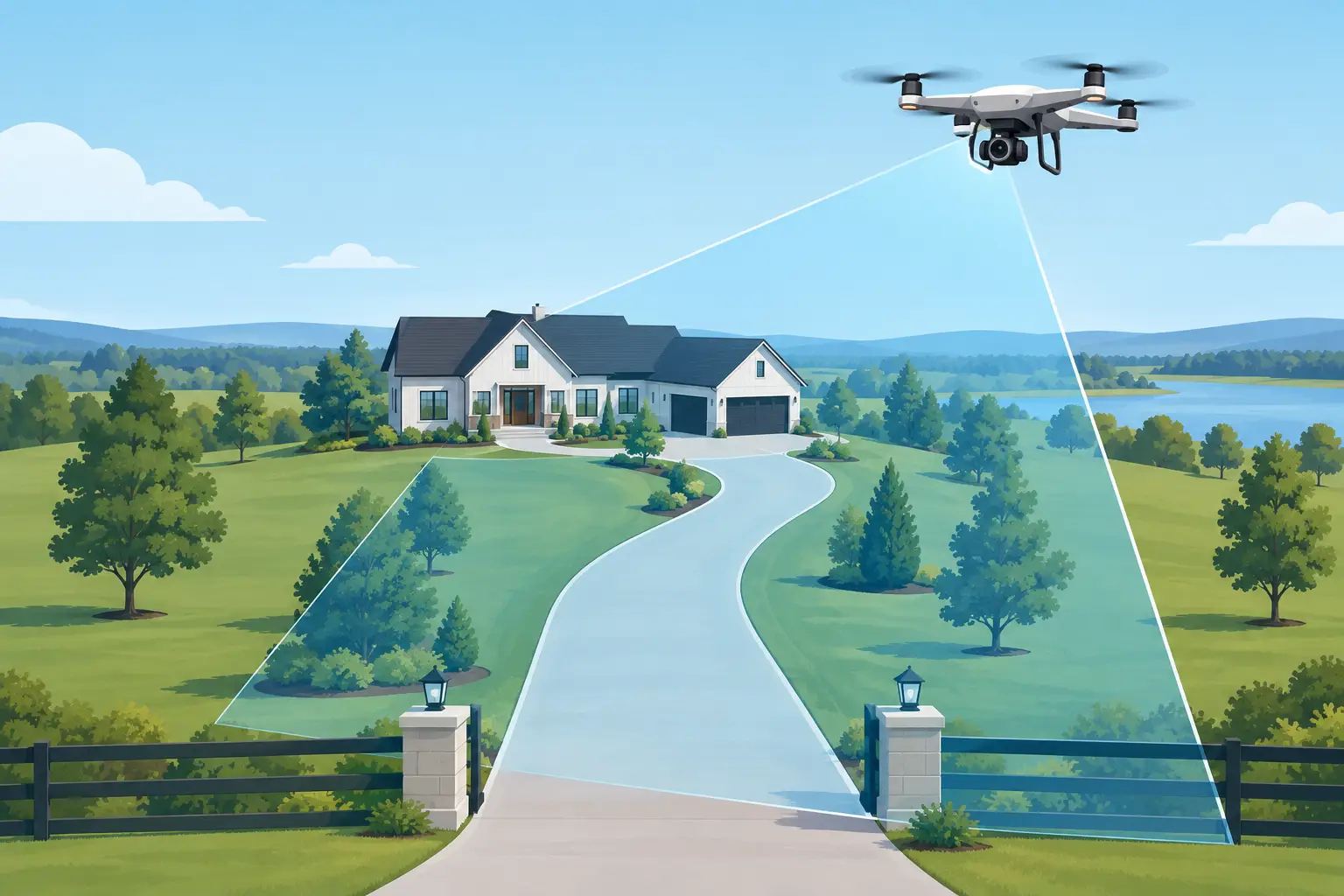
A long driveway can create a powerful first impression or a costly question mark. Buyers scrolling through a rural listing want to know what the approach feels like: Is the home private? Is access clear? How does the house sit on the land? A guide to long driveway drone coverage helps you answer those questions before a buyer decides whether to schedule a showing.
For Shenandoah Valley properties, the driveway is often more than pavement between the road and the house. It may wind through woods, cross open pasture, climb toward a mountain view, or create the privacy buyers are specifically seeking. The right aerial coverage turns that distance into a selling point. The wrong coverage makes the home feel isolated, hard to reach, or disconnected from its acreage.
Why Long Driveway Drone Coverage Matters
Standard exterior photos can show the front elevation beautifully, but they often cannot explain the property’s layout. On a home set well back from the road, buyers may be left guessing where the drive begins, how much land surrounds the house, and whether the setting is private or simply remote.
Drone media gives the listing a sense of orientation. It can show the relationship between the entrance, driveway, home, outbuildings, fields, views, and nearby roads without forcing buyers to piece the story together themselves. That clarity matters online, where a buyer may make a quick decision about whether a property deserves a closer look.
It also improves the way you present the listing appointment. When you can explain that your marketing plan will show both the home and the approach to it, you are offering more than attractive photos. You are offering a strategy for reducing buyer uncertainty and creating a stronger reason to visit.
Still, more aerial footage is not automatically better. A long flight from the road to the house can become repetitive, and a high overhead image can flatten the very features that make the property special. Coverage should be planned around the property’s best story, not added as a generic extra.
Guide to Long Driveway Drone Coverage: Start With the Buyer Question
Before scheduling aerial media, identify the question a buyer will ask first. For some listings, it is, “How private is this home?” For others, it is, “What does the land look like?” A property with a circular drive and a prominent front elevation needs a different approach than a cabin reached by a tree-lined lane.
Consider the driveway as a sequence of moments. The road entrance establishes access. The middle portion shows the character of the land. The arrival at the home should reveal the payoff: a view, a welcoming facade, a barn, a pool, or a home positioned in a quiet clearing.
If the driveway itself is an asset, such as a stone-lined entrance, mature trees, split-rail fencing, or a sweeping approach across open ground, make that clear in the shoot brief. If it is functional but not especially attractive, the aerial plan can focus more on orientation and the home’s setting than on every foot of pavement.
A useful brief for a long-driveway property includes four practical details:
- Where the driveway begins and whether the entrance is easy to identify from the road
- The features buyers should understand from above, such as acreage, a creek, a detached garage, or mountain views
- Any areas that should not be emphasized, including neighboring homes, construction, or clutter
- The primary listing angle, whether that is privacy, land, convenience, recreation, or a luxury arrival experience
This takes only a few minutes, but it prevents generic aerial media and helps the final listing assets work harder.
Show Access Without Making the Property Feel Remote
The biggest mistake with a long driveway is treating distance as the only story. A drone clip that starts far down the road and slowly travels to the house may demonstrate length, but it can also make the property feel inconvenient. Buyers do not need a survey-level record of every turn. They need confidence that the approach makes sense.
The strongest coverage usually combines a wider establishing perspective with a closer arrival view. A high, angled image can show the driveway connecting the road to the home. A lower forward-moving clip can then show the drive opening into the homesite. Together, those assets make access understandable while keeping attention on the destination.
For properties near Waynesboro, Staunton, Charlottesville, or Lexington, this is especially helpful when terrain changes quickly. A home may be only minutes from town but feel tucked away behind trees or beyond a ridge. Thoughtful aerial coverage can communicate both privacy and practical location without relying on vague listing language.
The same principle applies to short-term rental marketing. Guests often want a secluded experience, but they also want to know what arrival will feel like after dark or during a weekend getaway. Showing the route and the setting builds confidence before they book.
Plan the Coverage Around the Property’s Best Features
Aerial media should support the listing’s core value, not compete with it. When the home itself is the main draw, drone coverage should establish the setting and then hand attention back to strong exterior and interior photography. When acreage, views, water, equestrian facilities, or recreational land drive the value, aerial media can take a larger role.
A wooded driveway calls for a different visual plan than an open one. In dense woods, a high angle may show the home emerging from a canopy, while a lower shot can capture the sense of arrival. On open acreage, a wider perspective can show the scale of fields, fencing, and the home’s placement in the landscape.
Think about season as well. Summer foliage can make privacy look lush and complete, but it may hide a view or obscure the home from above. In late fall and winter, the property layout may be easier to understand, though the grounds may not have the same color. Neither season is automatically better. The right choice depends on what you need buyers to see.
Light matters, too. Early or late light can add dimension to rolling land, trees, and a long drive. Bright midday conditions may be useful when the priority is clear visibility of the layout. If you are pairing drone media with twilight images, plan the shot list intentionally so the final gallery feels cohesive rather than like a collection of unrelated assets.
Prepare the Driveway Before the Shoot
Drone coverage can reveal a property’s strengths, but it also reveals details that are easy to overlook from the ground. A few practical preparation steps protect the first impression.
Clear visible clutter near the road entrance and around the arrival area. Move vehicles away from the driveway if possible, especially if they block the best approach or crowd the front of the home. Mow or trim where needed, and make sure gates are open if the plan requires showing the full route to the house.
If there are private lanes, shared drives, or neighboring properties nearby, tell the media team ahead of time. That context helps shape framing choices and keeps the focus where it belongs. The goal is to show access and land boundaries in a buyer-friendly way, not to create confusion about what conveys with the property.
Also flag overhead wires, tall trees, active farm equipment, animals, and any access limitations. These details affect what can be captured safely and efficiently. A professional aerial plan should account for weather, airspace requirements, site conditions, and privacy considerations rather than assuming every desired angle is available on every day.
Use Drone Media as Part of the Listing Story
The best long-driveway drone coverage does not live alone at the end of a photo gallery. Use the strongest aerial still near the beginning when it immediately explains the property’s setting. Follow it with exterior photos that show the home buyers reach at the end of that drive. Then use interior images, floor plans, and a 3D virtual tour to carry buyers from the land into the living experience.
For video, lead with the clearest visual hook. That may be the home framed by mountains, a driveway curving through mature trees, or a broad view of the property’s usable land. The approach shot works best when it has a purpose: it should build anticipation and make the final reveal feel earned.
In listing remarks and social captions, be specific about what the aerials show. Phrases such as “private drive through mature hardwoods,” “open acreage surrounding the homesite,” or “clear approach to a hilltop setting” give buyers a reason to look closer. Avoid promising more than the property delivers. Good media earns trust when the showing experience matches the story buyers saw online.
Know When Less Coverage Is Better
Not every long drive needs a full aerial video sequence. If the road entrance is unremarkable, neighboring homes sit close to the drive, or the best feature is the home’s interior renovation, one strong aerial still may do more than several minutes of footage.
Likewise, a driveway that is narrow, heavily shaded, or visually cluttered may be better shown in a wider context shot rather than a low pass that calls attention to limitations. Honest presentation does not mean highlighting every drawback. It means giving buyers a useful, accurate sense of the property while keeping the marketing focused on its strongest reasons to visit.
Villa Views plans aerial coverage with the same goal as every other listing asset: make the property easier to understand, more compelling to click, and better positioned for the next showing. When a long driveway is part of the value, give buyers a clear view of where it leads.
Listing photos that sell homes faster.
Professional real estate media with 24-hour delivery across Waynesboro, Staunton, and the Shenandoah Valley.
Book a Shoot