
A Guide to Rural Property Photography Needs
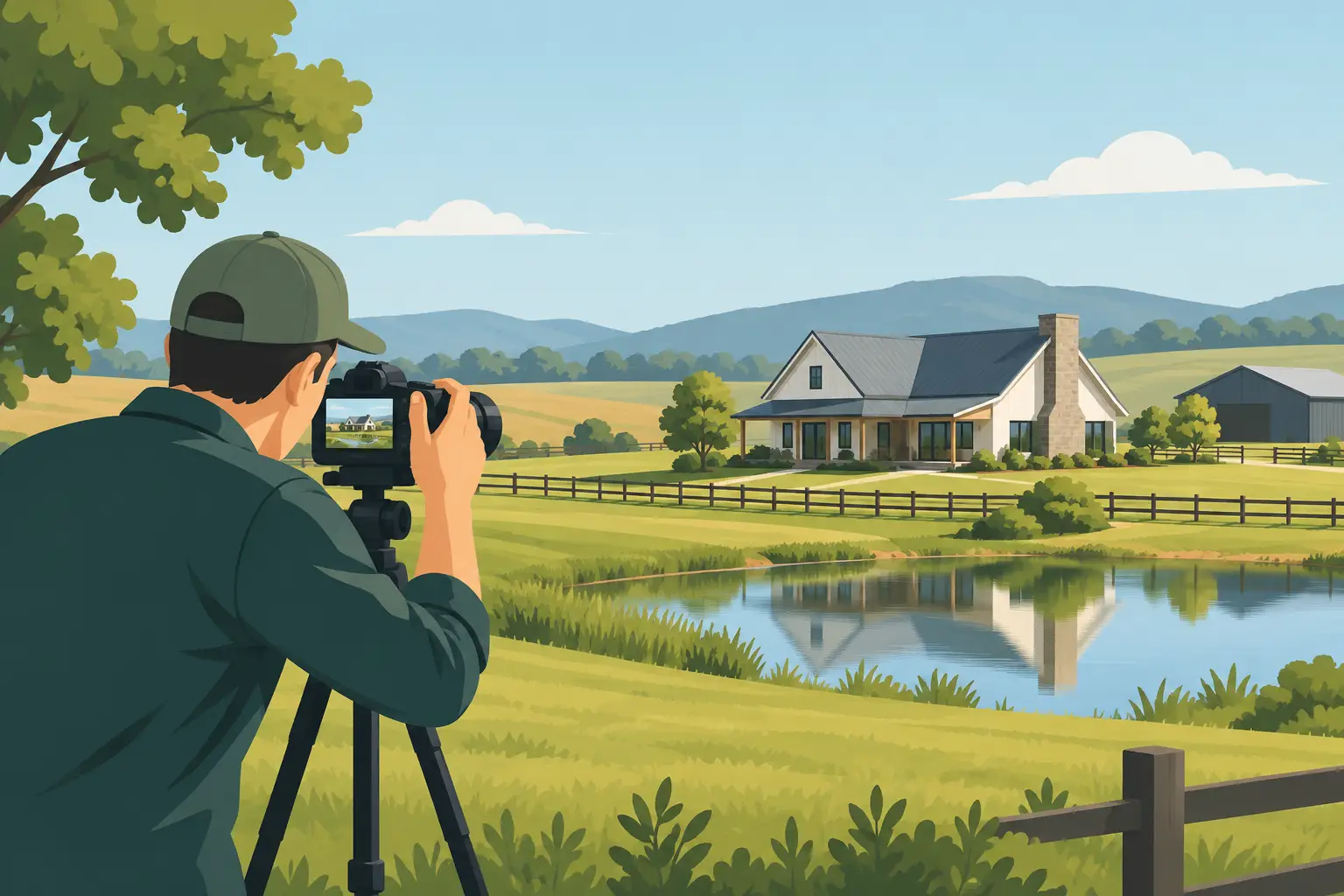
A rural listing can lose buyer attention before they understand what is being sold. A handful of interior photos may work for a compact in-town home, but acreage, outbuildings, private drives, mountain views, and land access need context. Use this guide to rural property photography needs to build listing media that answers buyer questions early and gives the property a stronger chance to earn clicks, showings, and serious offers.
Why Rural Listings Need a Different Media Plan
On a rural property, the home is often only one part of the purchase decision. Buyers may be comparing road frontage, usable pasture, privacy, proximity to neighbors, workshop space, creek access, or the view from the back porch. If the media focuses only on the kitchen and primary bedroom, it leaves the most valuable parts of the listing unexplained.
That does not mean every country home needs every available add-on. A five-acre property with a simple ranch home has different marketing needs than a 40-acre estate with a barn, guest house, and long private driveway. The right approach is to match the media package to the reasons a qualified buyer would choose that property over another one.
For agents in the Shenandoah Valley, this is especially relevant. Aerial views can clarify how a home sits against the Blue Ridge, while floor plans and interior photography help buyers understand whether the house itself supports the lifestyle they want. The goal is not to create more media for its own sake. The goal is to make the listing easier to understand online.
Start With the Property’s Real Selling Points
Before booking photography, identify the two or three features that will carry the listing. These are not always the features the seller mentions first. A seller may be proud of a recent appliance upgrade, while the likely buyer is more interested in the detached garage, fenced acreage, sunset view, or separation from nearby homes.
Ask practical questions. What can a buyer see from the road? What takes time to find once they arrive? Which spaces make the property useful for horses, hobbies, multigenerational living, or short-term rental potential? Are there seasonal features, such as a spring-fed creek or a mountain view that is clearest in cooler months?
A clear answer helps determine what needs to be photographed, filmed, measured, or shown from the air. It also helps prevent a common problem with rural listing media: plenty of attractive images, but no visual story about how the property works.
Build the Shot Plan Around Buyer Questions
A rural listing should help buyers answer basic questions before they schedule a showing. They want to know whether the driveway is paved or gravel, how close the barn sits to the house, whether there is open ground behind the home, and what the setting feels like.
For most rural properties, a strong visual plan includes these distinct areas:
- Exterior views that show the front approach, primary outdoor living areas, and the home in its setting.
- Interior photography that covers the rooms buyers need to compare, including kitchens, living spaces, bedrooms, bathrooms, basements, and finished bonus areas.
- Land and improvement coverage for barns, garages, workshops, fencing, ponds, patios, pools, or guest structures.
- Aerial photography or video when the layout, acreage, views, road access, or surrounding terrain adds real value.
- A floor plan or 3D virtual tour when layout, square footage, multiple levels, or distance buyers make orientation harder.
Not every item needs equal emphasis. A modest home on scenic acreage may need more exterior and aerial coverage than an oversized photo set of every closet. A renovated farmhouse close to town may need a more balanced mix, with interiors doing more of the selling.
When Drone Media Is Worth It
Drone photography is one of the clearest ways to show what traditional ground-level photos cannot: the relationship between the home, land, access points, and surrounding landscape. It is particularly useful when a property has acreage, a long driveway, a ridge-top location, water, mountain views, or multiple structures.
It is less useful when the aerial view adds little beyond a roof shot. If a home sits on a small, wooded lot with limited visual separation from neighboring properties, drone images may not be the first priority. The decision comes down to whether the aerial perspective makes the buyer’s decision easier.
Aerial media should also be planned responsibly. Weather, wind, tree cover, and airspace restrictions can affect what is possible on shoot day. Build in a little flexibility when drone coverage is central to the listing. If the property has a standout view, schedule at a time when visibility and light give that feature its best chance to read clearly.
Show the Layout, Not Just the Decor
Rural buyers are often relocating, buying from out of town, or trying to assess whether a property supports a specific use. They may need room for a home office, equipment storage, guests, animals, or a growing family. Wide photos are helpful, but they do not always explain how rooms connect.
A 2D or 3D floor plan gives buyers a fast way to understand flow, room placement, and approximate scale. It can reduce confusion around split-level homes, additions, converted basements, and properties with multiple living areas. A 3D virtual tour can add even more confidence for buyers who cannot visit immediately or want to narrow their options before a long drive.
These tools are especially valuable when the floor plan is unusual. A home with a separate entrance, an in-law suite, a finished lower level, or bedrooms on different wings needs more than beautiful still images. It needs a clear path through the space.
Prepare the Property for the Full Story
Rural homes require prep beyond decluttering countertops. The areas between the road and the front door matter. So do gates, driveways, equipment, sheds, porches, and views that may be blocked by everyday items.
Have the seller mow or tidy highly visible outdoor areas, move vehicles when possible, and remove trailers, trash bins, loose tools, and unnecessary equipment from key sightlines. If farm equipment or recreational items are part of the property appeal, decide ahead of time whether they should be featured or cleared away. A clean tractor bay can signal utility. A crowded, unorganized outbuilding can distract from it.
Inside, the standard still applies: clear surfaces, turn on lights, hide pet items, and make beds. But pay special attention to windows. Rural homes often have their best assets outside, and clean glass plus open blinds helps connect interior rooms to the land, trees, or views beyond them.
Use Twilight Images Selectively
Twilight photography can give a rural listing a premium lead image, particularly when the home has a welcoming porch, outdoor lighting, a pool, a fire pit, or a view that becomes more dramatic near sunset. It can create a sense of arrival that daytime images do not always capture.
Still, twilight is not automatically the right choice. If the most compelling feature is broad open acreage, a sunny daytime aerial image may communicate more. If the home is heavily shaded by trees, carefully planned daytime exterior images may provide a clearer look at the structure. Choose twilight when it supports the property story, not because it is expected.
Plan for Access and Timing Before the Appointment
The best media plan can be slowed down by locked gates, unclear property lines, tenants, animals, or a seller who is still packing when the appointment begins. Rural properties have more moving parts, so a quick pre-shoot confirmation protects the schedule and the final result.
Confirm gate codes, driveway instructions, parking areas, access to outbuildings, and whether pets or livestock need to be secured. Let the media team know about remote structures, trails, water features, or viewpoints that should be included. If there is a long drive between the house and a barn or guest cottage, account for that in the appointment scope.
For working agents, operational clarity matters as much as image quality. Villa Views offers online booking and a 24-hour turnaround for core photography, helping you keep the listing launch moving without unnecessary back-and-forth.
Make the Media Work Harder at Launch
Once the assets are delivered, lead with the clearest reason to care. Use the strongest exterior, view, or aerial image as the first impression when the setting is a major selling point. Follow it with the rooms and structures that support the property’s use, then include floor plans and virtual tour access where buyers can find them easily.
Your listing remarks should reinforce what the images show. If the aerials reveal privacy and usable land, describe the acreage accurately. If a floor plan clarifies separate living quarters, make that feature easy to spot in the copy. Strong media and clear listing language should answer the same questions, not compete for attention.
A rural property does not need to be marketed like a city home with a bigger yard. Give buyers a clear view of the life the property makes possible, and they will arrive at the showing ready to look closer.
Listing photos that sell homes faster.
Professional real estate media with 24-hour delivery across Waynesboro, Staunton, and the Shenandoah Valley.
Book a Shoot