
How to Improve Photo Ordering for Real Estate
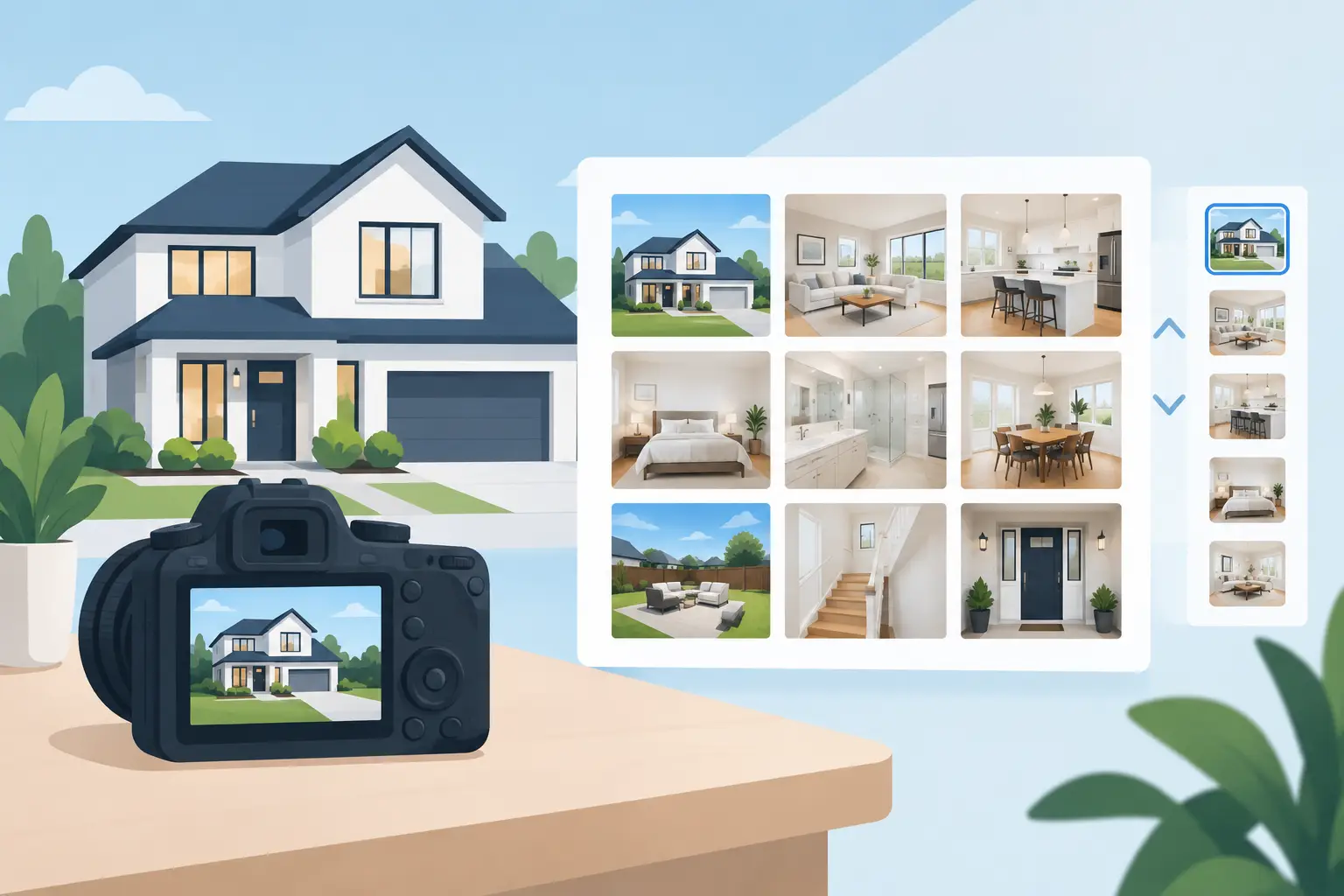
The first image earns the click. The next several images decide whether a buyer keeps looking, schedules a showing, or moves on to the next listing. To improve photo ordering, treat your listing gallery like a guided property tour, not a folder of finished images arranged at random.
Strong real estate photography matters, but sequence matters too. A well-photographed kitchen can lose impact if it appears before buyers understand the home’s layout, setting, or curb appeal. The right order helps buyers quickly answer the questions that drive action: What is this property? What makes it different? Can I picture myself there?
Why photo order affects listing performance
Buyers usually begin their search on a small screen, moving quickly through dozens of listings. They are not studying every photo with equal attention. They are scanning for a reason to pause.
Your opening image should show the strongest, most marketable feature available. Often, that is the front exterior. For a home with an exceptional mountain view, an architectural exterior, a dramatic great room, or a resort-style backyard, the best lead image may be different. The goal is not to follow a rigid rule. It is to make the property’s clearest selling point impossible to miss.
From there, your photos should build confidence. Buyers need enough visual context to understand the home before they invest time in a showing. When the gallery jumps from a bedroom to a drone shot, then to a bathroom, then back to the kitchen, the listing can feel disconnected. A logical visual flow makes the home feel easier to understand and easier to remember.
For listing agents, that means stronger marketing in two places: online, where buyers decide what to click, and in listing appointments, where a polished presentation supports your promise to market the home professionally.
How to improve photo ordering before your listing goes live
Start by deciding what story the home needs to tell. Every property has a different reason for buyers to care. A renovated downtown home may win with interior finishes and walkability. A Shenandoah Valley property on acreage may need to establish privacy, land, views, outbuildings, and a long driveway before moving inside.
The sequence should support the buyer’s decision-making process rather than simply documenting every room.
Lead with the image that sells the opportunity
The first photo is your cover image. Use it to create immediate interest without confusing the buyer.
A clean, inviting front exterior is often the safest choice because it confirms the property type and creates an instant first impression. But it is not always the highest-performing choice. If the property’s main value is a panoramic view, waterfront setting, distinctive architecture, or an exceptional living space, lead with that advantage when it accurately represents the home.
Avoid opening with a small secondary bedroom, utility area, generic bathroom, or close-up detail. Those images may be useful later in the gallery, but they do not carry the job of earning attention.
After choosing the cover photo, place two or three additional high-impact images near the front. Think of these as your proof points: the kitchen buyers will remember, the primary suite, the backyard, the view, or the main entertaining space. Do not make viewers scroll through ten average images to reach the reason the home is priced and positioned the way it is.
Build a route through the property
Once buyers are interested, guide them through the home in an order that feels natural. A common route starts with the exterior, entry, main living areas, kitchen, dining space, primary suite, secondary bedrooms and baths, then outdoor spaces. The exact order changes with the home, but the underlying principle remains the same: adjacent photos should make visual sense together.
If the kitchen opens into the living room, show those spaces close together. If a primary bedroom connects to a standout bath or private patio, keep that sequence intact. When you are marketing a property with a finished basement, include the stair transition or another image that helps buyers understand it is a separate level, rather than dropping basement photos into the middle of the main-floor gallery.
This approach also prevents overemphasis on less important rooms. Buyers do not need five angles of a small guest bedroom before they have seen the primary living spaces. One strong image may be enough, especially when the room does not add a unique selling feature.
Give outdoor features room to work
Outdoor images are especially important in rural and small-town markets. A home’s lot, views, porch, barn, detached garage, pool, creek, or surrounding acreage may be central to its appeal. These photos should not be treated as an afterthought at the end of a long gallery.
If the outdoor setting is a major value driver, show it early and return to it later. For example, an opening exterior can be followed by a wide backyard or view image, then the interior tour. Later, after buyers have seen the main rooms, add patio, deck, fire pit, acreage, and aerial photos that provide context.
Aerial images work best when they answer a practical question. They can show the relationship between a home and its land, clarify access from a long driveway, establish proximity to trails or town, or reveal the scale of an estate-style property. They are less useful when they are included only because aerial coverage was available. Use the images that help buyers understand value.
Use twilight images strategically
Twilight photography is designed to create a premium emotional moment. It can be a strong first image for the right property, particularly when exterior lighting, outdoor entertaining areas, or a view are central to the presentation.
Still, twilight should complement the daytime gallery rather than replace it. Daylight photos show condition, landscape, and exterior detail clearly. Twilight adds warmth and atmosphere. If you have both, use the daytime exterior near the beginning for clarity, then place a twilight image among your strongest later images or near the end for a memorable finish.
Keep the gallery focused, not repetitive
More photos are not automatically better. A long gallery with repeated angles can make buyers feel as if there is less to see, not more. Each image should earn its place by showing a different room, a useful perspective, a feature, or a connection between spaces.
Before publishing, scan the gallery quickly on your phone. If two images communicate the same thing, use the stronger one. If a photo makes you stop and ask, “Where is this?” move it closer to the images that provide context. If a room looks smaller or darker in one frame than it does in person, do not let that weaker frame shape a buyer’s impression.
This is also where a floor plan and 3D virtual tour can support the photo sequence. Photos create interest and highlight key features. A floor plan helps buyers understand layout and dimensions, while a virtual tour lets them explore at their own pace. Together, these tools reduce uncertainty without forcing your photo gallery to do every job at once.
Match the order to the property and buyer
There is no single perfect order for every listing. A first-time buyer condo, a historic home near downtown Staunton, and a house on several acres outside Waynesboro should not be marketed with the same visual priorities.
For a compact home, lead with the most polished main space and show the layout efficiently. For a luxury or lifestyle property, establish the experience early: arrival, setting, architecture, entertaining areas, and the best interior spaces. For a fixer-upper, be honest but intentional. Lead with its potential, location, lot, or major improvements rather than allowing dated secondary rooms to define the first impression.
The best order reflects how the buyer will evaluate that specific property. It protects attention, answers questions, and keeps the strongest features visible while interest is highest.
Make photo ordering part of your listing checklist
Photo ordering is a small task with a direct effect on how your marketing feels. It deserves a final review alongside the list price, remarks, map pin, room details, and showing instructions.
Ask one simple question before you publish: if a buyer saw only the first eight images, would they understand why this home is worth seeing? If the answer is yes, your gallery is doing its job. If not, reorder the photos until the listing makes its strongest case from the first scroll.
Listing photos that sell homes faster.
Professional real estate media with 24-hour delivery across Waynesboro, Staunton, and the Shenandoah Valley.
Book a Shoot