
Long Driveway Video Planning for Better Listings
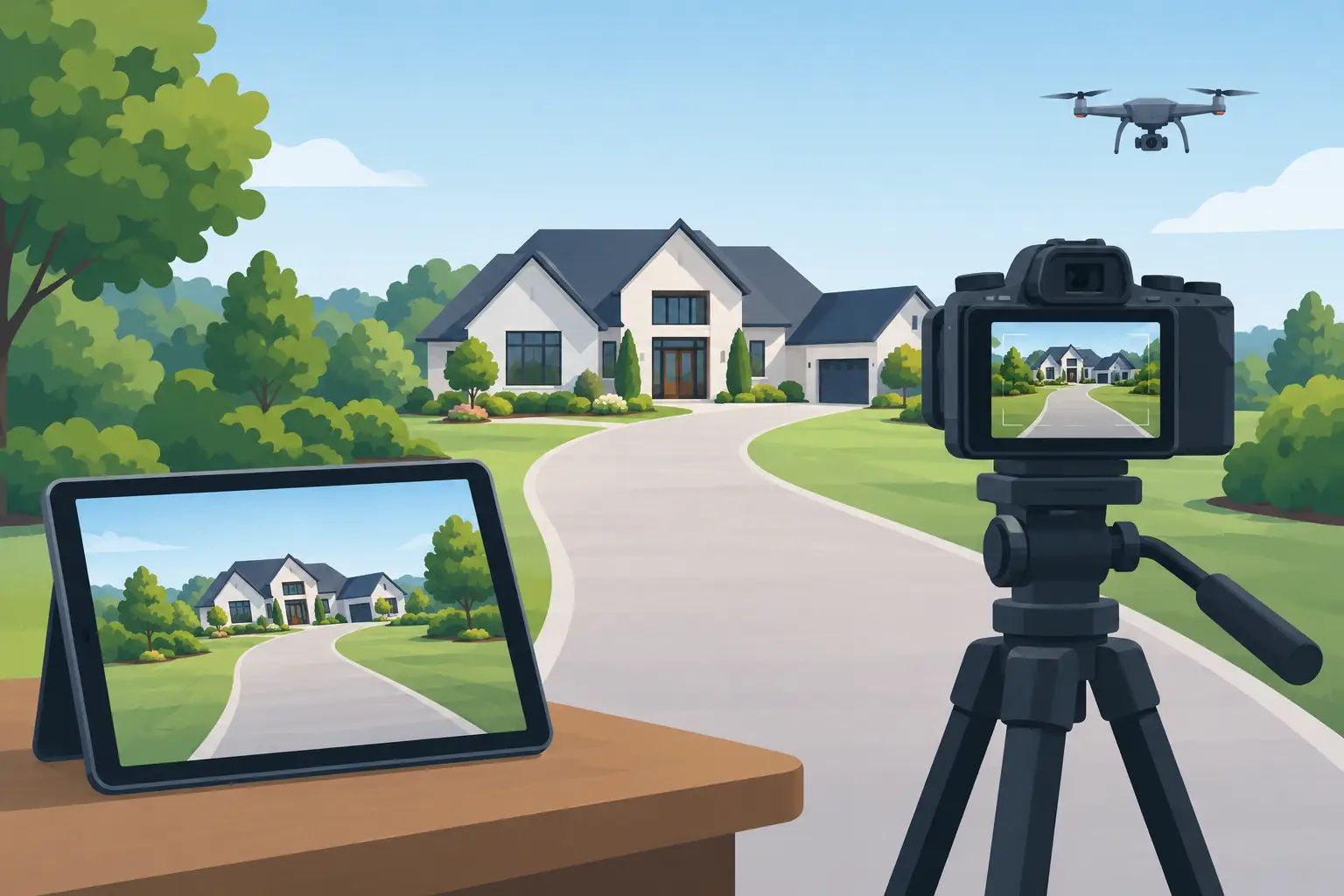
A long driveway can be one of a property’s strongest selling features or its biggest unanswered question online. Smart long driveway video planning turns that distance into a clear, appealing arrival experience, so buyers understand the setting, privacy, access, and payoff before they schedule a showing.
For Shenandoah Valley properties, a driveway is rarely just pavement between the road and the house. It may pass pasture, woods, a creek, mountain views, neighboring acreage, or a gated entrance. A well-planned video helps buyers feel the progression of the property instead of wondering what is hidden beyond the first turn.
Why the Driveway Deserves a Place in the Listing Video
Buyers scrolling a listing make quick judgments with limited context. Interior photos can show finishes, room flow, and natural light, but they cannot always explain how a home sits on the land. When the residence is set back from the road, the approach often answers the questions buyers are already asking: Is the property private? Is the drive maintained? How close are the neighbors? What does the land look like between the road and the house?
A driveway sequence gives the listing geographic context. It also creates anticipation. The goal is not to make a two-minute trip down every curve feel cinematic. The goal is to show enough of the approach that the home feels intentional, accessible, and worth arriving at.
That distinction matters. Too little coverage can make a remote home feel difficult to reach. Too much can slow the video and bury the features that move buyers toward a showing. The best plan presents the driveway as part of the property story, then gets to the home, views, and livable spaces without wasting attention.
Long Driveway Video Planning Starts With the Buyer Question
Before scheduling aerial video, decide what the driveway needs to communicate. Every property is different, and the same shot plan should not be used for a wooded cabin, a luxury estate, a working farm, and a short-term rental.
For a private wooded home, the message may be separation from the road and a peaceful arrival. For an acreage listing, the driveway may show the relationship between the home, fields, barns, and outbuildings. For a mountain-view property, the strongest moment might be where the driveway opens to the view or reveals the home’s position on the ridge.
Start by identifying the one concern a buyer could have from the listing map and exterior photos. It might be road access, the driveway surface, distance from the main road, a gate, or how the house is oriented on the parcel. The video should answer that concern directly, not avoid it.
This does not mean highlighting every imperfection. It means presenting the property honestly and with enough clarity that qualified buyers arrive informed. Clear marketing can reduce surprises at showings, which is better for the agent, seller, and buyer.
Build the Arrival Sequence Before the Shoot
A strong approach video usually follows the same logic as an in-person showing: establish where the property begins, travel through the setting, reveal the home, then transition into the features that justify the price and attention.
The opening should establish the entrance without lingering. If the entry has a gate, stone columns, a clear sign, or a distinctive tree line, it can provide an effective first frame. From there, the camera movement should show the driveway in manageable sections rather than documenting every foot of travel.
The reveal is the key moment. That may be the home coming into view after a bend, a wide aerial perspective showing the house within its acreage, or a lower approach that leads naturally toward the front entry. A reveal works because it gives the viewer orientation and reward at the same time.
Once the home is visible, move on. The driveway should support the listing, not become the listing. Buyers still need to see the exterior, the key rooms, outdoor living areas, outbuildings, and the features that separate this home from competing options.
Choose the Right Perspective
Aerial video is often the best tool for showing how a long driveway connects the house to the surrounding land. It can show distance, topography, privacy, and nearby features in one view. For rural listings near Waynesboro, Staunton, or Charlottesville, that context can be especially useful when the property’s value is tied to acreage or views.
However, aerial coverage is not automatically the right answer for every driveway. Dense tree cover, narrow lanes, low branches, active farm activity, weather, and local airspace conditions can affect what is practical and safe. In some cases, a ground-level sequence paired with a higher establishing shot will explain the property better than a long aerial flight.
The choice comes down to what the buyer needs to understand. Use aerial views for scale and relationship. Use ground-level movement when the surface, entrance, landscaping, or feeling of the approach matters most.
Prepare the Driveway Like You Prepare the House
A video can make a well-kept driveway feel inviting. It cannot make clutter, poor access, or obvious maintenance issues disappear without creating a misleading impression. Preparation protects the quality of the footage and the credibility of the listing.
Before the appointment, ask the seller to remove vehicles, trailers, bins, equipment, and delivery items from the visible approach when possible. Mow or trim along driveway edges if the season and property condition call for it. Clear fallen branches and avoid placing trash cans near the entrance or garage approach.
If the property has a gate, make sure it is unlocked or that access instructions are clear. A gate can signal privacy and security, but a closed gate with no visible context can also make buyers wonder whether access is complicated. Show the entrance in a way that makes the experience understandable.
Weather deserves planning, too. Light rain can make a gravel drive look darker and more reflective, while a dry period can create dust. Snow may add charm to the right property but can obscure driveway edges and make access harder to judge. There is no universal best condition. Match the timing to the property’s strongest, most accurate presentation.
Keep the Video Useful, Not Overproduced
Long-driveway properties invite dramatic footage, but the listing video still needs to work as a sales tool. Fast motion, extended flyovers, and dramatic music may look polished, yet they can distract from the practical information buyers need.
Keep the driveway sequence concise. The viewer should understand the approach without feeling like they are commuting to the house. Pacing should be calm enough to show the setting, but efficient enough that the video reaches the home quickly.
The same principle applies to editing. A clean transition from road to driveway to home is more valuable than a collection of disconnected scenic clips. Each scene should answer a question or build desire: where the property starts, how it sits on the land, what the arrival feels like, and what waits at the end.
This is also why video works best as part of a coordinated media plan. Professional photography can highlight the home’s individual features. Aerial stills can show lot shape and surroundings. A 3D virtual tour can help buyers understand interior layout. The video’s job is to create movement and context that static media cannot provide alone.
Give Your Media Team the Details Early
The most efficient shoots happen when the visual team knows the property’s access points and priorities before arrival. Share gate codes, driveway instructions, parking guidance, major property features, and any areas that should or should not be filmed. If the best reveal happens from a specific direction, say so.
It also helps to clarify the listing strategy. Is privacy the lead message? Is the acreage the headline? Is the home positioned as a retreat, an equestrian property, a family home with land, or a short-term rental with a memorable setting? That direction helps shape footage around the buyer you want to attract.
Villa Views plans real estate media around what gets a listing noticed, understood, and shown. For properties with a long approach, that means treating the driveway as a business asset, not an afterthought.
A buyer should finish the video knowing more than what the house looks like. They should understand what it feels like to leave the road behind, follow the drive, and arrive somewhere that feels worth seeing in person.
Listing photos that sell homes faster.
Professional real estate media with 24-hour delivery across Waynesboro, Staunton, and the Shenandoah Valley.
Book a Shoot