
How to Market Acreage Homes With Video
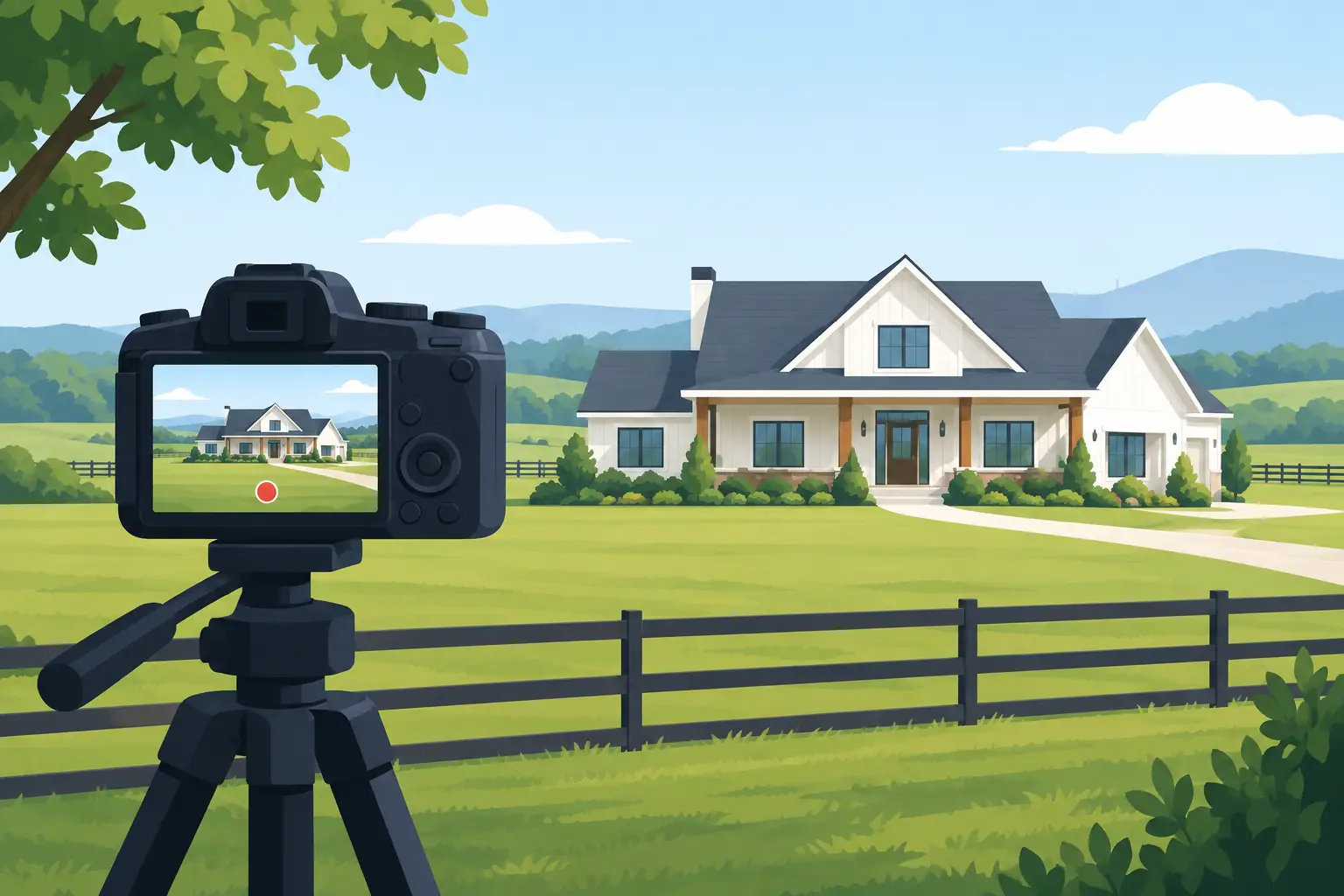
Acreage listings ask buyers to understand more than a house. They need to grasp the drive in, the setting, the usable land, the distance to neighbors, and the lifestyle the property makes possible. To market acreage homes with video, agents need more than a quick walk-through of the interior. They need a clear visual story that answers the questions buyers have before they ever schedule a showing.
For rural properties across the Shenandoah Valley, video can turn a listing from a collection of facts into a place buyers can picture themselves owning. Done well, it creates stronger first impressions, helps qualify serious prospects, and gives you a more compelling asset for the MLS, social media, email, and listing presentations.
Why Acreage Listings Need More Than Photos
Professional listing photography remains the foundation of online marketing. Buyers still scan photos first, and strong images create the click. But acreage homes have scale, movement, and context that still photos cannot always communicate on their own.
A buyer may see a beautiful kitchen and a wide porch in photos, yet still wonder what sits beyond the treeline. Is the pasture close to the home? Does the driveway climb sharply? Can they see the Blue Ridge from the back deck? Is the property private, open, wooded, level, or a mix of all four?
Video helps answer those questions quickly. It gives buyers a sense of arrival, shows how the home relates to the land, and makes important features easier to understand. That matters when a property is a 20-minute drive from the nearest town or when the buyer is considering a move from out of the area.
The goal is not to make every acreage listing feel like a movie. The goal is to remove uncertainty and give qualified buyers a reason to take the next step.
Start With the Property Story, Not the Camera
Before planning video, identify what actually sells the property. Acreage itself is not the story. A five-acre wooded retreat, a horse-ready property, a farmette with useful outbuildings, and a mountain-view home on open land each need a different emphasis.
Ask what a buyer will value most after the purchase. It may be privacy, room for animals, a workshop, garden space, hunting access, a creek, long-range views, or the ability to host family outside. Then decide which of those features must be seen in motion or from above to make sense.
For example, a home with a detached garage and large level yard may benefit from a video route that moves from the driveway to the home, then out toward the garage and usable grounds. A mountain property may need an opening aerial view that establishes elevation and surrounding ridgelines before the video enters the house.
This keeps the production focused. Buyers do not need a slow tour of every hallway. They need a reason to believe this property fits the way they want to live.
Use Video to Show the Buyer’s Arrival
The arrival experience is especially important for rural and acreage homes. Long driveways, gated entries, winding roads, and changes in elevation can be selling points, but they can also create questions if they are not presented clearly.
A strong opening sequence often establishes the approach, then reveals the home in its setting. That visual progression helps buyers understand the property before they start evaluating room finishes. It also creates an emotional payoff when the home, barn, view, or open field comes into view.
Be honest about what the drive looks like. Video should present the property at its best, but it should not hide practical realities. If access is steep, narrow, gravel, or shared, buyers will eventually learn that information. Setting clear expectations can reduce unproductive showings and protect your seller’s time.
Build the Right Shot Plan for Acreage Homes
Acreage video works best when it follows a simple, buyer-focused sequence. Each scene should add useful context rather than repeat what photos already cover.
A practical video plan may include:
- The approach and exterior reveal, showing how the home sits on the property.
- Aerial views that establish land layout, surrounding scenery, and major features.
- Key outdoor spaces such as porches, patios, pools, gardens, barns, or fire pits.
- Interior highlights that support the lifestyle story, including gathering spaces, views, primary suites, and updated kitchens.
- A closing view that brings the buyer back to the land, the home’s exterior, or its strongest scenic feature.
Not every property needs every shot. A smaller parcel with a polished home may need a concise video focused on outdoor living and proximity to town. A larger tract with fields, trails, multiple structures, or water features may need more aerial context. The right length depends on what buyers need to understand, not on how much footage can be captured.
Aerial Video Should Explain, Not Just Impress
Drone video is one of the most useful tools for marketing acreage, but it should do more than provide dramatic overhead footage. Its real value is orientation.
Aerial views can show the relationship between the home, driveway, fields, tree cover, outbuildings, water features, and nearby views. They can also help distinguish between a property that merely has acreage and one with land that is genuinely useful for a buyer’s goals.
That said, aerial footage has limits. It cannot prove boundary lines, confirm access rights, verify land use, or replace a survey. Avoid presenting a broad scenic view in a way that could confuse buyers about what is included with the sale. If a feature is nearby but not part of the property, keep the video and listing remarks clear.
The best aerial footage is purposeful. It helps a buyer say, “Now I understand how this property lives.”
Match the Video to the Buyer Pool
Video strategy should change based on who is most likely to buy the home. A luxury country estate may need a refined lifestyle film with twilight exterior footage and a calm pace. A practical homestead may need clearer coverage of the shop, pasture, fencing, and storage. A weekend retreat may need to emphasize views, privacy, and easy outdoor enjoyment.
This is also where your listing copy and video should work together. Use the video to show what is hard to explain. Use remarks to provide the details that need precision, such as acreage, zoning, utility information, restrictions, road maintenance, or distances.
If a home appeals to relocation buyers, video becomes even more valuable. Someone browsing from Richmond, Northern Virginia, or out of state may not know how Waynesboro, Staunton, or Crozet feels on the ground. A well-planned listing video can give them a better sense of setting before they commit to a long drive.
Do Not Let the Interior Take Over the Story
One common mistake is treating an acreage listing video exactly like a suburban home video. The camera moves room to room, shows the finishes, and ends without making the land feel meaningful. That approach can leave the property’s biggest differentiator underrepresented.
Another mistake is the opposite: too much scenic footage and not enough of the home. Buyers still need to see the condition, flow, upgrades, and everyday function of the house. The strongest videos balance both parts of the decision.
Think of the property as one connected experience. The kitchen may open to a deck with a view. The mudroom may make sense because it serves the barn or garden. The great room may matter because it frames the landscape through large windows. When the interior and exterior are connected visually, the listing feels more complete.
Prepare the Property for Video Day
The condition of the land matters as much as the condition of the rooms. Mow or tidy visible areas when possible, move vehicles that distract from the approach, secure trash bins, and make sure outdoor seating areas feel ready to use. If there are horses, livestock, or equipment, decide in advance whether they add to the story or create clutter.
Weather deserves attention, too. A blue-sky day is helpful, but the best timing depends on the property. Mountain views may show best in early morning or later afternoon. A west-facing porch can look much better as the sun begins to soften. Winter can reveal views hidden by summer foliage, while spring and early summer may show fields and landscaping at their most inviting.
Coordinate with your media team around the listing’s strongest feature, not just the next open appointment on the calendar. Villa Views can help agents build a practical media package that combines photography, aerial coverage, 3D virtual tours, floor plans, and video without adding unnecessary complexity to the process.
Give the Video a Job After It Is Delivered
A listing video should not sit quietly on one platform. Use it wherever buyers and potential sellers are evaluating your marketing.
Place the full video where buyers expect listing media, then use shorter cuts for social posts, email campaigns, and property previews. Lead with the strongest visual moment, whether that is a mountain view, a sweeping approach, a horse barn, or a striking exterior. A generic opening can lose attention before the property has a chance to make its case.
Video also strengthens your next listing appointment. Sellers of rural homes want to know whether you understand how to market features that do not fit neatly into a standard residential listing. Showing a clear plan for aerial media, property video, virtual tours, and fast delivery helps position you as an agent who knows how to bring the full property to market.
Acreage buyers are not simply shopping for square footage. They are shopping for space, privacy, possibility, and a different daily routine. Give them a video that makes those benefits easy to see, and the right buyers will have a much clearer reason to book a showing.
Listing photos that sell homes faster.
Professional real estate media with 24-hour delivery across Waynesboro, Staunton, and the Shenandoah Valley.
Book a Shoot