
New Construction Listing Media That Sells the Vision
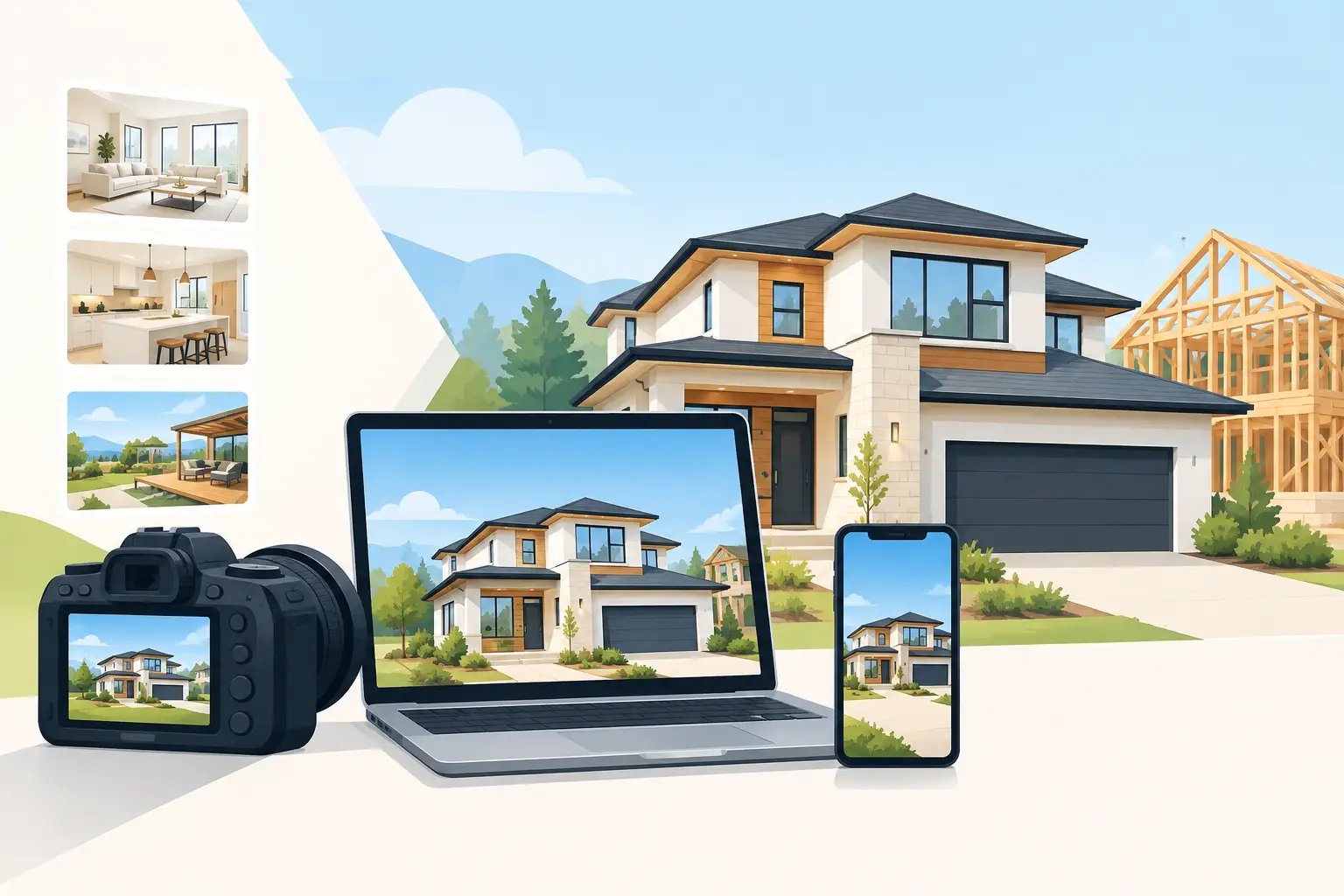
A new build can be harder to market than a finished resale home. There may be fresh landscaping that has not filled in, empty rooms that feel smaller on camera, active crews nearby, or a view buyers cannot appreciate from the street. The right new construction listing media closes that gap. It helps buyers see not just what is built today, but what life in the home will feel like when the final details are in place.
For agents representing builders, spec homes, or custom homes nearing completion, media is not a last-minute checkbox. It is the presentation that earns the click, gives buyers a reason to schedule a showing, and supports the price before they ever pull into the driveway.
New Construction Listing Media Starts With the Buyer Journey
Buyers shopping new construction are often comparing several homes at once, sometimes across multiple communities or counties. They are looking at layout, finishes, lot position, nearby amenities, views, and the overall value of the build. If your listing does not answer those questions quickly online, it can lose attention to a property with a clearer presentation.
Professional photography provides the first impression, but the full media package should match the home and the way it will be marketed. A straightforward starter home may need strong interior and exterior photography, a floor plan, and a clean set of images ready for the MLS. A mountain-view build, a home on acreage, or a property in a developing community may benefit from aerial coverage and twilight images that establish the setting and the lifestyle.
The goal is not to add every possible deliverable to every listing. The goal is to remove buyer uncertainty. If an asset makes the layout, setting, upgrades, or scale easier to understand, it earns its place in the package.
Photography That Makes Empty Rooms Feel Intentional
New construction photography has a different job from occupied-home photography. There is no lived-in warmth from furniture, bookshelves, or a kitchen counter in use. That means every image needs to work harder to show light, flow, craftsmanship, and the purpose of each space.
Wide, balanced interior photography helps buyers understand how rooms connect. It should show the kitchen as part of the home’s daily living space, not as a collection of cabinets and appliances. It should make clear whether the primary suite is private, whether the basement has real entertaining potential, and whether the mudroom, pantry, or home office solves a practical need.
Exterior photos matter just as much, particularly in the Shenandoah Valley where lot size, ridgelines, porches, and drive-up appeal can shape the decision. A long driveway is not a problem when it is presented as privacy and arrival. A large lot should be photographed in a way that communicates usable outdoor space. If the home has a sunset-facing deck or mountain backdrop, those features should lead the visual story rather than get buried near the end of the gallery.
Timing matters. Photographing before final cleaning, while protective film is still on appliances, or before the site is presentable can make a finished home look unfinished. When possible, schedule once the home is clean, lights are working, exterior debris is removed, and contractors are no longer moving through the rooms.
When Virtual Staging Makes Sense
Virtual staging can help buyers read the scale and purpose of an empty room. A vacant dining area, flex room, or open basement can look undefined in photos. Staging can show how the space functions without requiring the cost and logistics of physical furniture.
It is best used selectively. Stage the rooms where furniture adds clarity, such as the living room, primary bedroom, dining area, or a bonus space that could otherwise confuse buyers. Keep the style aligned with the home and likely buyer. A modern farmhouse build should not be filled with ultra-contemporary furnishings that make the listing feel disconnected.
Virtual staging is a visual aid, not a substitute for accurate marketing. Keep the permanent features of the home visible and make sure the listing description clearly represents what conveys.
Give Buyers a Better Sense of Layout
A beautiful photo gallery can create interest, but it cannot always answer the questions buyers ask before a showing. How does the kitchen connect to the living room? Is the laundry near the bedrooms? Where is the stairway? Is the lower level finished, and how large is it?
That is where 2D or 3D floor plans earn their value. They give buyers a fast, practical way to understand the footprint, room relationships, and approximate dimensions. For new construction, this is especially useful when buyers are comparing similar models with different elevations, basement options, or bedroom configurations.
A 3D virtual tour adds another layer of confidence. Buyers can move through the home at their own pace and revisit the spaces that matter to them. For out-of-area buyers, busy families, and anyone narrowing a list before a weekend of showings, that access can keep your property in the conversation.
There is a trade-off to consider. A tour and floor plan are most valuable when the layout is a meaningful selling point or when buyers need help understanding a larger home. For a compact, simple plan with excellent photography and a clear listing description, a floor plan may be the more efficient addition. Build the package around the questions the property is likely to create.
Use Aerial Media to Sell the Lot, Not Just the Roofline
Drone photography and video are particularly useful for new construction because the home is often part of a bigger story. Aerial images can show the relationship to mountain views, farmland, nearby roads, a neighborhood entrance, or a larger parcel. They can also help buyers understand privacy, tree cover, slope, and how the home sits on the land.
The strongest aerial coverage is specific. It highlights what buyers cannot see from ground level. For a rural property, that may be acreage and separation from neighboring homes. For a neighborhood build, it may be proximity to community features or a clear view of the lot’s position. A generic overhead roof shot rarely does as much work as an image that explains why this location is worth the price.
Video can be useful when the setting has movement and scale, such as a drive through a community, a sweeping approach to a home on land, or a reveal of a view beyond the rear porch. Keep it focused. Buyers need a reason to watch, not a long reel of every room.
Create a Launch Plan Before the Home Is Finished
The best time to think about media is before the final week. Builders and agents often know which homes are coming available well in advance, but photography gets delayed because the completion date moves. That is normal. The answer is not to wait until the sign goes in the yard.
Set a tentative media date, then confirm it once the home is close to photo-ready. Use a simple checklist: utilities on, all light fixtures working, counters cleared, windows cleaned, construction materials removed, landscaping finished as much as possible, and vehicles out of the drive. If a few details remain, decide whether they affect the listing’s first impression or can be handled before showings begin.
For communities with repeated models, consistency is valuable. Similar framing, polished editing, and a predictable turnaround help your listings look like they came from the same professional brand. That matters in listing appointments, too. Sellers and builders want to know their homes will be presented with care every time, not only when the schedule happens to be easy.
Villa Views gives agents a practical way to build the right package, with professional photography, aerials, virtual tours, floor plans, twilight images, and virtual staging available as clear, bookable services. Core photography is delivered within 24 hours, helping you move from a finished home to an active listing without losing momentum.
Let the Media Support the Sales Conversation
New construction listings often come with decisions: finish selections, builder allowances, warranties, timelines, and sometimes homes that are still being completed. Your media should make the physical home easy to understand so your conversations can focus on the value behind those decisions.
Lead with the strongest visual advantage in the first photos. Use the floor plan and tour to answer practical questions. Add aerials when land or location is part of the value. Then make sure every asset is ready when the listing goes live, not days after the first wave of buyer attention has passed.
A well-marketed new build does more than look polished. It gives buyers enough confidence to take the next step, and it gives you a stronger reason to ask for that showing.
Listing photos that sell homes faster.
Professional real estate media with 24-hour delivery across Waynesboro, Staunton, and the Shenandoah Valley.
Book a Shoot