
Portal Browsing Behavior That Drives Showings
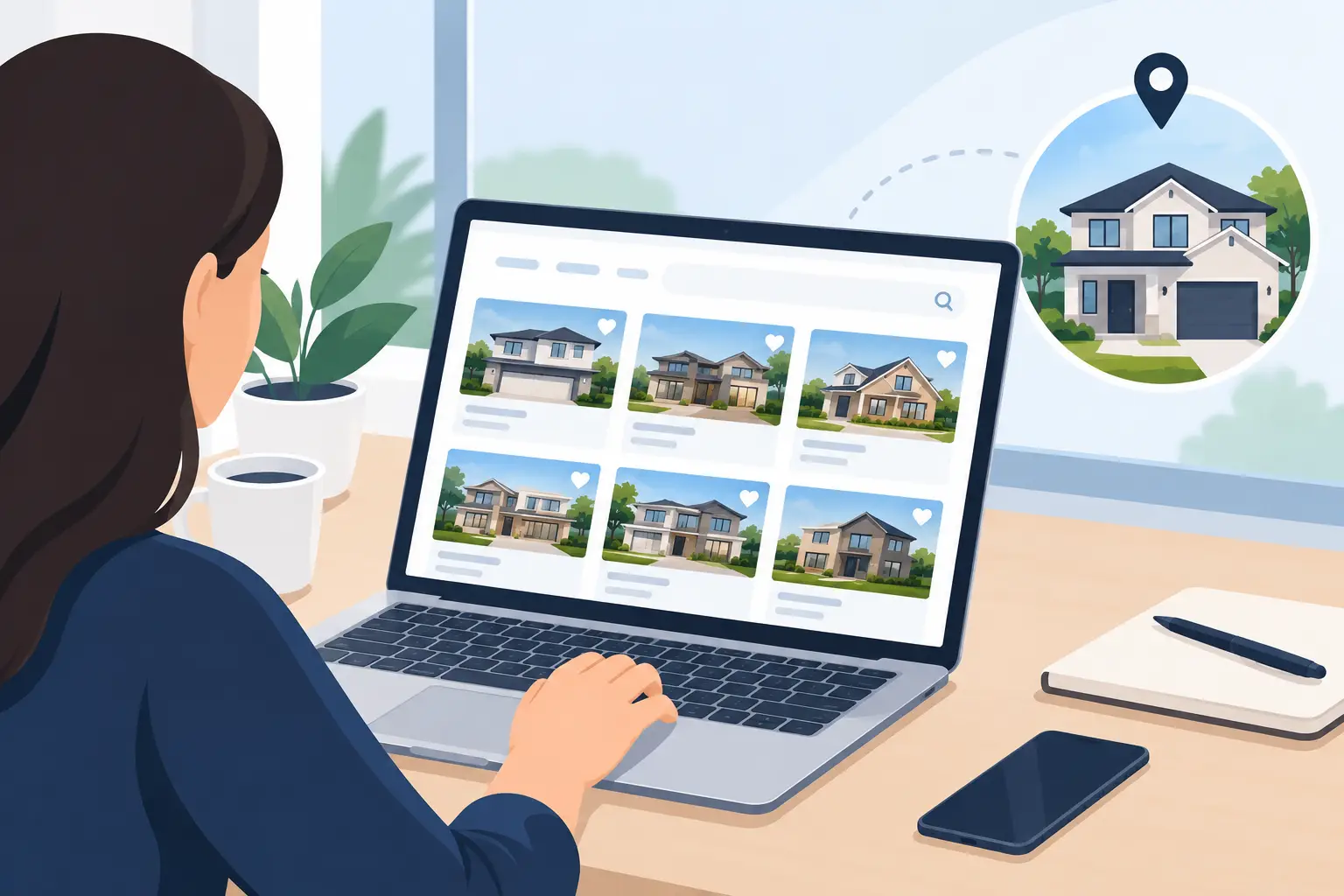
A buyer scrolling a property portal is not giving every listing equal consideration. They are making fast decisions from a thumbnail, a price, a location, and the first few images. Understanding portal browsing behavior helps agents build a listing presentation that earns the click before a buyer moves on to the next option.
For Shenandoah Valley listings, that first impression has to work especially hard. A home may have acreage, a long driveway, mountain views, an outbuilding, or a layout that makes more sense when buyers can see it. The right media does not simply document those features. It answers the questions buyers are already asking while they browse.
Portal browsing behavior starts with the first click
Most buyers begin with a filtered set of homes. They may be comparing several properties in the same price range, school area, or commute radius. At that point, your listing is competing against every other thumbnail on the results page, not just the house down the road.
The cover photo carries real weight. A strong exterior image, an inviting main living space, or a view that clearly separates the property from nearby options can create the pause that leads to a click. The best choice depends on the home. A traditional neighborhood listing may need curb appeal first. A mountain property may need the view. A renovated home with a modest exterior may earn more attention by leading with a bright, finished kitchen or living room.
This is not a reason to choose the most dramatic image at random. The first photo should set an accurate expectation. If buyers click for a sunset mountain view, that view needs to be a meaningful part of the property experience. If they click for a beautifully renovated kitchen, the rest of the gallery should support that level of quality.
What buyers look for after they open the listing
A click is only the beginning. Once a buyer opens a listing, they scan the image gallery for proof that the property fits their needs. They are looking for scale, condition, flow, light, privacy, storage, outdoor usability, and signs that the home is worth scheduling.
That is why a complete visual package matters more than a handful of attractive photos. Buyers do not move through a listing in the order an agent thinks about the home. They often jump straight to the kitchen, primary bedroom, bathrooms, backyard, basement, garage, or any room tied to their priorities. Missing images can create uncertainty, and uncertainty makes it easy to return to the search results.
A well-planned photo set gives each important space a job. Wide images establish the room and its relationship to adjoining areas. Detail images can reinforce finish quality when a feature truly adds value. Exterior coverage shows approach, setting, and usable outdoor areas. For rural properties, that may include a driveway, frontage, pasture, detached buildings, a deck, or the distance between the home and neighboring structures.
The goal is not to photograph every corner for its own sake. It is to remove the questions that prevent a buyer from taking the next step.
Sequence affects how the listing feels
Gallery order influences perception. Start with the strongest reason to care, then quickly show the spaces buyers expect to evaluate first. From there, guide them through the home in a sequence that feels logical rather than repetitive.
For many homes, that means moving from exterior to entry, main living areas, kitchen, dining, bedrooms, baths, and outdoor spaces. A property with substantial land or a standout view may need a different opening sequence. The right order depends on what makes that listing competitive in its market.
Avoid burying a major selling point near the end of a long gallery. If the property has a finished basement, a renovated bath, a screened porch, or usable acreage, buyers should not have to hunt for it.
Use visuals to answer the practical questions
Online browsing is a form of pre-qualification. Buyers are deciding whether the home seems promising enough to investigate further. Strong listing media helps them picture the property with less guesswork.
Professional photography establishes the baseline. It gives buyers clear, consistent views of rooms, condition, and natural light. But some listings need more context than still photos can provide alone.
A 3D virtual tour can help buyers understand how rooms connect, especially when the layout is split-level, expansive, updated in stages, or difficult to read from photos. It can also help an out-of-area buyer spend more meaningful time with the property before requesting a showing.
Floor plans serve a different purpose. They give buyers a quick way to check bedroom placement, room dimensions, access points, and overall flow. This is particularly useful for families comparing bedroom locations, remote workers looking for office space, or buyers trying to understand how a finished lower level connects to the main home.
Drone photography and video add value when the setting is part of the sale. They can show acreage, proximity to a ridge line, a private approach, nearby fields, a large lot, or the relationship between a home and its surroundings. They are less useful when they are included by habit on a property where an aerial view does not clarify a buying decision.
That distinction matters. More media is not automatically better. The best package is the one that makes the property easier to understand and more compelling to compare.
Make the listing easy to trust
Buyers have become skilled at spotting a mismatch between marketing and reality. Overly selective coverage, confusing angles, and images that hide key areas can create doubt. The same is true when a listing looks polished but does not explain the home’s layout or setting.
Trust comes from clarity. Show the rooms that matter. Represent the property honestly. Use virtual staging when it helps buyers understand the intended use of an empty room, but keep the presentation consistent with the home’s actual condition. If a room is compact, show it well without making it appear to be something it is not.
This approach protects the showing experience, too. A buyer who understands the basics before arriving is more likely to spend the visit evaluating fit rather than feeling surprised by information they expected to find online.
Match the media plan to the listing, not a standard checklist
A starter home, a luxury estate, a rental cabin, and a home on ten acres do not need the same visual strategy. Agents get better results when they choose media based on the questions a particular buyer will ask.
For a move-in-ready home in a competitive neighborhood, polished photography, a clear floor plan, and an attention-grabbing lead image may be the priority. For a property with land, privacy, or views, aerial coverage may carry more weight. For a home with an unusual layout or a buyer pool that includes relocations, a 3D virtual tour can reduce confusion and encourage more qualified inquiries.
The trade-off is timing and budget. Not every feature needs every add-on, and not every listing should wait for a large production plan. What matters is choosing the coverage that supports the listing’s position, price point, and likely buyer. A dependable media partner should make that decision easier with clear options, quick scheduling, and predictable delivery.
Prepare for the way buyers actually browse
Media quality starts before the appointment. Buyers notice clutter, dark rooms, crowded counters, and distractions in the background because those details make it harder to assess the home. A simple prep plan gives the property room to communicate its strengths.
Ask sellers to clear kitchen and bathroom counters, remove personal items where practical, replace burned-out bulbs, open blinds when privacy allows, and move vehicles from the driveway if exterior coverage is planned. For acreage or larger lots, identify gates, barns, trails, view corridors, and other features that deserve to be shown. Those details are easy to miss if no one mentions them before the shoot.
For agents who need a consistent process, Villa Views provides an end-to-end menu of photography, aerial media, 3D virtual tours, floor plans, twilight images, and virtual staging, with online booking and a 24-hour turnaround for core photography. The point is not to add production for its own sake. It is to give buyers a clearer reason to click, stay, and schedule.
Before your next listing goes live, look at it through a buyer’s filter: What makes them stop scrolling, what questions will they have next, and have your visuals answered those questions clearly enough to earn the showing?
Listing photos that sell homes faster.
Professional real estate media with 24-hour delivery across Waynesboro, Staunton, and the Shenandoah Valley.
Book a Shoot