
Rental Photography Trends That Drive Bookings
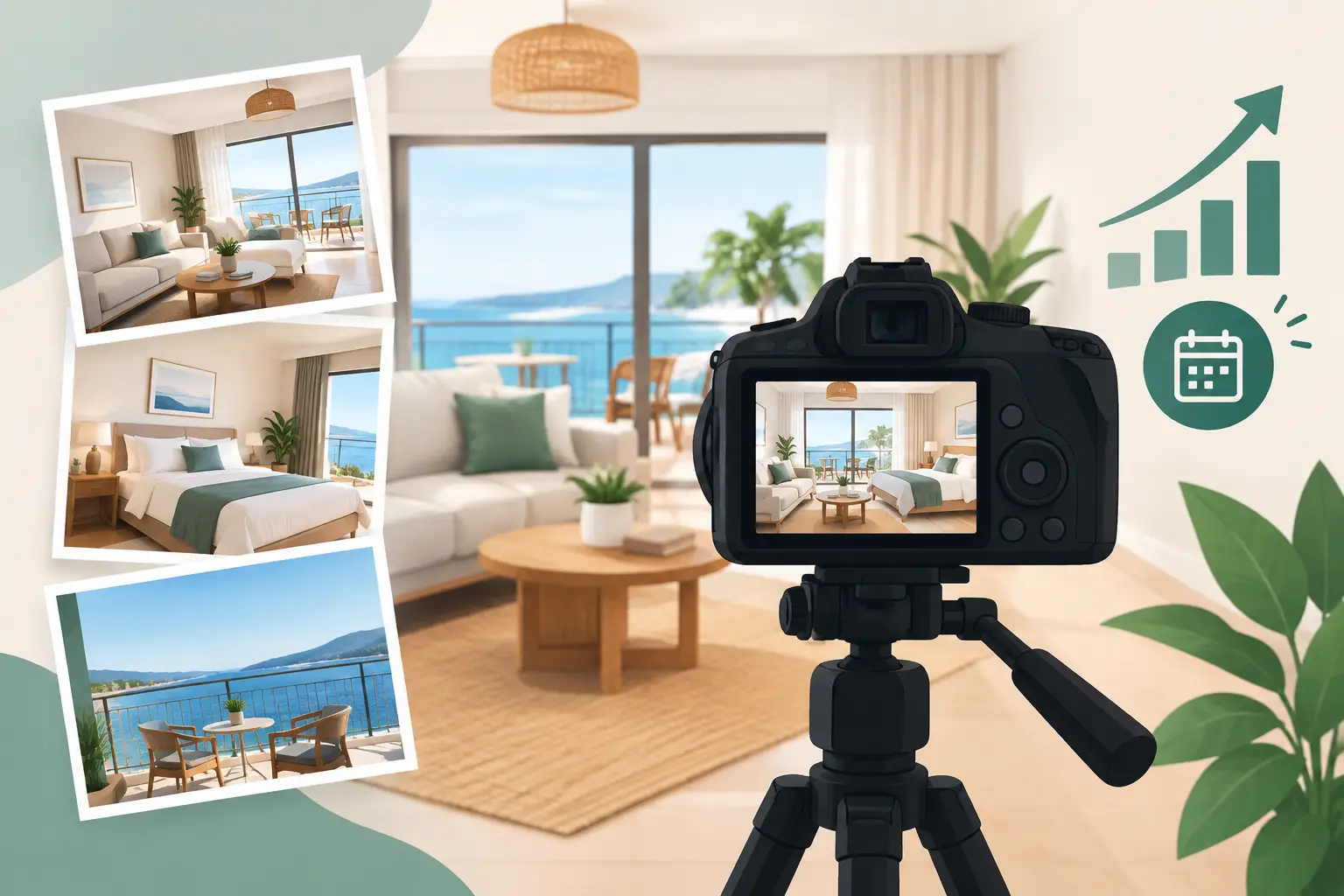
A rental can be spotless, well furnished, and set in a beautiful location, then still lose a booking because the listing photos leave too much unanswered. Guests are comparing several properties in seconds. The rental photography trends worth following are not about chasing a look for its own sake. They are about making the stay easy to understand, easy to trust, and easy to choose.
For short-term rental hosts and property managers, that means moving beyond a basic set of room photos. Strong listing media now needs to show the experience, clarify the layout, answer practical questions, and create a polished first impression before a guest ever opens the door.
Rental Photography Trends Are Becoming More Practical
The biggest shift in rental marketing is simple: guests want useful visual information along with attractive images. A bright hero shot still matters, but it cannot carry the whole listing. Travelers want to know whether the kitchen can handle a family breakfast, whether the bedrooms offer privacy, where they will park, and what the outdoor space actually feels like.
This is especially true for properties in the Shenandoah Valley. A mountain view, acreage, a creek, a fire pit, or a long private driveway may be part of the reason someone books. If those details are buried in the description or photographed as an afterthought, the listing gives away one of its strongest advantages.
The goal is not to photograph every inch of a property. It is to build a visual story that helps the right guest picture their stay. That requires intentional coverage of the spaces and features that influence a booking decision.
Experience-first images beat room-by-room documentation
Guests do not book a bedroom in isolation. They book a weekend getaway, a family gathering, a hiking basecamp, or a quiet place to work remotely. Rental photography is increasingly designed around those use cases.
That may mean leading with a welcoming porch at sunset, a living room arranged for conversation, a dining area ready for a group meal, or an outdoor seating area with the view clearly visible. Interior images still need to document the property accurately, but the first images should give people a reason to keep looking.
This approach works best when the property has a clear draw. A downtown apartment may need to emphasize walkability, efficient design, and stylish comfort. A rural cabin may need to make its setting, privacy, and outdoor amenities impossible to miss. The right sequence depends on what guests are actually choosing.
Wide, Natural Images Still Matter, With Better Restraint
Wide-angle photography remains essential because guests need to understand room size and flow. But the trend is moving away from overly stretched images that make spaces appear unrealistic. Guests can spot distortion quickly, and disappointment at check-in can lead to poor reviews even when the listing technically disclosed the space.
Well-composed wide images should make a room feel open while keeping vertical lines straight and furniture proportions believable. A kitchen should look functional, not artificially enormous. A cozy bedroom should look inviting, not misleadingly spacious.
Natural color is part of that same trust-building process. Rental photography should feel clean, bright, and professionally finished without turning a home into something it is not. Window views should remain visible when they are a selling point. Wood tones, stone, greenery, and local character should look like themselves.
For managers with multiple properties, consistency matters just as much as individual image quality. A recognizable, polished visual standard across a portfolio makes the entire operation look more reliable. It also reduces the back-and-forth that comes from trying to explain what kind of coverage is needed for every new listing.
Twilight Photography Has Become a Strategic Upgrade
Twilight images are no longer reserved only for luxury homes. For rentals with strong exterior lighting, outdoor living areas, pools, decks, fire features, or a notable view, a twilight image can create the emotional pull that a midday exterior photo may not.
The trade-off is that twilight should support the listing, not replace clear daytime coverage. A guest still needs to see the driveway, entrance, parking arrangement, and exterior condition in straightforward light. The twilight image is most effective as a high-impact hero photo or a later image that reinforces the feeling of the stay.
It is particularly useful for properties marketed around relaxation and gathering. String lights over a patio, a warm glow from inside, or a fire pit ready for the evening can show how the property lives after check-in. When the setting supports it, that image can help a listing feel more memorable in a crowded search result.
Drone Media Is More About Context Than Height
Aerial photography and video continue to be valuable, but the best use is not simply putting a camera high in the air. Guests need context. They want to see how close a rental is to the mountains, water, trails, vineyards, town, or nearby attractions. They may also want confidence that the property offers privacy or enough room for their group.
For acreage, mountain properties, and homes with substantial outdoor amenities, drone coverage can communicate what ground-level photos cannot. It can show the relationship between the house, the view, the land, and the surrounding setting in one frame.
That said, drone media is not necessary for every rental. A tightly packed property with no meaningful exterior context may benefit more from better interior photography, a floor plan, or a virtual tour. The right media bundle should follow the property’s strongest booking triggers, not a one-size-fits-all checklist.
3D Tours and Floor Plans Reduce Guest Guesswork
One of the most useful rental photography trends is the growing expectation for visual clarity. Guests are planning around sleeping arrangements, stairs, shared spaces, bathroom access, kitchen layout, and work areas. A well-produced 3D virtual tour lets them explore at their own pace, while a floor plan gives them a fast, practical overview.
These tools are especially helpful for larger homes, multi-level properties, distinctive layouts, and rentals designed for groups. A family traveling with grandparents may need to know whether there is a main-level bedroom. Friends splitting a weekend may want to understand bedroom separation and bathroom locations before they book.
Floor plans can also reduce repetitive pre-booking questions for property managers. They do not replace clear written details about bed sizes, accessibility, or house rules, but they make the listing easier to evaluate. That can attract guests who are better matched to the property from the start.
Detail Photos Should Earn Their Place
Close-up images of coffee setups, towels, local decor, board games, or a carefully styled entry can add personality. Used well, they help a rental feel cared for rather than generic. Used too often, they take up image slots that should be showing bedrooms, bathrooms, storage, or outdoor amenities.
The best detail images reinforce a differentiator. Show the stocked coffee bar if it is genuinely inviting. Show the record player, reading nook, sauna, game room, or pet-friendly setup if it supports the property’s positioning. Do not use details to hide a lack of comprehensive room coverage.
Before scheduling photography, walk the property as a guest would. Identify the five features most likely to earn the click, then identify the questions a guest may have before booking. That simple exercise helps prioritize the media that will do the most work.
Preparation Is Still the Trend That Never Changes
No visual upgrade can overcome a rental that is not prepared. Clean counters, made beds, staged outdoor furniture, open blinds, hidden cords, and cleared personal items remain the foundation of good listing media. Preparation also protects turnaround time, because the photographer can focus on producing useful coverage instead of waiting for rooms to be reset.
For occupied rentals, build a repeatable pre-shoot checklist. Confirm that every bulb works, remove cleaning supplies, straighten dining chairs, put away pet items unless they are part of the pet-friendly amenity, and make sure vehicles are not blocking the exterior. If a hot tub, fireplace, or outdoor feature is central to the listing, have it ready to photograph.
Villa Views helps hosts and managers build the right mix of professional photography, aerial media, twilight images, 3D virtual tours, and floor plans without forcing every property into the same package. The priority is clear: choose media that gives guests confidence and gives your listing more reasons to win the click.
Before your next refresh, look at your listing from the perspective of someone who has never been there. If the photos answer their practical questions and make the stay feel worth planning, they are doing far more than filling a gallery.
Listing photos that sell homes faster.
Professional real estate media with 24-hour delivery across Waynesboro, Staunton, and the Shenandoah Valley.
Book a Shoot