
Top Home Prep Priorities Before Listing Photos
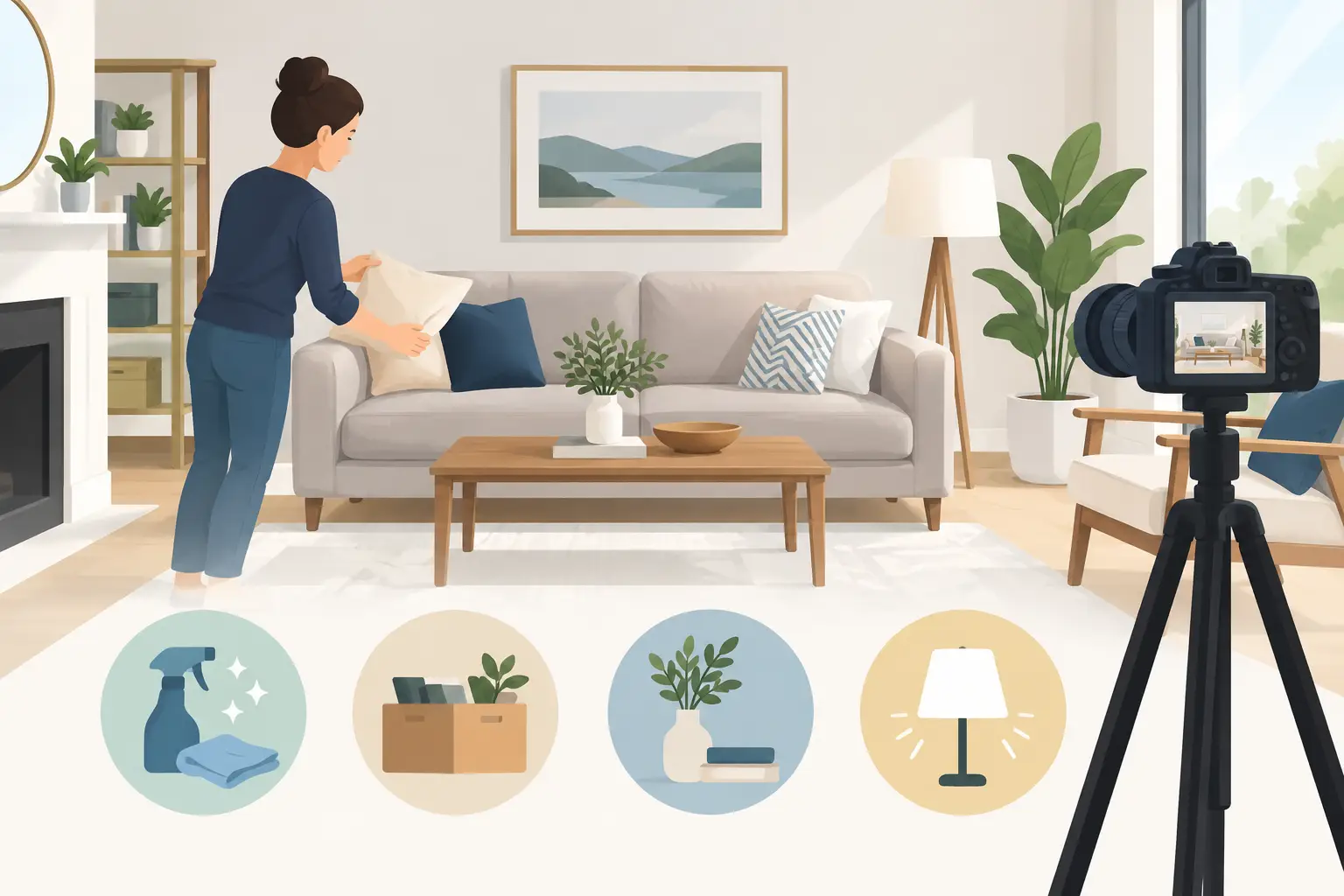
A photo appointment is not the time to decide where the mail pile goes. Buyers form an opinion of a home in seconds online, and the camera records every distraction, dark corner, and crowded countertop. The top home prep priorities are the few actions that make rooms photograph bigger, brighter, and easier for buyers to picture themselves in.
For busy listing agents, prep is also a service issue. A clear plan keeps the appointment on schedule, reduces last-minute calls, and gives the marketing package a more polished starting point. The goal is not to make a lived-in house look unrealistic. It is to remove visual friction so the home, its layout, and its best features can do the selling.
Start With the Buyer’s First Impression
Curb appeal is not just a showing-day concern. It sets the visual tone for the whole listing, especially when the exterior image appears first in search results. Ask sellers to walk to the street, then look back at the home as if they had never seen it before.
Clear vehicles from the driveway and move trash cans, hoses, toys, sports equipment, and yard tools out of sight. Sweep the porch, walkway, deck, and patio. Straighten outdoor furniture and remove faded cushions or broken planters. In the Shenandoah Valley, a long driveway, acreage, mountain backdrop, or detached garage may be a major selling point. Those features need a clean line of sight, not a foreground full of parked cars and clutter.
Landscaping does not need to be perfect. Freshly cut grass, trimmed obvious growth, and a swept entry go a long way. Seasonal realities matter, too. A home photographed in winter will not have summer color, but it can still look cared for with a clean porch, tidy beds, and an unobstructed façade.
Top Home Prep Priorities Inside the House
The highest-impact interior prep is simple: declutter, depersonalize, and clean what reflects light. These three moves affect nearly every photo, from wide room views to detail shots.
Clear surfaces, not just closets
Countertops, tables, desks, nightstands, and bathroom vanities should be mostly clear. A few intentional items can make a room feel inviting, but everyday accumulation reads as visual noise. Put away mail, charging cords, remote controls, medications, pet supplies, paper towels, dish racks, magnets, and small appliances that are not adding to the room.
This is where sellers often underestimate the difference. A kitchen may be updated and spacious, but crowded counters make it feel less usable. A home office can suggest flexibility for remote work, but stacks of paperwork pull attention away from its size and function.
Do not ask sellers to empty every room until it feels sterile. Instead, aim for one clear purpose per space. The dining table should read as a place to gather. The primary bedroom should feel calm. The bonus room should communicate whether it is an office, gym, playroom, or media room. If a room is trying to do four jobs, buyers may struggle to understand the layout.
Remove personal and sensitive items
Family photos, personalized signs, calendars, school schedules, and visible documents should be stored before the appointment. So should valuables, medications, firearms, and anything a seller would not want displayed in public marketing.
Depersonalizing is not about stripping a home of character. It gives buyers room to imagine their own routines there. Keep a well-styled bookshelf or a thoughtful piece of art if it supports the room, but remove items that make the space feel too specifically owned by someone else.
Clean glass, mirrors, and high-visibility areas
Smudged mirrors, shower doors, stainless appliances, windows, and glass tabletops show up quickly in professional imagery. Before the appointment, sellers should clean these surfaces and check for streaks from multiple angles.
Bathrooms deserve special attention because they are compact and detail-heavy. Close toilet lids, remove bath mats if they are worn or mismatched, hide toiletry bottles, and use fresh, neatly folded towels. Kitchen sinks should be empty and wiped down. Bedrooms benefit from made beds with smooth bedding, pillows arranged simply, and clothing fully put away.
Make Light Work for the Listing
Natural light is one of the strongest assets a home can have, but sellers need to help it reach the room. Open blinds and curtains before the appointment unless a window has an unattractive view or severe glare. Raise shades fully where possible, and remove items blocking windowsills.
Replace burned-out bulbs and make sure fixtures have matching color temperatures within the same room. A mix of cool white bulbs, warm lamps, and one dim fixture can make a space feel inconsistent. Sellers do not need to buy expensive lighting. They simply need working, coordinated bulbs and lamps that support the room.
Agents should also encourage sellers to switch on lights before the photographer arrives, unless appointment instructions say otherwise. This gives the team time to identify any fixture issues and keeps the process moving. For homes with darker interiors, preparation matters even more. Clear windows, light-colored surfaces, and open pathways help each room feel more accessible.
Prepare the Rooms That Drive Decisions
Not every room carries equal marketing weight. The main living area, kitchen, primary bedroom, bathrooms, and outdoor living spaces usually deserve the most focused prep because they shape how buyers judge condition, comfort, and value.
In the kitchen, remove refrigerator magnets and papers, clear the sink, tuck away pet bowls, and decide whether a small accent, such as a bowl of fruit or simple flowers, improves the scene. In the living room, reduce extra furniture if traffic flow is blocked. A room can be fully furnished yet still look cramped when oversized recliners, side tables, and storage pieces compete for floor space.
For the primary bedroom, keep the bed as the focal point. Remove exercise equipment, laundry baskets, and under-bed storage that is visible. In bathrooms, close cabinets and shower curtains unless the shower itself is a selling feature. A clean, simple presentation signals care without asking sellers to stage every inch of the home.
Secondary rooms still matter, especially in homes where square footage, flexible space, or additional bedrooms are key to the buyer conversation. If a guest room has become a catch-all, clear enough space that it can once again read as a bedroom. If a finished basement is a selling point, define it and remove storage overflow.
Handle Pets, People, and Daily Life Before Arrival
Pets are part of the household, but they should not be part of the listing media. Arrange for dogs, cats, crates, litter boxes, beds, food bowls, and pet toys to be out of the home or fully out of view. This protects the pet, avoids delays, and keeps the focus where it belongs.
Sellers and children should plan to leave during the appointment whenever possible. It is easier to photograph rooms efficiently without people waiting in hallways or moving from room to room. If someone must stay, they should be ready to move quickly and keep personal items contained.
Agents can prevent most appointment-day stress by sending prep expectations early, then following up the day before. A simple reminder works better than an overwhelming project plan: clear surfaces, clean key rooms, open window coverings, turn on lights, secure pets, and remove vehicles from the driveway.
Know When Prep Is Enough
There is a point where extra effort has diminishing returns. Sellers do not need to repaint an entire home or replace every piece of furniture before photos unless those issues are already affecting the listing strategy. Focus first on what the camera will reveal: clutter, poor lighting, unfinished chores, worn linens, and blocked sightlines.
If a property is vacant, virtual staging can help buyers understand the scale and intended use of key rooms. If a home has strong exterior features, aerial photography may better show acreage, outbuildings, access, or surrounding views. The right media choices depend on the property, not a one-size-fits-all package.
Villa Views helps agents build listing media around the features buyers need to see, with a straightforward booking process and fast core photography turnaround. Prep still sets the foundation. When the home is ready before the camera arrives, every image has a better chance to earn the click, support the showing, and keep the buyer focused on what makes the property worth seeing in person.
A seller does not need a magazine-ready house. They need a clear, clean, well-lit version of the home that lets its strongest spaces speak first.
Listing photos that sell homes faster.
Professional real estate media with 24-hour delivery across Waynesboro, Staunton, and the Shenandoah Valley.
Book a Shoot