
Top Rural Listing Media Tools That Drive Showings
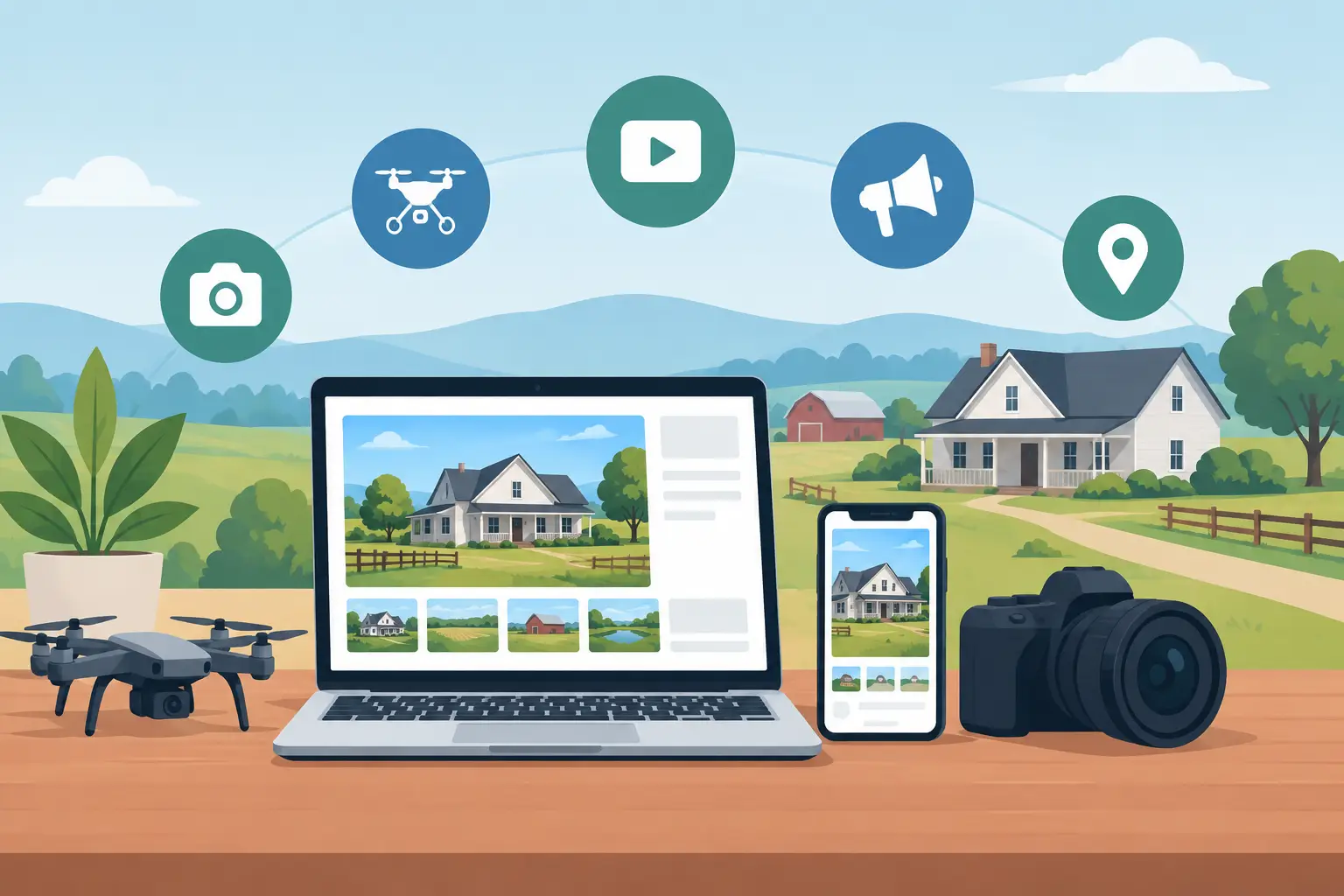
A rural property can lose a buyer before they ever reach the driveway. A few interior photos may work for a compact neighborhood home, but acreage, outbuildings, mountain views, and long approaches create more questions. The top rural listing media tools answer those questions early, helping the right buyers click, inquire, and schedule a showing with a clearer idea of what they are coming to see.
For Shenandoah Valley agents, the goal is not to add every available media product to every listing. It is to build a package that makes the property easy to understand online. The right mix depends on the land, the home’s layout, the access, and the feature that gives the property its value.
Why rural listings need a different media plan
Rural buyers are often evaluating more than bedrooms and square footage. They may be comparing usable land, privacy, road frontage, terrain, detached structures, views, proximity to town, and the practical relationship between the house and the acreage. If the listing media only shows a kitchen and a primary bedroom, buyers are left to guess about the parts of the property that matter most.
That uncertainty can create weak leads and unnecessary showing questions. Clear media does the opposite. It lets you lead with the property’s strongest selling points while setting realistic expectations about scale, setting, and layout.
A wooded retreat needs a different visual plan than a horse property. A renovated farmhouse on two open acres needs a different plan than a mountain cabin with a steep drive and a detached guest space. Start by asking one question: what does a serious buyer need to see to understand why this property is worth the trip?
The top rural listing media tools to prioritize
Professional listing photography
Professional photography is the foundation. It gives buyers a clean, accurate look at the home and provides the core visuals for the MLS, property websites, email campaigns, social posts, and listing presentations.
For rural homes, a strong photo set should do more than document rooms. It should show the connection between the home and its surroundings. That can mean framing a porch around a ridgeline, showing the view from the living room, photographing a workshop in context with the house, or making sure the primary exterior image communicates the property’s setting.
The trade-off is simple: photography can make a listing look polished, but it cannot fully explain acreage boundaries, a long driveway, or the flow of a large home. Use it as the anchor, then add media that answers the property-specific questions photography cannot cover alone.
Drone photography and video
Aerial media is often the highest-value addition for rural properties because it provides perspective no ground-level camera can offer. It can show the home’s position on the land, the distance to neighboring homes, the relationship between a barn and pasture, the shape of open fields, and the scale of a mountain or valley view.
Drone photography works well when buyers need a quick visual overview. Drone video is especially useful when the approach, setting, or surrounding landscape is a key part of the appeal. A short aerial sequence can establish the property’s location and character before the interior photos begin.
Use aerial media with purpose. It is not automatically necessary for a small in-town parcel with little visible context. It becomes far more valuable when the land, privacy, outbuildings, water features, views, or access are central to the listing conversation. It should clarify the property, not create a dramatic clip that leaves buyers wondering what they actually saw.
3D virtual tours
A 3D virtual tour helps buyers move through a home at their own pace. For agents, that means prospects can get a better sense of room size, traffic flow, ceiling height, stair placement, and how finished spaces connect. This is particularly helpful for rural homes with additions, split levels, converted barns, multiple living areas, or layouts that are difficult to explain in a photo carousel.
Virtual tours also help qualify interest before a showing. Buyers relocating to the area, comparing several properties, or coordinating a long drive can spend time with the layout first. The people who request a visit may arrive with more informed questions and a stronger grasp of the home.
A tour does not replace great photography. Photos create the first impression and emphasize the best features. The tour provides detail and orientation. Together, they give buyers both the emotional pull and the practical information they need to move forward.
Floor plans
Floor plans are one of the most practical tools in a rural listing package, especially for homes with unusual layouts. They give buyers a quick reference for room connections and approximate dimensions without asking them to mentally assemble the property from photos.
They are useful for properties with an in-law suite, a finished basement, a separate office entrance, multiple porches, a bonus room, or a detached structure that could support a hobby, storage, or work space. Floor plans also reduce a common friction point: buyers asking where a room sits in relation to the rest of the house.
Choose a 2D floor plan when clarity and speed are the priority. A 3D version can add visual appeal when you are presenting a more design-focused home or need a more dimensional overview. In either format, the value is straightforward: buyers can understand the layout faster.
Twilight images
Twilight images are a strategic upgrade, not an automatic requirement. They can be especially effective when exterior lighting, a wraparound porch, a pool, a fire pit, a patio, or a view-facing outdoor space is part of the property’s appeal. The warmer light can help an exterior image stand apart in a crowded feed and give buyers a stronger sense of how the home feels at the end of the day.
For a listing with a plain front elevation and no meaningful outdoor feature, twilight may not be the first dollar to spend. If the property has a strong setting, inviting exterior spaces, or lighting that changes the presentation, it can be a smart lead image or social asset.
Virtual staging
Vacant rooms can make it difficult for buyers to judge scale and function, particularly in older rural homes with flexible spaces. Virtual staging can show how an empty room might work as a dining area, office, bedroom, or sitting room without requiring physical furniture to be delivered and arranged.
It works best when used selectively and transparently. Stage the rooms where function is unclear, then keep the rest of the photo set focused on the actual property. Over-staging every room can feel repetitive. A few well-chosen staged images help buyers picture a life in the home while preserving an honest view of the space.
Build the package around the listing, not a preset bundle
A practical rural media package starts with photography, then adds tools based on the questions buyers will ask. For a home on a scenic parcel, photography, drone images, and a twilight exterior may be the right combination. For a large farmhouse with additions and a finished lower level, photography, a 3D virtual tour, and floor plans may do more to move buyers toward a showing.
For a property with both acreage and a complicated interior, use the full story: professional photos for first impressions, aerial media for land context, a virtual tour for flow, and floor plans for quick reference. That is not excess. It is a way to remove uncertainty from a property that cannot be understood in ten listing photos.
Your marketing budget should follow buyer behavior. Spend on the media that answers the biggest decision-making questions first. If the acreage is the reason buyers will click, show it clearly. If the home’s flexible layout will determine whether they inquire, make the layout easy to understand.
Make media part of your listing appointment advantage
Strong media helps you market the home, but it also helps you win the listing. Sellers want to know how you will present features that a phone camera cannot capture well. When you can explain a clear plan for the house, land, views, and exterior amenities, you position yourself as the agent who understands how buyers shop online.
Operational details matter here. A simple booking process, clear home-prep guidance, and dependable turnaround keep media from becoming a last-minute scramble before the listing goes live. Villa Views provides a practical menu of photography, drone coverage, 3D virtual tours, floor plans, twilight images, and virtual staging so agents can build the right package for each property.
The best rural listing media does not try to make every property look the same. It gives buyers enough context to recognize the right property when they see it. Build your next package around the feature that makes the home worth the drive, then make that feature impossible to miss.
Listing photos that sell homes faster.
Professional real estate media with 24-hour delivery across Waynesboro, Staunton, and the Shenandoah Valley.
Book a Shoot