
How to Use Aerial Video for Acreage Listings
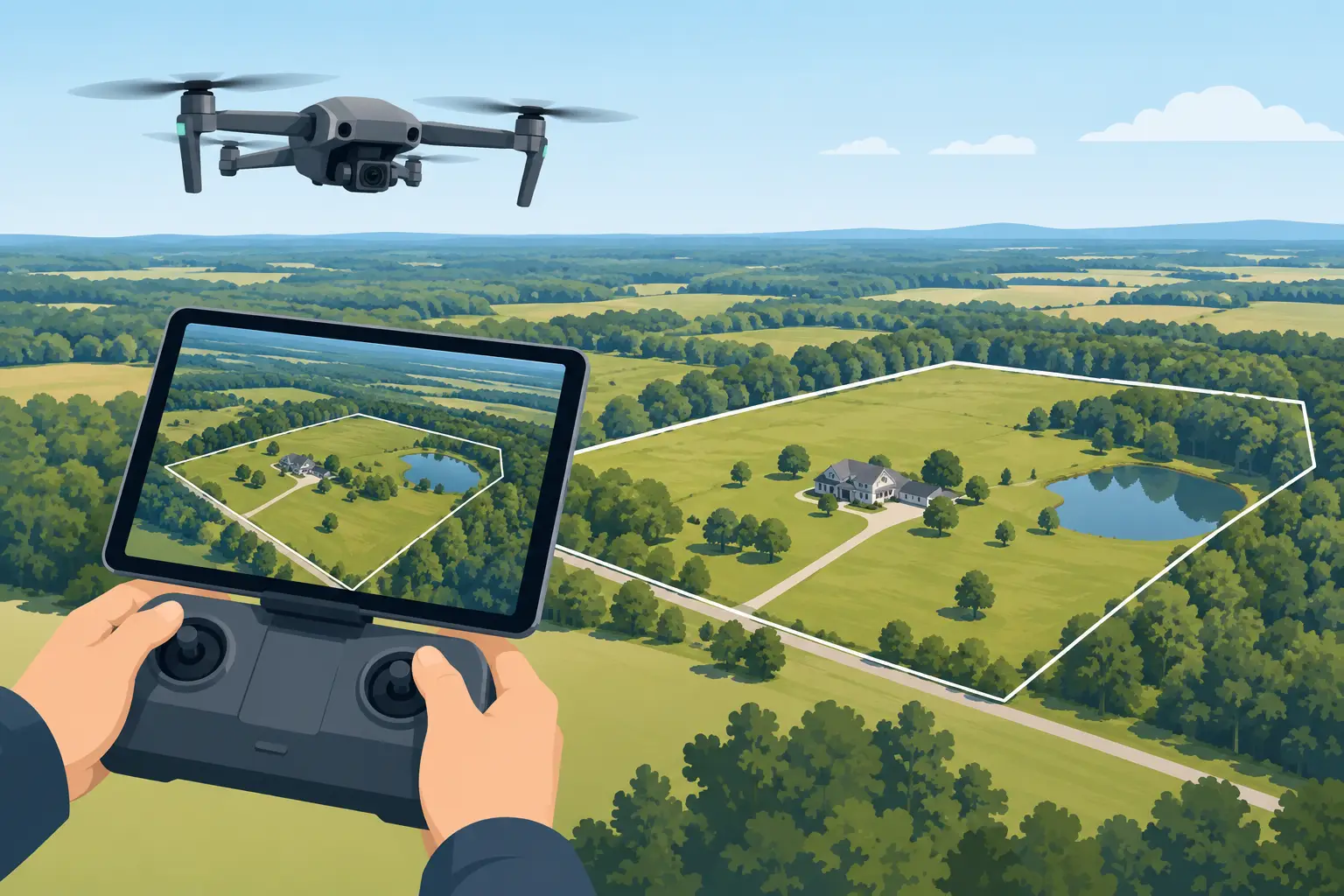
A 40-acre listing can look surprisingly small in a photo gallery. Buyers see a handsome house, a barn, maybe a mountain view, but they still cannot tell how the land connects, where the driveway leads, or what sits beyond the tree line. When you use aerial video for acreage, you give buyers the context that ground-level images cannot provide before they decide whether the property deserves a showing.
For Shenandoah Valley agents, this is not a luxury add-on reserved for rare estates. Land, views, long driveways, outbuildings, and rural settings are central to how many properties are marketed. The right aerial sequence helps a buyer understand the opportunity quickly, while helping you present the listing with the confidence expected of a full-service agent.
Why aerial video works for acreage
Acreage is not one feature. It is the relationship between the home, usable land, access points, woods, fields, neighboring parcels, roads, and surrounding scenery. Still photography remains essential for showing rooms, finishes, and curb appeal. Aerial video adds the larger story.
That story matters most when a buyer needs to answer practical questions early. Is the home tucked away or visible from the road? Does the pasture sit behind the house? Is there a usable clearing, a stream corridor, or a detached garage at the far end of the drive? How close is the property to town, a highway, or the Blue Ridge foothills?
A short, purposeful aerial video can establish those answers in seconds. It also gives your listing presentation more weight. Sellers with land are often concerned that agents will market their property like a standard subdivision home. Showing that you have a plan to capture the full setting can help differentiate your service before the sign goes in the yard.
What to show in an aerial acreage video
The best videos are not a random collection of high shots. Each clip should explain something useful about the property. Start with the listing’s strongest selling point, then build outward.
The approach and arrival
For properties with a long private drive, gated entry, or a home set back from the road, an approach shot gives buyers an immediate sense of arrival. It answers a common rural-listing question: what does it feel like to get there?
This is especially valuable when access is a benefit. A tree-lined drive, a gentle approach from a paved road, or a home positioned beyond open pasture can make the property feel more intentional and more private. If the drive is narrow, steep, or shared, your listing remarks and disclosures should provide the necessary context rather than relying on video to soften a practical consideration.
The home in relation to the land
A high, wide view can show where the house sits within the acreage. Buyers can see whether outdoor living spaces face the view, whether the barn is conveniently located, and how the yard transitions into open land or woods.
This is often more persuasive than simply stating that a property has 10, 20, or 50 acres. Acreage totals are facts. Aerial perspective helps buyers picture how they would use the land for horses, gardening, recreation, privacy, or a weekend escape.
Features that are easy to miss from the ground
Ponds, creeks, fencing, trails, fields, sheds, guest structures, and mountain backdrops can be difficult to explain through interior photos alone. Aerial video gives these features their proper place in the listing story.
Be selective. A pond may be a major selling feature, while a small drainage area may not need its own sweeping sequence. The goal is not to document every square foot. The goal is to make the property’s value easier to understand.
Setting, proximity, and views
Buyers moving into the Waynesboro, Staunton, Charlottesville, or Lexington area often care about both privacy and convenience. Aerial footage can show the property’s setting relative to nearby mountains, open countryside, or a recognizable road corridor without turning the video into a map.
This is where judgment matters. If a home enjoys a broad mountain view, lead with it. If the property is close to a commercial road or neighboring homes, do not hide that reality. Accurate marketing builds better buyer expectations and leads to more productive showings.
Use aerial video for acreage without creating confusion
Drone footage is compelling, but it should never imply facts that have not been verified. This is especially important with property lines.
An aerial view may help buyers see the general layout of a tract, but it is not a survey. Avoid presenting estimated lines, fence rows, tree lines, or natural features as legal boundaries unless they are supported by reliable information and properly labeled. If boundary context is useful, make it clear that buyers should verify acreage and lines through the appropriate documents and professionals.
The same principle applies to nearby features. Do not imply access to a trail, waterway, or adjoining land unless that access conveys with the property. Do not frame a distant view as permanent if its protection is unknown. Great real estate marketing is persuasive, but it must also be precise.
Plan the video around the buyer, not the equipment
Before scheduling aerial media, identify the two or three reasons someone would choose this particular property. Those reasons should guide the footage.
A horse property may need to show pasture layout, fencing, the barn, and trailer access. A mountain retreat may need to emphasize privacy, wooded acreage, outdoor gathering areas, and the view corridor. A home on a few open acres may benefit most from showing the house, usable lawn, detached workshop, and the easy drive from the road.
Share those priorities before the shoot. The more clearly you communicate what matters, the more intentional the finished video can be. It also helps to provide any details that affect access, such as gate codes, shared-driveway instructions, livestock on site, or areas the seller does not want filmed.
For a clean result, have sellers mow when practical, move vehicles away from key exterior views, secure loose items, and keep pets indoors during the appointment. Rural properties do not need to look artificial. They do need to look cared for and easy to evaluate.
Keep the final edit focused
Long videos can lose buyers before they reach the best part of the property. For most acreage listings, a concise aerial segment performs better than an extended flight over every field and tree line.
Use the footage where buyers will encounter it first: the listing video, social media previews, agent marketing, and a property webpage if you use one. Pair it with professional photography, floor plans when appropriate, and a 3D virtual tour for homes where interior flow needs more explanation. Each service should do a different job, not repeat the same view.
Aerial video is most effective when it supports the listing’s full media package. The drone establishes the setting. Photography sells the rooms. A floor plan helps buyers understand layout and dimensions. Together, they reduce the questions that cause buyers to scroll past a property.
Know when aerial video is worth it
Not every listing needs drone video. A small in-town home with no notable exterior features may be better served by strong photography, a floor plan, or twilight images. Adding aerial footage just because it is available can feel generic.
It is usually a smart choice when the property has acreage, a meaningful view, a long or distinctive approach, multiple structures, water features, usable open land, or a location whose appeal is difficult to explain from the ground. It can also help with short-term rentals and larger properties where the setting is part of the guest experience.
Work with a provider who operates professionally and follows applicable flight requirements. Weather, wind, airspace, and site conditions can affect what is possible on a given day. A dependable plan accounts for those variables rather than promising a shot that cannot be captured safely.
Villa Views approaches aerial media as part of a practical listing strategy, not as a flashy extra. When the land is a reason to buy, the marketing should make that clear from the first click.
The best aerial video leaves buyers with a simple, useful feeling: they understand the property better than they did a minute ago, and they want to see it in person.
Listing photos that sell homes faster.
Professional real estate media with 24-hour delivery across Waynesboro, Staunton, and the Shenandoah Valley.
Book a Shoot