
When Should Agents Order Twilight Photos for Listings?
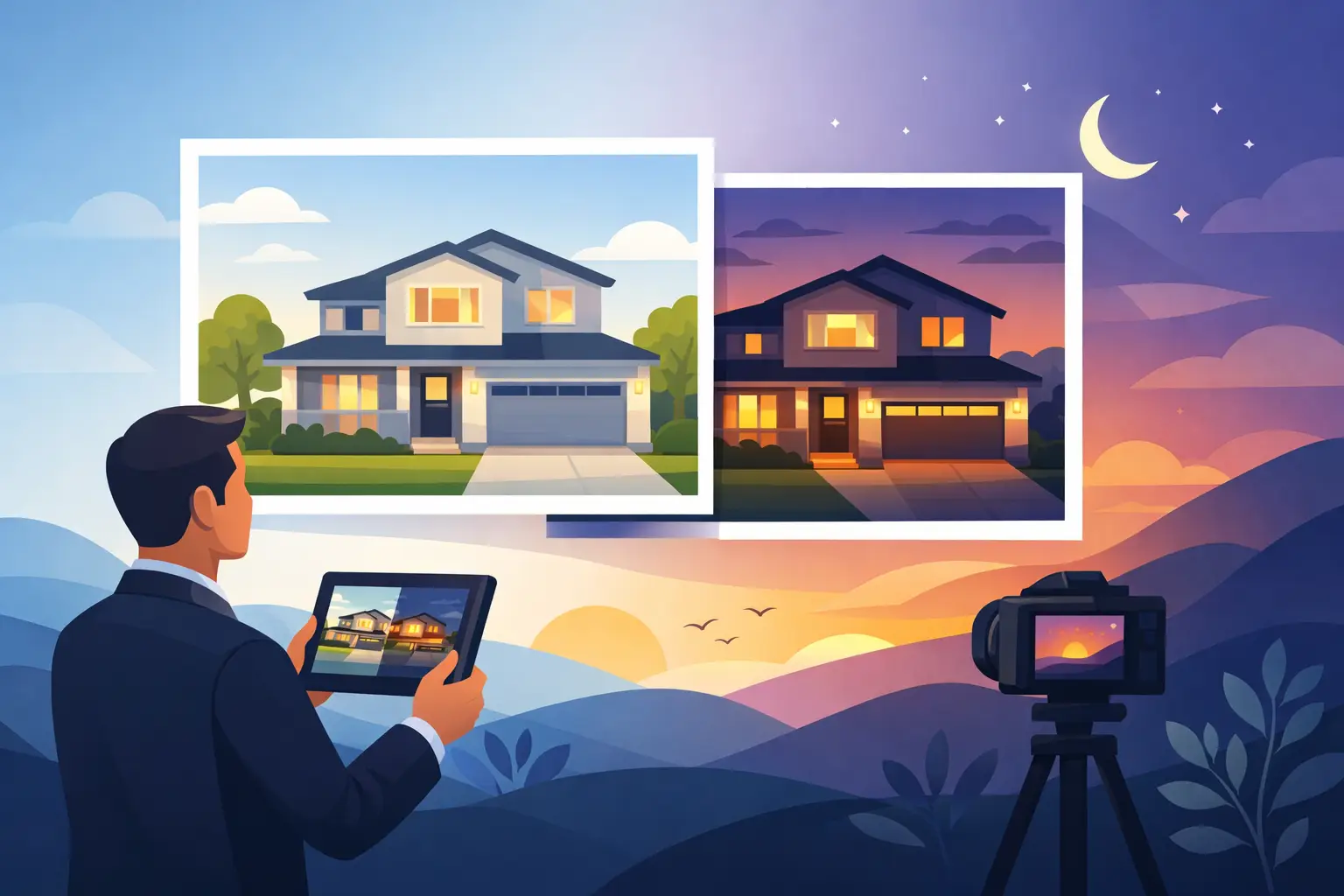
A twilight photo is not just a pretty add-on for a luxury home. Used at the right time, it can stop a buyer from scrolling past your listing, give your marketing a more premium feel, and create a stronger first impression before the first showing is scheduled. So, when should agents order twilight photos? Order them when the exterior, setting, and price position of the property give that image a real job to do.
For Shenandoah Valley agents, that can mean a home with Blue Ridge views, a long private drive, a pool, a covered porch, or a warm, inviting outdoor entertaining area. It can also mean a well-priced suburban home that needs a stronger online presence in a crowded search result. The goal is not to add twilight photography to every listing. The goal is to use it where it helps earn more clicks, more showings, and a better perception of value.
When Should Agents Order Twilight Photos?
Order twilight photos when the home has exterior features that become more compelling as daylight fades. Warm interior lights, landscape lighting, a glowing porch, a fire feature, water views, and a clean pool can all create an emotional image that standard daytime photography cannot always deliver.
That emotional pull matters because buyers often make a fast decision about whether a listing feels worth seeing. A strong twilight image makes the property feel established, cared for, and ready to enjoy. It gives buyers a reason to pause, then look closer at the rest of the listing.
Twilight images work especially well when you need one standout exterior image for the listing cover, social media promotion, print materials, or a listing presentation. They are designed to create attention, not replace the daytime photos that clearly show the home, land, and layout.
The property has outdoor features worth selling
A twilight session makes the most sense when the exterior is part of the value proposition. Think patios, decks, outdoor kitchens, pools, hot tubs, fire pits, screened porches, wraparound porches, and landscaped entertaining spaces. When the lights come on, these features can feel less like square footage and more like a lifestyle.
This is particularly useful for short-term rental properties. Guests are not only comparing bedroom counts. They are imagining where they will have coffee, gather after a hike, or sit outside at the end of the day. One well-executed twilight exterior can help communicate that experience quickly.
For rural properties, consider the setting just as closely as the house itself. A home on acreage may benefit from twilight photos if the drive, front elevation, mountain backdrop, pond, or outdoor living area looks intentional and inviting in lower light. If the property’s biggest advantage is a distant view that disappears after sunset, daytime aerial and exterior images may be the better investment.
The listing needs premium positioning
Not every property needs to be high-end for twilight photography to make sense. But the listing should have a reason to be positioned above the ordinary.
If you are asking buyers to recognize the value of recent renovations, a desirable neighborhood, privacy, architectural character, or a higher price point, twilight imagery can support that message. It signals that the marketing plan was built with care. That helps you present the listing as a serious opportunity rather than another home placed online with the minimum required photos.
For higher-priced listings, twilight images are often a practical part of a broader media plan that includes professional daytime photography, drone coverage where appropriate, floor plans, and a 3D virtual tour. Each deliverable answers a different buyer question. Twilight creates interest. Daytime photography shows condition and flow. Floor plans clarify layout. A virtual tour helps serious buyers explore before scheduling.
Order Twilight Before the Listing Goes Live
The best time to order twilight photos is before your launch date is locked in, not after the listing is already live and underperforming. Twilight sessions depend on a short window of usable light, weather conditions, home preparation, and scheduling availability. Treat them as part of the original marketing plan.
When booking listing media, decide early whether twilight belongs in the package. That allows the photographer to plan the timing around sunset and gives homeowners time to prepare the exterior. A rushed request can still be possible, but it limits flexibility and can create unnecessary pressure for everyone involved.
If you are launching a listing on a Thursday or Friday to capture weekend attention, schedule photography far enough ahead to leave room for weather changes and file delivery. Villa Views provides a 24-hour turnaround for core photography, helping agents keep momentum without sacrificing a coordinated launch.
Twilight photos can also be scheduled as a second visit when needed. This may be the right move when the house is ready for daytime images now, but landscaping, pool readiness, exterior lighting, or weather needs a few more days. The key is to avoid treating twilight as an afterthought. If it will improve the launch, build it into the timeline.
What Makes a Home a Good Twilight Candidate?
A good candidate does not need expensive landscaping or a resort-style backyard. It needs visual depth and a clean exterior.
Start with the front elevation. Homes with appealing architecture, a defined entry, mature landscaping, or an inviting porch often photograph well at twilight. Interior lights seen through windows can add warmth, while exterior fixtures give the structure shape and dimension.
Next, assess the backyard. Pools, patios, decks, fire pits, string lights, and covered entertaining areas often make excellent twilight subjects. A simple backyard with no visible lighting or distinctive features may be better served by a bright daytime exterior image.
Finally, consider the home’s condition. Twilight does not hide clutter, dead landscaping, broken fixtures, or unfinished exterior projects. In fact, lower light can draw attention to uneven lighting and areas that were not prepared. Sellers should mow, edge, clear vehicles and bins, tidy the porch, remove pool covers when appropriate, and replace burned-out bulbs before the session.
When Twilight Photos Are Not the Best Spend
There are times when your marketing budget will work harder elsewhere. If the listing has limited exterior appeal, no usable outdoor features, or a front elevation that is blocked by heavy shade and utility lines, twilight may not add enough value to justify the cost.
The same is true when the home’s strongest selling points are inside. A thoughtfully renovated kitchen, a flexible floor plan, a finished basement, or a bright living area may deserve investment in additional interior coverage, floor plans, or a 3D virtual tour before twilight photography.
Weather can also change the decision. Light rain is not always a deal-breaker, but wind, storms, heavy cloud cover, and wet exterior surfaces can limit the look you are trying to achieve. Be realistic about seasonal conditions. In winter, twilight arrives earlier and bare trees may open up a view. In summer, greener landscaping can look excellent, but late sunset times require seller coordination and a later appointment.
There is also a price-point question. On an entry-level listing with strong demand and a simple exterior, standard professional photography may be enough to get the job done. The right choice depends on competition, condition, location, and the story you need the listing to tell.
Use Twilight Photos Where Buyers Will See Them First
A twilight image earns its place when it is used strategically. It is often the strongest option for the primary listing image, especially when the daytime front exterior is attractive but not immediately memorable. It can also work well in social media posts, just-listed graphics, property brochures, and email marketing.
Do not make every exterior photo a twilight photo. Buyers still need clear daytime images to understand the approach, yard, roofline, parking, and surroundings. A small number of polished twilight images paired with comprehensive daytime coverage usually creates the strongest presentation.
If you have both a front and backyard twilight option, choose based on the listing’s main selling angle. Use the front if curb appeal and architecture drive the first impression. Use the backyard if the outdoor living space is what makes the property feel different from competing homes.
Plan for the Details That Make Twilight Work
Sellers should know that a twilight session requires the house to remain photo-ready later in the day. Interior and exterior lights may need to be turned on, blinds should be consistent, vehicles should be moved, and outdoor areas should be clear. A seller who understands the purpose of the session is more likely to help create a clean final image.
Set expectations early. Explain that twilight photography is meant to highlight the home’s mood and exterior appeal, not document every angle. That simple conversation helps sellers see it as a marketing decision tied to buyer interest, rather than an unnecessary extra.
The strongest listing media plans are intentional. Choose twilight photography when it gives the property a more compelling opening image, reinforces its price position, and makes buyers want to see what is inside. That is when a short window after sunset can keep your listing working long after the day ends.
Listing photos that sell homes faster.
Professional real estate media with 24-hour delivery across Waynesboro, Staunton, and the Shenandoah Valley.
Book a Shoot